Residents in the Kanyosha zone of Bujumbura report going two to three days or more without water, facing persistent shortages that disrupt daily life. Jean-Albert Manigomba, Director General of Regideso, acknowledged these water supply difficulties during a press conference held on 19 August 2026. Beyond the water crisis, residents face compounding infrastructure failures that hinder access to basic services. A young man in the Kanyosha zone explained the ongoing challenges: "Malheureusement, nous nous heurtons aussi au problème de manque de courant électrique. Il est très rare d’en avoir pendant une heure de suite dans le quartier, voire dans toute la zone." These utility disruptions continue to affect households across the sector as officials grapple with the grid's instability.
Daily Struggles for Residents
Residents in the Kanyosha area contend with high costs for basic water access as municipal supplies remain intermittent. A 20-liter container of water sourced from mountain springs currently sells for between 3,500 and 4,000 BIF. These prices place significant pressure on household budgets as families rely on alternative sources to meet their daily needs.
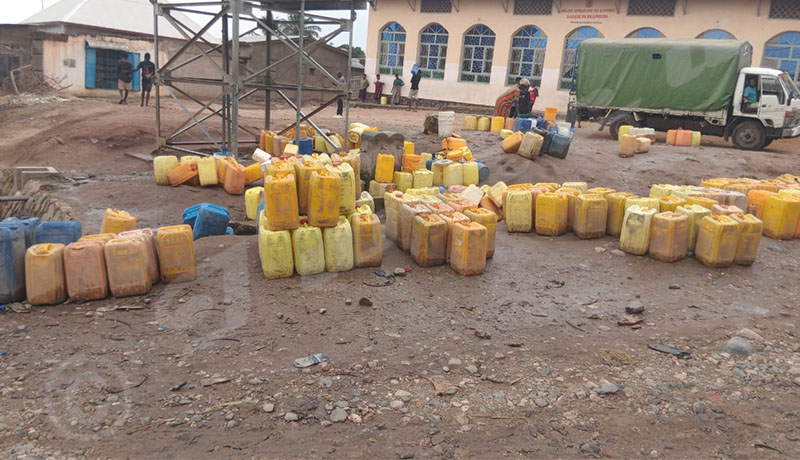
Private boreholes serve as another source of water in the Kajiji neighborhood, though access remains unpredictable. Water from these private sites costs 300 BIF per 20-liter container, a price that increases to 500 BIF when operators must utilize a generator to power the extraction equipment. Residents often spend hours waiting in lines at these locations, unsure of when the supply will be available. A young woman in the Kajiji neighborhood described the uncertainty of the situation: "Nous déposons ces bidons sur la queue et attendons. Personne ne peut savoir quand l’eau viendra."
N.M, a private owner of a borehole, noted the substantial investment required to establish these water points in the current environment. He explained the technical and financial requirements for tapping into local groundwater, stating: "Il a fallu plusieurs dizaines de millions de francs burundais pour pouvoir capter l’eau. La nappe se trouve à plus de cinquante mètres dans le sous-sol. C’est un projet cher non seulement en termes financiers mais aussi de temps."
Regideso plans to address the broader supply issues through the PAEPA project. The utility aims to increase the total quantity of water produced from Lake Tanganyika by 30% through this initiative. Officials expect this expansion to improve overall distribution capacity across the affected zones.