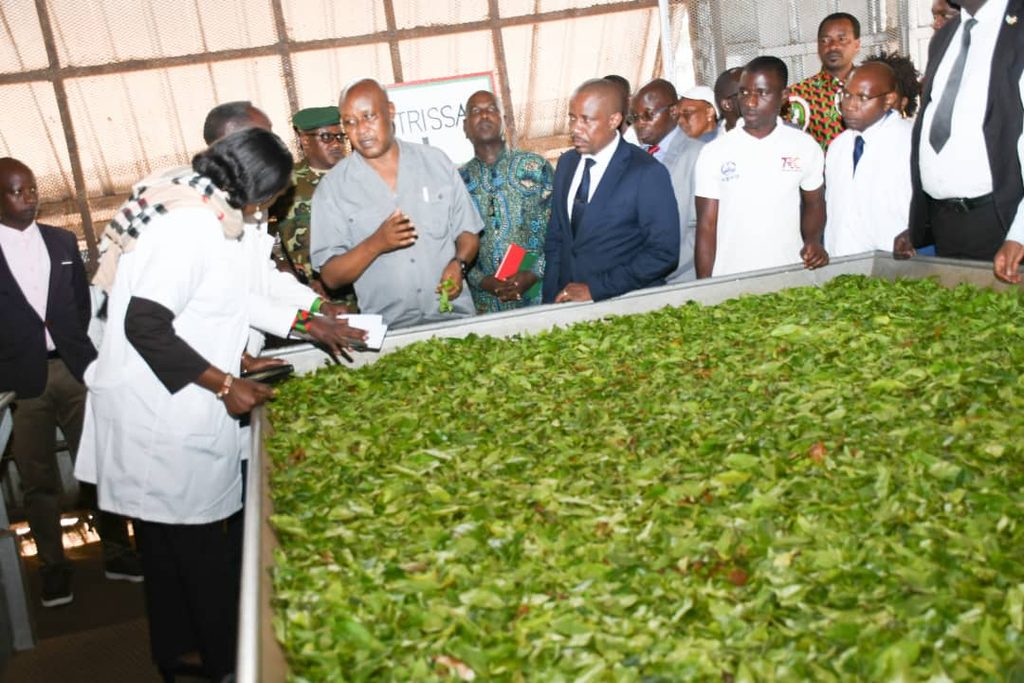
Burundi's Vice-President Prosper Bazombanza conducted a working visit to the tea factory at the Ijenda tea complex on Thursday, August 20, 2026. The objective of the visit was to assess the state of tea production at all stages, from cultivation to processing, within the complex. Vice-President Bazombanza's engagement reflects ongoing efforts to understand and potentially improve the sector's performance, which is seen as vital for the nation's economic future. The full assessment aimed to provide a clear picture of both operational successes and areas requiring urgent intervention.
Assessing Production and Future Vision
During his visit, Vice-President Prosper Bazombanza affirmed that the agricultural sector, particularly the production of export crops in large quantity and quality, is essential for Burundi to achieve its Vision of emergence by 2040 and development by 2060. This strategic emphasis notes the government's long-term economic planning. Bazombanza called on all stakeholders to prioritize tea cultivation, advising everyone to take care of this key sector, emphasizing its significant role in remarkably generating foreign currency for the nation. He further encouraged tea growers to double their efforts to boost overall production, showing the need for increased output to meet national economic goals. The Vice-President's remarks show the government's focus on agricultural exports as a cornerstone of its long-term economic strategy. His visit to the Ijenda tea complex provided an opportunity to directly engage with the sector's current challenges and future potential, observing firsthand the operations and speaking with those involved.
Obstacles Hindering Tea Output
Discussions during the Vice-President's visit noted several obstacles contributing to low tea production in both quantity and quality. These challenges include repetitive power outages, which severely affect operations at the Ijenda tea complex, leading to disruptions in processing schedules and potential quality degradation. Insufficient transport vehicles for tea collection from plantations also hinder efficiency, according to observations made during the assessment, resulting in delays that can impact the freshness and quality of harvested leaves. The factory faces a lack of sufficient labor, impacting processing capabilities and the overall throughput of the facility. Beyond the factory and transport logistics, the sector grapples with abandoned tea fields, which reduce overall cultivation area and potential yield, signaling a need for renewed investment and engagement from farmers. The practice of sales through brokers was also identified as an issue, potentially affecting regulated market channels and producer revenues by introducing intermediaries that may reduce farmer profits and market transparency.
Call for Improved Farmer Compensation
Low payment per kilogram to tea farmers was identified as a significant obstacle affecting the sector's performance. This issue directly contributes to the overall challenges observed in tea production, impacting both quantity and quality as farmers may lack incentive to invest further in their fields or maintain high standards. Vice-President Prosper Bazombanza urged decision-makers to increase the price paid per kilogram for harvested tea, signaling a recognition of the need for better compensation to growers to ensure their livelihood and encourage continued cultivation. The call for improved farmer remuneration is part of broader efforts to revitalize the tea industry and encourage greater participation and investment from cultivators. Addressing this payment issue is seen as key for stimulating production and ensuring the long-term sustainability of tea cultivation in Burundi, thereby supporting the nation's economic vision.