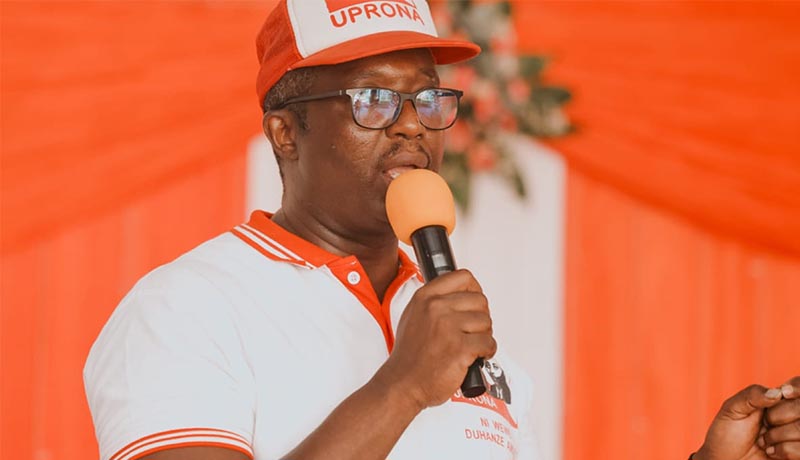
Burundi will commemorate the 65th anniversary of Prince Louis Rwagasore's assassination on October 13, 2026, an event that Olivier Nkurunziza, president of the Uprona party, believes should embody national unity. This upcoming commemoration serves as a critical moment for national reflection and reaffirmation of shared values. Nkurunziza stated that "the memory of the nation remains" even as "power passes, parties pass," emphasizing that national memory should not be managed as partisan or governmental. He articulated a vision where the legacy of national heroes transcends political affiliations, becoming a unifying force for all citizens. This perspective suggests that the historical narrative of Burundi should be preserved and honored independently of the political landscape of the day. He also noted the prince's symbolism of independence and unity for all Burundians, alongside President Ndadaye's representation of democratic openness. Prince Louis Rwagasore is widely revered for his key role in the struggle for Burundi's independence from colonial rule, making his assassination a profound moment in the nation's history. His vision for a unified and sovereign Burundi continues to resonate, serving as a foundational ideal for the country. Similarly, President Melchior Ndadaye is remembered for ushering in a new era of democratic governance, symbolizing the aspirations of the Burundian people for political freedom and participation. The dual recognition of these figures shows a broad national consensus on the importance of both sovereignty and democratic principles.
Nkurunziza showed that patriotism involves loving one's country, defending its interests, and working for its progress, rather than requiring membership in the ruling party. This definition seeks to broaden the understanding of patriotism beyond partisan lines, advocating for an inclusive national identity. He explained, "One cannot therefore consider that a Burundian ceases to be patriotic because he belongs to the opposition or because he criticizes a government policy." This statement champions the right to dissent and political pluralism as integral components of a healthy democracy, suggesting that constructive criticism can be a form of patriotic engagement aimed at national improvement. The Uprona president also expressed concern over Burundi's current economic state, describing it as "worrying: fuel shortages, electricity cuts, tensions on the currency market, high cost of living, and low purchasing power." These economic indicators point to significant challenges affecting the daily lives of ordinary Burundians, impacting their ability to access essential goods and services. The scarcity of fuel and electricity directly affects productivity across various sectors, from agriculture to industry, further hampering economic growth. Currency market tensions contribute to inflation, eroding the purchasing power of households and exacerbating the high cost of living. He stressed that political independence cannot be fully realized without economic independence, noting the country's reliance on imports and external financing. This reliance creates a vulnerability where external economic shocks can have significant domestic repercussions, undermining the nation's ability to chart its own course without undue influence.
The Enduring Power of National Memory
Burundi commemorates the assassination of President Melchior Ndadaye, recognized as a hero of democracy, on October 21 each year. This annual observance is a testament to the nation's commitment to democratic ideals and its remembrance of those who sacrificed for them. The day serves as a moment for Burundians to reflect on the importance of democratic institutions and the rule of law. The Uprona party, in a separate development, has achieved reunification from its base to its summit. This internal consolidation within one of Burundi's historic political parties marks a significant moment in its organizational trajectory, potentially influencing the broader political landscape. The reunification process involved extensive dialogue and reconciliation efforts among different factions, aiming to present a united front and strengthen the party's operational capacity. This development could lead to a more coherent political voice and strategy for Uprona in national affairs, potentially enhancing its role in future political processes and elections.
The preservation and interpretation of national memory, as noted by Olivier Nkurunziza, are key for fostering a shared national identity and cohesion. By emphasizing that national memory should not be managed in a partisan or governmental manner, Nkurunziza advocates for a historical narrative that belongs to all Burundians, irrespective of their political affiliations. This approach helps to prevent the politicization of historical events and figures, allowing them to serve as symbols of unity rather than division. The figures of Prince Louis Rwagasore, representing independence and unity, and President Melchior Ndadaye, embodying democratic openness, provide a powerful foundation for this collective memory. Their legacies offer a framework for understanding Burundi's past struggles and aspirations, guiding its path towards a future built on shared values and mutual respect. The consistent commemoration of these national heroes reinforces their enduring significance and ensures that their contributions remain central to the national consciousness, inspiring future generations.
Economic Independence: A Prerequisite for Sovereignty
Political independence cannot be fully realized without economic independence, according to observers of Burundi's development. This assertion shows a fundamental truth: a nation's ability to make sovereign decisions on the global stage is often constrained by its economic vulnerabilities and dependencies. The country's economy faces significant challenges, including a heavy reliance on imports and external financing. This dependency means that Burundi's economic stability is often at the mercy of global market dynamics and the policies of international lenders and donors. These external dependencies make Burundi particularly vulnerable to international price fluctuations, especially concerning essential commodities. For instance, global increases in the price of oil or food staples can have immediate and severe impacts on the domestic economy, leading to inflation and reduced purchasing power for citizens. Energy supply issues and a persistent scarcity of foreign currency further complicate the economic landscape, hindering industrial development and trade. The lack of reliable energy infrastructure impedes production and service delivery, while foreign currency shortages make it difficult to import essential goods and raw materials, thus perpetuating a cycle of economic constraint.
Beyond external factors, internal dependencies also significantly affect Burundi's economic stability and growth. These include issues such as poor governance, which can hinder effective policy implementation and resource allocation. Weak governance structures often lead to inefficiencies, corruption, and a lack of accountability, diverting resources away from productive investments and public services. Clientelism, characterized by favoritism and patronage, contributes to inefficiencies and can undermine equitable economic development. This practice distorts market mechanisms, rewards connections over merit, and can lead to the misallocation of resources, benefiting a select few at the expense of broader societal welfare. The country struggles with insufficient resource transformation, meaning that its natural resources are not adequately processed or utilized to create higher-value products for export or domestic consumption. This limitation prevents Burundi from fully leveraging its indigenous assets to foster sustainable economic growth and reduce its reliance on external markets. Instead of exporting raw materials, value-added processing within the country could create jobs, generate higher revenues, and build domestic industrial capacity. Addressing these multifaceted challenges, both external and internal, is considered essential for Burundi to achieve genuine economic independence and strengthen its overall sovereignty. This requires a full approach that includes diversifying the economy, improving governance, fostering a merit-based system, and investing in local processing and manufacturing capabilities. The current economic situation, marked by fuel shortages, electricity cuts, currency market tensions, high cost of living, and low purchasing power, vividly illustrates the urgent need for these structural reforms. These issues collectively create a challenging environment for businesses and households, showing the imperative for strategic interventions to stabilize the economy and foster long-term resilience.
Reforms for a Democratic and Prosperous Future
For Burundi to achieve a democratic and prosperous future, essential reforms are necessary ahead of the 2027 elections. These reforms are critical to building a strong and legitimate political system that enjoys the trust of its citizens and the international community. These reforms include establishing a credible, transparent, and inclusive electoral process. A credible process ensures that results accurately reflect the will of the people, while transparency builds public confidence by making all stages of the election visible and accountable. Inclusivity guarantees that all eligible citizens, regardless of their background or political affiliation, have the opportunity to participate fully in the electoral process, both as voters and as candidates. Strengthening electoral institutions is also identified as a critical component to ensure fairness and public trust in the democratic system. This involves enhancing the capacity, independence, and impartiality of electoral bodies, providing them with the necessary resources and legal frameworks to operate effectively and without undue influence. Consolidating the rule of law is considered fundamental, providing a stable and predictable legal framework for all citizens and institutions. A strong rule of law ensures that laws are applied equally to everyone, that justice is accessible, and that government actions are bound by legal principles, thereby protecting rights and promoting stability. Alongside these institutional changes, guaranteeing fundamental rights and freedoms for all Burundians is noted as a core requirement for a truly democratic society. This includes freedom of expression, assembly, association, and the press, as well as protection from arbitrary arrest and discrimination. Upholding these rights is essential for civic participation, political discourse, and the overall health of a democratic state.
In the broader regional context, the East African Community (EAC) Parliament holds a significant role. It is expected to act as the guardian of regional integration principles. This involves ensuring that member states adhere to the foundational tenets of cooperation, trade, and shared development that underpin the EAC's mandate. The Parliament's oversight function is key for maintaining the integrity of the regional bloc and promoting stability across its member nations, including Burundi. By monitoring the implementation of EAC treaties and protocols, the Parliament helps to ensure that member states fulfill their commitments, fostering a predictable and harmonious environment for regional development. Its actions are seen as instrumental in fostering an environment conducive to democratic governance and economic progress within the region. The EAC Parliament can encourage best practices in governance, promote human rights, and advocate for policies that support sustainable economic growth across all member states. Its role in fostering regional solidarity and upholding democratic values is vital for the collective prosperity and stability of East Africa.