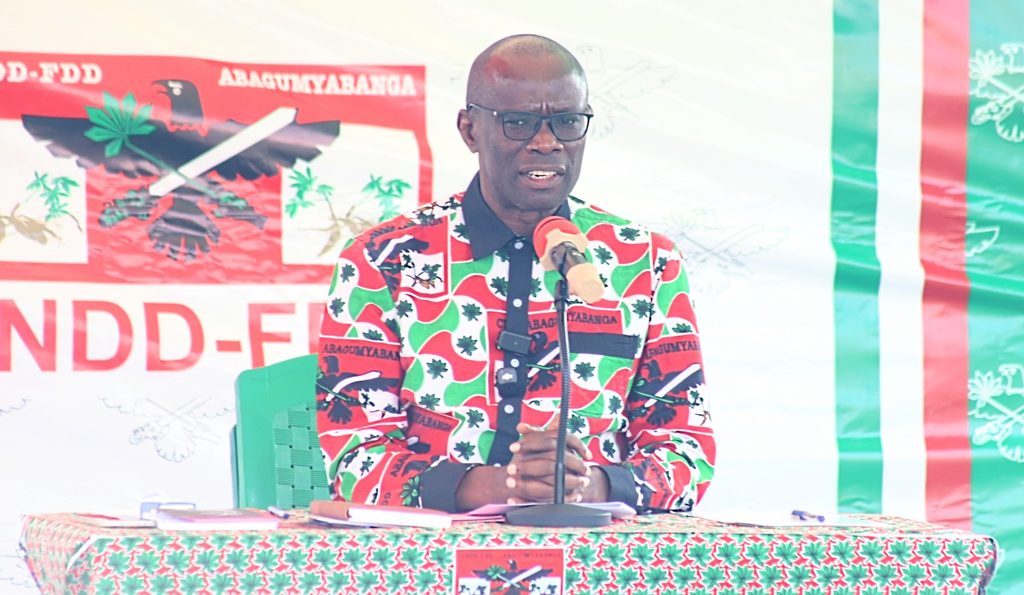
Révérien Ndikuriyo, the influential Secretary General of the ruling CNDD-FDD party, recently expressed profound confidence in Burundi's overarching development vision. Mr. Ndikuriyo, a prominent figure in Burundian politics, made these significant statements during a full press conference held at the Nkurunziza Peace Park Complex Stadium in Gisenyi, Makamba province. This strategic location for the press conference allowed for direct engagement with regional concerns while conveying a national message. During the extensive briefing, he addressed a wide array of critical topics, including the nation's political landscape, the vital agricultural sector, the challenges and progress in education, and broader socio-economic development initiatives. These discussions showed the party's full approach to governance and national progress.
During the press conference, Ndikuriyo delivered a powerful declaration, stating, "Pour engager la guerre au Burundi, il faut avoir des motifs valables. Pourtant, actuellement, aucune raison ne peut justifier le déclenchement d’une guerre." (To wage war in Burundi, one must have valid reasons. However, currently, no reason can justify the outbreak of a war.) This firm stance noted the government's commitment to peace and stability, even as it navigates various internal and external pressures. His remarks sought to reassure citizens and the international community of the nation's dedication to peaceful resolution and development.
Addressing National Challenges and Security Concerns
Révérien Ndikuriyo emphatically stated that, from the perspective of the CNDD-FDD party, no valid reasons currently exist to justify initiating a war in Burundi. This assertion comes amidst a backdrop of various challenges that the nation is actively working to overcome. He openly acknowledged several national challenges that are impacting daily life and economic progress. These include persistent fertilizer shortages, which directly affect the agricultural output key for the country's food security, as well as difficulties within the education sector that demand urgent attention and reform. The nation is grappling with fuel scarcity, a common issue in many developing economies that can hinder transportation and economic activity.
Ndikuriyo specifically noted that some individuals are reportedly claiming significant quantities of fertilizer from Fomi, an issue that he indicated warrants further investigation to ensure equitable distribution and prevent illicit practices. Despite these internal challenges and the government's efforts to address them, rebel groups such as Red-Tabara and the FNL of Nzabampema are reportedly calling for war from outside the country's borders. This external pressure adds a layer of complexity to Burundi's security situation, even as the government maintains its position that no internal justification for conflict exists. In a separate incident noting urban challenges, two commercial establishments in Bujumbura, specifically 'Ndayizamba' galleries and 'Le Parisien', were recently affected by a fire, showing the need for strong urban infrastructure and emergency services. In a proactive move to improve public health and civic responsibility, Ndikuriyo also urged public services to set an exemplary standard in hygiene and sanitation, emphasizing their key role in fostering community well-being and preventing disease. This call to action reflects a broader governmental focus on public health and environmental stewardship.
Economic Development Prospects and Agricultural Focus
Burundi's ambitious economic development vision includes a strategic focus on key agricultural sectors, which are seen as key for sustainable growth. Notably, coffee production in Burundi has shown a significant increase, a testament to the hard work of farmers and ongoing agricultural reforms. This surge in production positions coffee as a vital export commodity. Beyond coffee, substantial efforts are actively being made to position both the coffee and avocado sectors as important levers for the national economy. This strategic emphasis aims to bolster overall economic growth, create employment opportunities, and diversify revenue streams within the country, moving beyond reliance on a single crop. The government believes that by investing in these sectors, Burundi can unlock significant economic potential.
Further recommendations have been made regarding the payment structure for coffee producers, a critical aspect of supporting the agricultural community. It was specifically recommended that these producers receive their payments prior to the commencement of the 2026-2027 school year. This forward-thinking measure intends to provide much-needed financial stability to farmers, potentially improving their livelihoods and ensuring they have sufficient resources to cover educational expenses for their children. This initiative notes the interconnectedness of agricultural policy with social welfare and educational access. The sustained focus on these key agricultural sectors shows a governmental strategy to capitalize on Burundi's natural resources for broader economic benefit and to enhance the quality of life for its citizens.
Future Engagements and Outlook
Looking ahead, Révérien Ndikuriyo intends to attend the return match of the Aigle Noir club in Rwanda next month. This potential engagement notes future inter-regional activities involving Burundian entities, particularly in the realm of sports diplomacy. He indicated that his attendance is contingent on his responsibilities permitting the visit, acknowledging the demands of his high-profile role as Secretary General. The match itself would represent a notable cultural and sporting exchange between Burundi and its neighbor, Rwanda, fostering goodwill and regional camaraderie. Ndikuriyo's participation, if confirmed, would show the CNDD-FDD's engagement beyond national borders and its commitment to regional cooperation. Such events often serve to foster diplomatic and social ties between neighboring nations, contributing to overall stability and understanding in the East African region. Ultimately, his schedule and official duties will determine his ability to be present at the event, but the intention signals a broader outlook. The Aigle Noir club's continued participation in international fixtures contributes significantly to Burundi's presence in regional sports, elevating the nation's profile on the continental stage.