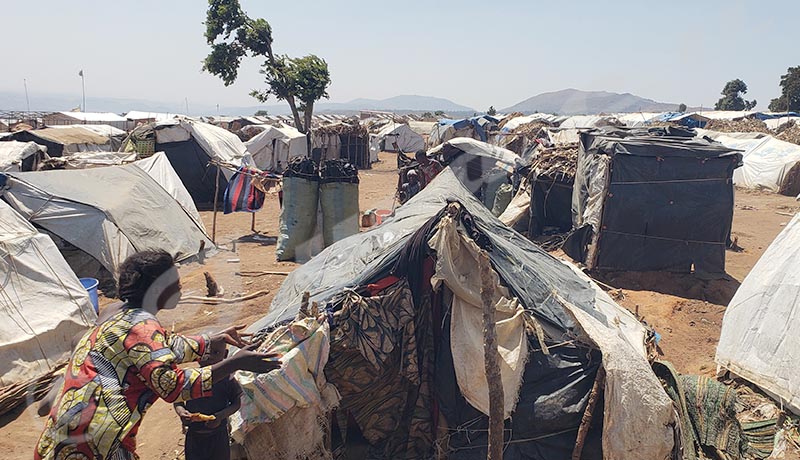
More than 50,000 Congolese refugees residing in the Busuma camp are facing severe deterioration in their living conditions, prompting a strong desire for repatriation to their home country, the Democratic Republic of Congo (DRC). The refugees, many of whom have been in the camp for years, have consistently expressed their wish to return amidst the worsening circumstances that have plagued their daily lives within the camp's confines. This significant population, numbering over 50,000 individuals, is grappling with a humanitarian crisis that shows the urgent need for sustainable solutions.
Grim Living Conditions Emerge
The Busuma camp, situated in the Ruyigi commune within Buhumuza province, is experiencing a significant decline in living standards for its refugee population. The geographical location of the camp in this specific province and commune provides a clear context for the challenges faced by its residents. Aid provided to the camp's residents has been described as "insignificant," a stark assessment that notes the inadequacy of current support mechanisms. This lack of substantial assistance is a primary contributor to the rapidly deteriorating situation. Many of the refugees' tents are now worn out or torn, creating apprehension among residents as the upcoming rainy season approaches. The dilapidated state of these shelters offers little protection against the elements, raising serious concerns about health and safety, particularly for vulnerable populations within the camp. The worn-out and torn tents are a visible manifestation of the prolonged hardship and insufficient resources available to the refugees.
The challenges in Busuma camp are set against a backdrop of underfunded humanitarian efforts. The total needs for assisting these refugees are estimated at 33.2 million US dollars. This substantial figure represents the full financial requirement to address the myriad of issues facing the camp's inhabitants, from basic necessities to critical services. This estimate was part of a funding appeal launched in December 2025 to address the critical gaps in support. The appeal was designed to galvanize international and national partners to provide the necessary resources to alleviate the suffering within the camp. However, mobilization for this key funding appeal currently stands at only 30%, leaving a substantial shortfall in resources required to alleviate the severe conditions within the camp. This significant funding gap directly impacts the ability of humanitarian organizations to provide adequate food, shelter, medical care, and sanitation facilities, perpetuating the cycle of hardship for the Congolese refugees. The lack of sufficient funding means that essential services are either severely limited or entirely absent, exacerbating the already dire circumstances.
Refugees Yearn for Home Amidst Scarcity
Refugees in the Busuma camp have reported experiencing hunger, with many stating they often go one or two days without food. This alarming scarcity of provisions contributes profoundly to the severe deterioration of living conditions within the camp. The constant struggle to find sustenance is a daily reality for thousands of individuals, impacting their health, well-being, and overall sense of security. The lack of adequate food is a critical concern, leading to malnutrition and increased susceptibility to illness among the refugee population. Beyond the immediate concern of hunger, the financial aid provided to the refugees has also seen a significant reduction, dropping from 38,000 Burundian Francs (BIF) per month per person to 13,000 BIF per month per person. This drastic decrease in financial assistance, representing a reduction of over 65%, severely limits the refugees' ability to purchase essential goods not covered by direct aid. The reduction in BIF per person has broad consequences, making it nearly impossible for families to meet their basic needs or supplement their meager food rations. The decrease in financial assistance exacerbates the challenges faced by the Congolese refugees as they struggle to meet basic needs, further entrenching them in a cycle of poverty and dependency.
Amidst these deteriorating conditions, many refugees have expressed a strong desire to return to the Democratic Republic of Congo (DRC). This yearning for home is a natural response to the prolonged suffering and uncertainty experienced in the camp. The prospect of returning to their country, despite its own challenges, offers a glimmer of hope for a more stable and dignified life. However, the head of Burundian diplomacy, Edouard Bizimana, addressed the situation on August 14, 2026. Bizimana stated that the refugees' safety is critical, indicating that they cannot be sent back to conflict zones. This position notes the complex balance between the refugees' longing for home and the security concerns regarding their repatriation. The Burundian government's stance emphasizes the responsibility to ensure that any return is voluntary, safe, and dignified, and not merely a transfer from one precarious situation to another. The imperative of safety is a key consideration that complicates and slows down the repatriation process, despite the refugees' strong desire to leave the camp.
Repatriation Efforts and Challenges Continue
Refugees in the Busuma camp report a lack of adequate tents and insufficient food supplies, two fundamental necessities for survival. The dilapidated state of their shelters, coupled with the persistent hunger, paints a grim picture of daily life. Beyond these immediate concerns, a severe shortage of water, medicine, and latrines further compounds the humanitarian crisis within the camp. The scarcity of clean water poses significant health risks, increasing the likelihood of waterborne diseases. The lack of essential medicines means that even treatable illnesses can become life-threatening, while the insufficient number of latrines contributes to poor sanitation and the spread of disease. These critical deficiencies show the urgent need for full humanitarian intervention.
Brigitte Eno-Mukanga, the UNHCR representative in Burundi, addressed the complex issue of repatriation, announcing that a tripartite meeting involving the UNHCR, Burundi, and the Democratic Republic of Congo in Kinshasa authorized returns exclusively to secured zones within the DRC. This policy aims to ensure the safety of returning refugees, reflecting the shared commitment of all parties to prioritize the well-being of those being repatriated. The decision to restrict returns to secured zones is a direct response to the concerns raised by officials like Edouard Bizimana regarding the safety of returning individuals. This collaborative approach involving the United Nations High Commissioner for Refugees (UNHCR) and the governments of both Burundi and the DRC is key for managing the complex logistics and security assessments required for successful repatriation. The agreement reached in Kinshasa provides a structured framework for the voluntary return process, emphasizing careful planning and coordination to mitigate risks.
Despite the ongoing challenges in Busuma, repatriation efforts have commenced, offering a pathway home for some of the camp's residents. Repatriation began in April, marking a significant step in addressing the prolonged displacement of these Congolese refugees. Since then, nearly 13,000 individuals have already departed from the camp, embarking on their journey back to the DRC. These returns are facilitated through organized convoys, ensuring a structured and safer transit for the returning populations. Weekly convoys, each transporting approximately 1,000 people, are arranged for the repatriation of refugees to designated secured zones in their home country. This systematic approach allows for a steady flow of returns, managed to ensure that the process is as orderly and safe as possible, demonstrating a tangible commitment to resolving the refugee crisis in Busuma camp. The continued organization of these convoys is vital for reducing the population of the camp and allowing refugees to rebuild their lives in their home country, provided the security conditions in the designated zones remain stable.