Inhabitants of Mukaza commune provided testimonies on June 16, 2026, regarding a concerning decline in public hygiene measures. These reports indicate that essential precautions, such as the provision of taps or buckets with soap, have largely been abandoned across the commune. This widespread abandonment of hygiene provisions is now evident, with handwashing stations rarely found in front of shops, boutiques, or restaurants within Mukaza commune's city center and its neighborhoods. The absence of these facilities is raising significant public health concerns among residents and observers alike.
Deteriorating Hygiene Infrastructure
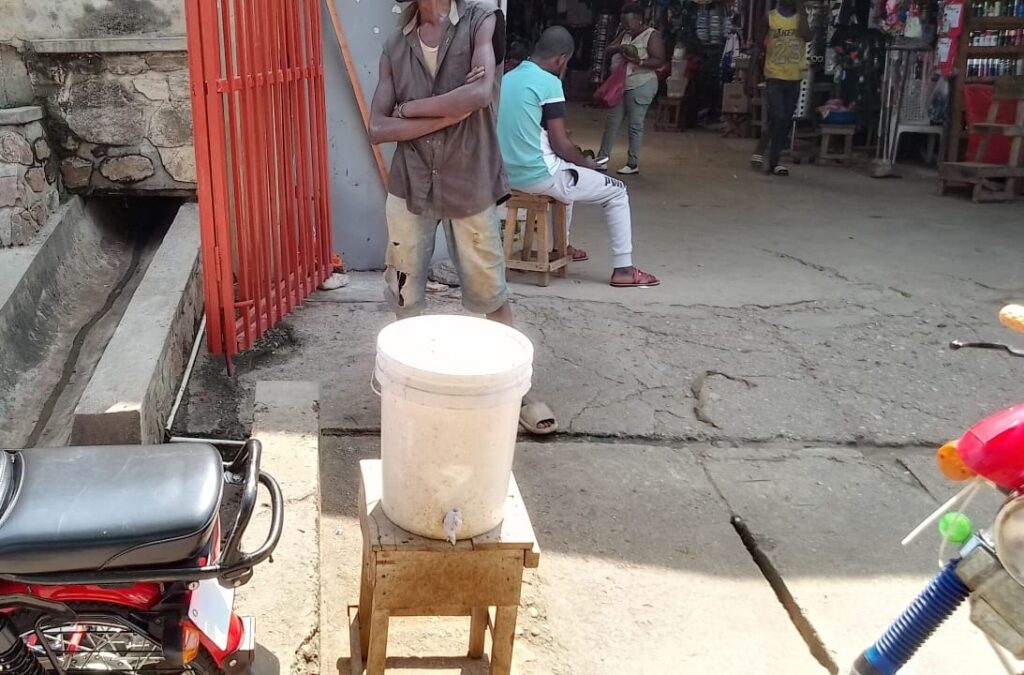
The current state of public hygiene infrastructure in Mukaza commune is a cause for alarm. Public spaces, which see high foot traffic daily, are particularly affected. For instance, in prominent locations like the Brarudi kiosk in the city center and the central parking area, there are currently no taps or buckets with soap available for users to wash their hands. This critical absence extends to various other public access points throughout the commune, creating an environment where basic hand hygiene is difficult to maintain. Even in places where facilities are present, their utilization is not consistent. At the bustling Jabe market, for example, water buckets and soap are indeed available at its entrances, yet many individuals are observed not utilizing these facilities for handwashing, showing a potential gap in public awareness or practice.
Past Practices and Current Risks
The current absence of readily available handwashing facilities exposes the population to a range of preventable health risks. These risks include the increased prevalence of diarrheal diseases, respiratory infections, and various other hygiene-related illnesses that can spread rapidly in communities. This situation represents a significant regression from past practices. During the challenging coronavirus period, almost all businesses within Mukaza commune demonstrated a strong commitment to public health by providing water buckets and soap for customers. This practice, widely adopted then, ensured a baseline of public hygiene that is now largely absent, leaving the community more vulnerable to the spread of infectious diseases.
Calls for Renewed Action
In response to these deteriorating conditions, local voices are calling for renewed action to prioritize public health. Hervé Girukwishaka, a concerned resident, stated unequivocally that handwashing devices should be systematically installed in all public places to limit health risks. He further elaborated, "Ces dispositifs devraient être systématiquement installés dans tous les lieux publics, afin de limiter les risques sanitaires." Grâce Kwizera, another community member, emphasized the broader impact of such facilities, noting, "Il ne s’agit pas seulement d’une infrastructure, mais aussi d’un outil d’éducation sanitaire qui sensibilise indirectement la population à l’importance de l’hygiène au quotidien." Kwizera noted that the presence of handwashing facilities not only provides a practical means of hygiene but also encourages the adoption of good habits and serves as a continuous health education tool. Kwizera also recalled past practices, stating, "A cette époque, presque toutes les maisons de commerce disposaient des seaux d’eau avec du savon, afin que chaque client se lave les mains avant d’entrer ou de sortir. Mais, aujourd’hui, ces mesures ont été abandonnées et on ne trouve presque plus de robinets ou de seaux d’eau devant les magasins, boutiques ou restaurants, aussi bien au centre-ville que dans les quartiers de Mukaza. Pourtant, ce sont des endroits où circulent énormément de personnes." Chantal Butoyi noted the critical necessity for public outreach, asserting, "Il y a un besoin urgent de sensibilisation, afin que la population adopte davantage, les mesures de prévention les maladies liées aux mains sales." Butoyi's statement shows the importance of awareness campaigns to encourage the population to adopt preventive measures against diseases linked to dirty hands.
Community Health Imperative
Washing hands is a fundamental and highly effective practice that protects individuals and significantly contributes to the overall health of the entire community. This basic hygiene practice is key in mitigating the spread of various illnesses, particularly in densely populated areas like Mukaza commune. Adopting consistent handwashing habits can significantly reduce the incidence of preventable diseases and enhance public well-being. The collective health of the commune relies on the consistent implementation and utilization of these simple yet powerful preventive measures.