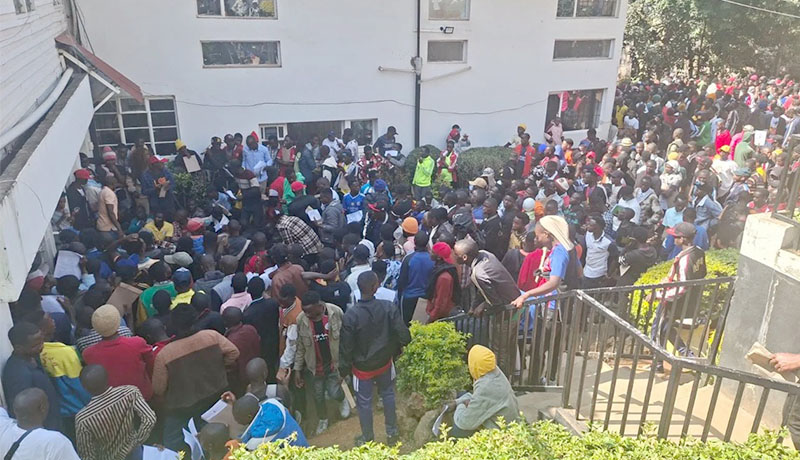
Kenyan President William Ruto initiated the closure of certain activities exercised by foreigners starting Monday, September 7, a decision that has prompted fear and displacement among Burundian nationals. This directive, targeting specific economic activities undertaken by non-citizens, has sent ripples of concern through the foreign resident community in Kenya. Hundreds of Burundian refugees in Mombasa's Likoni area subsequently fled their homes, seeking refuge at a local church. This relocation followed incessant threats directed at the community, according to Citizen TV Kenya. The immediate flight of these refugees notes the profound and often destabilizing impact such policy shifts can have on vulnerable populations.
The directive from President Ruto targets specific economic activities undertaken by non-citizens, leading to uncertainty regarding the status and livelihoods of foreign residents in Kenya. The flight of Burundian refugees from Likoni shows the immediate impact of these developments on vulnerable communities. Their move to a church signifies a search for safety and sanctuary amidst the heightened climate of intimidation. The situation in Mombasa reflects broader concerns among Burundian nationals across Kenya regarding their security and long-term presence in the country. This atmosphere of apprehension has been exacerbated by reports of increased harassment and calls for non-citizens to leave.
Harassment and Exodus
Burundian nationals in Kenya are reportedly facing increased threats and intimidation, contributing to a climate of fear. Consolate Majambere, a donut seller in Mombasa, described the daily pressure, stating that Kenyan citizens are constantly telling them to leave and return home. This sentiment of unwelcome has created a palpable sense of insecurity among the community. Another vendor in Mombasa reported that some Kenyans refuse to pay for goods, consuming merchandise without payment, further illustrating the challenges faced by the community and the erosion of their economic stability. In response to the escalating situation and the perceived threat to their well-being, Célestin Majambere, who works in the hotel sector, is currently in the process of repatriating his family from Kenya, a testament to the severity of the situation on the ground.
Prime Mbarubukeye, president of the National Observatory for the Fight Against Crime and Torture (ONLCT), denounced what he described as "jealousy" and "visceral hatred" towards Burundians in Kenya. Mbarubukeye stated that hostility towards Burundians dates back approximately three months, when Kenyan Member of Parliament Béatrice Elachi allegedly called for citizens to target them. This alleged call to action is seen by many as a significant turning point, contributing to the current climate of animosity. The ONLCT president noted severe consequences for those in irregular situations, painting a grim picture of their plight. According to Prime Mbarubukeye, 234 Burundians in irregular situations have been arrested and imprisoned in four underground cells, which he referred to as Mahano, a term that evokes a sense of dread and severe hardship. The conditions within these facilities are a major concern for human rights advocates.
Mbarubukeye also reported a significant number of fatalities among the community, adding a tragic dimension to the crisis. He stated that 73 other irregular Burundian migrants have been murdered by unidentified individuals, a claim that, if substantiated, points to a grave human rights situation. Emphasizing the gravity of the situation, Mbarubukeye called for urgent action, stating, "73 burundais auraient été assassinés, 234 autres ont déjà été arrêtés et emprisonnés." This stark declaration shows the urgent need for intervention and investigation. He further urged the Burundian government to engage in discussions with Kenyan authorities to address the crisis, adding, "Il doit aussi engager des discussions avec les autorités kényanes afin de suspendre toute expulsion collective et de privilégier un examen individuel des dossiers." This plea for individual assessment rather than collective expulsion notes a desire for due process and humanitarian consideration.
Policy and Legal Context
Kenyan President William Ruto stated that Kenya is not strengthening foreign investor confidence to welcome "street vendors from elsewhere." This statement, delivered with an air of nationalistic resolve, signaled a clear shift in policy direction regarding the presence and activities of foreign nationals in the informal sector. Following this, Kenyan authorities announced a ninety-day grace period for foreigners engaged in commercial activities to regularize their status. This period is intended to allow non-citizens to comply with new regulations, although the specifics of these regulations and the feasibility of compliance for many remain unclear. After this period, license rules will be strictly applied, indicating a more stringent enforcement regime. President Ruto also mentioned a bill currently in Parliament that proposes certain commercial activities not be authorized for foreigners in Kenya, suggesting a legislative framework to solidify these new restrictions. This proposed legislation could have broad implications for foreign nationals seeking to establish or continue their livelihoods in Kenya.
The President's statements and the proposed legislation contrast sharply with existing regional agreements that aim to foster integration and free movement. The protocol on the Common Market within the East African Community (EAC), adopted on November 20, 2009, explicitly recognizes the freedom of establishment for individuals in a member country of their choice. This foundational principle is designed to promote economic cooperation and mobility across the region. Guillaume Ndayisaba, a legal expert, explained that the Common Market protocol of the EAC is based on "four freedoms": the free movement of goods, people, services, and capital. These principles are designed to facilitate economic integration and mobility across member states, allowing citizens of one EAC country to reside and conduct business in another without undue restrictions. The spirit of these freedoms is to create a unified economic bloc where citizens can thrive across borders.
The current measures being pursued by Kenyan authorities, particularly regarding restrictions on commercial activities for non-citizens and the proposed parliamentary bill, appear to challenge the provisions outlined in the EAC Common Market protocol. The imposition of new licensing requirements and the potential exclusion of foreigners from specific commercial activities could be seen as a direct contravention of the freedom of establishment principle. The grace period for regularization signals an immediate impact on foreign nationals, including Burundians, who may find their established livelihoods under threat if they cannot meet the revised licensing requirements. This situation creates a dilemma for many, forcing them to either comply with potentially prohibitive new rules or face the prospect of losing their source of income and even facing expulsion. The implications for regional integration and the future of the EAC's common market are significant, as such unilateral actions could undermine trust and cooperation among member states.
Regional and International Reactions
Burundian Minister of Foreign Affairs, Édouard Bizimana, confirmed that his department had received various testimonies and images depicting the mistreatment of Burundian nationals in Kenya. These reports, which include graphic evidence, have raised serious concerns within the Burundian government. Separately, the NGO ONLCT "Où est ton frère?" reported that 73 Burundians have been assassinated and 234 others imprisoned in Kenya amid the ongoing situation, corroborating some of the most alarming claims. In response to these distressing developments, the Burundian embassy in Kenya announced it would freely issue "laissez-passer" (travel documents) to any Burundian wishing to return to their home country. This initiative aims to facilitate the safe repatriation of those who feel their lives are at risk or who can no longer sustain themselves in Kenya. Minister Bizimana also called for Burundians living elsewhere in the sub-region to be treated with respect, emphasizing the need for humane treatment and adherence to regional agreements on human rights and free movement.
Révérien Ndikuriyo, Secretary General of Burundi's ruling CNDD-FDD party, announced that 11,000 laissez-passer would be issued to Burundians in Kenya by Friday, indicating the scale of the expected repatriation effort. This large number shows the widespread fear and desire to return home among the Burundian community in Kenya. Ndikuriyo also revealed that nearly 600 Burundians had been arrested in Tanzania due to a lack of proper travel documents, indicating broader regional challenges for Burundian migrants who often move across borders in search of safety or economic opportunities. Vianney Ndayisaba, president of the Association of Burundians in Kenya (Aluchoto), characterized President Ruto's declarations as discriminatory, stigmatizing, and contrary to the spirit of the East African Community (EAC). He argued that such statements not only fuel xenophobia but also undermine the very principles of regional cooperation that the EAC was built upon. Ndayisaba urged, "Le président Ruto devrait retirer ses propos," and called upon the EAC, the African Commission on Human and Peoples' Rights, and other competent international bodies to demand an independent and impartial investigation into the reported abuses, stressing the importance of accountability and justice.
Innocent Bano, a geopolitologist, described President Ruto's discourse as "very dangerous" and against international law, expressing concern about a potential "contagion phenomenon" akin to xenophobic violence observed in South Africa. Bano's warning notes the risk that such rhetoric from a head of state can inspire similar sentiments and actions across the region, potentially leading to widespread instability and violence against foreign nationals. Bano stated that if deaths are registered following the discourse, the Kenyan state would bear responsibilities under international law. "S’il y a des morts qui seront enregistrées suite à ce discours, vous comprendrez que l’État kényan répondra à certaines responsabilités qui relèvent des droits internationaux," Bano asserted, emphasizing the legal ramifications for the Kenyan government should the situation escalate further. He further noted the significance of the message originating directly from the head of state, distinguishing it from a statement by immigration officials. "Ce n’est pas un discours qui a été prononcé par le chef de l’immigration. C’est un discours qui a été prononcé par le numéro un du pays," Bano added, showing the weight and authority behind President Ruto's words. Political scientist Guillaume Ndayikengurutse noted the inherent limits of international law in such contexts and pointed to the fragile state of the EAC, which has contended with inter-state problems for years. This suggests that while international legal frameworks exist, their enforcement can be challenging, especially when regional blocs are themselves facing internal strains. "De toute façon, on ne va pas quitter un pays parce qu’on est satisfait," Ndayikengurutse remarked, showing the difficult circumstances driving people to leave their homes and seek refuge or opportunity elsewhere, often making them particularly vulnerable to policy changes and social hostility.