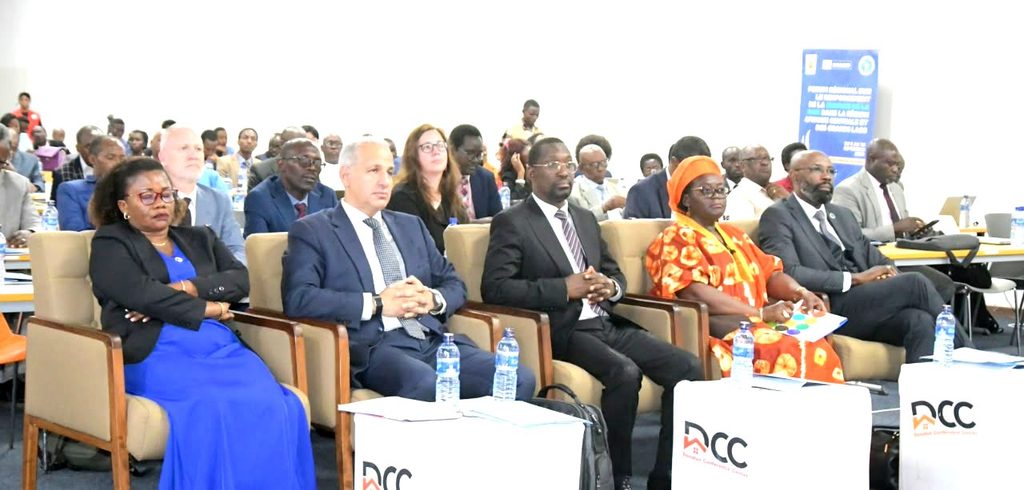
A regional forum focused on strengthening the culture of peace in Central Africa and the Great Lakes convened on Tuesday, September 8, 2026. The event, held at the Donatus Conference center, brought together key stakeholders to discuss regional stability. The forum was a collaborative effort, organized by the Economic Community of Central African States (CEEAC), the United Nations Educational, Scientific and Cultural Organization (Unesco), and the government of Burundi. Participants aimed to foster dialogue and propose strategies for enduring peace across the vital regions.
Foundations of Lasting Peace
François Havyarimana, Burundi's Minister of National Education and Scientific Research, emphasized that constructing peace extends beyond merely silencing weapons. "La paix que l’on veut construire ne se limite pas au silence des armes, mais qu’elle est une œuvre faite de justice, de transparence, de partage et de la dignité retrouvée pour chaque citoyen de la sous-région," Havyarimana stated, showing that peace is built on justice, transparency, sharing, and dignity for every citizen in the sub-region. He also linked sustainable development directly to enduring peace, asserting that lasting peace is unattainable without a genuine culture of peace. "Nous recherchons au jour le jour le développement, mais il ne peut y avoir de développement durable sans une paix durable. De même, il ne peut y avoir de paix durable sans une véritable culture de paix," the Minister remarked.
Havyarimana further affirmed Burundi's commitment to ensuring the full participation of women in conflict prevention efforts. "Je veux également, devant vous, réaffirmer l’engagement du Burundi, et je le crois, de toute l’Afrique, en faveur de la pleine participation des femmes à la prévention des conflits," he declared. He noted Burundi's own journey in peace consolidation as a source of hope for the broader region. "Si le Burundi a accepté d’accueillir ce forum, c’est parce que notre pays connaît, dans sa chaire et dans son histoire, le prix de la paix perdue et la valeur de la paix retrouvée," Havyarimana concluded, indicating that Burundi's experience with both lost and regained peace provided valuable lessons for the forum.
Regional Efforts and Challenges
Marcellino Nkoho Mbula, representing the Economic Community of Central African States (CEEAC), showed the critical role of education in peacebuilding. He emphasized the importance of school systems in instilling values such as honor, patriotism, pride, and love for one's peers and the continent. Mr. Mbula affirmed CEEAC's commitment to regional cooperation, stating, "La CEEAC réaffirme ainsi sa détermination à renforcer la coopération avec la région des Grands-lacs et les autres mécanismes nationaux, afin de transformer nos facultés en opportunités de solidarité et d’action communes." This notes CEEAC's ongoing efforts to strengthen collaboration with the Great Lakes region and other national mechanisms to convert capabilities into opportunities for solidarity and joint action. CEEAC is actively engaged in building a full regional architecture for peace and security.
Mohamed Elfarnaway, representative of the Director-General of Unesco, noted that Central Africa and the Great Lakes region have endured complex crises for nearly three decades. Mr. Elfarnaway articulated the forum's objective, stating, "En cohérence avec le mandat de l’Unesco et l’agenda de l’Union africaine, le forum vise à catalyser un changement de paradigme fondamental : passer de la simple gestion de crise à la construction active d’une paix durable, fondée sur la justice sociale, l’inclusion et la cohésion." He explained that the forum aims to shift from crisis management to actively building lasting peace grounded in social justice, inclusion, and cohesion, aligning with Unesco's mandate and the African Union's agenda.
Broader Goals and Commitments
Mohamed Elfarnaway, representative of the Director-General of Unesco, articulated the forum's overarching objective: to catalyze a fundamental paradigm shift from merely managing crises to actively constructing lasting peace. This peace, according to Mr. Elfarnaway, must be firmly based on principles of social justice, inclusion, and cohesion. He emphasized that achieving enduring peace necessitates addressing the foundational causes of conflicts rather than solely focusing on emergency management. Mr. Elfarnaway noted that the forum's goals align with both Unesco's mandate and the broader agenda of the African Union, seeking to move beyond reactive measures towards proactive peacebuilding.
The initiative aims to embed a culture of peace deeply within the social fabric of the Central African and Great Lakes regions. Elfarnaway's remarks showed the necessity of a full approach that tackles underlying grievances and systemic issues contributing to instability. This strategic shift is designed to ensure that peace is not just the absence of conflict but a sustained state fostered by equitable conditions and shared societal values. By focusing on root causes, the forum seeks to establish a framework for long-term stability and development across the region.