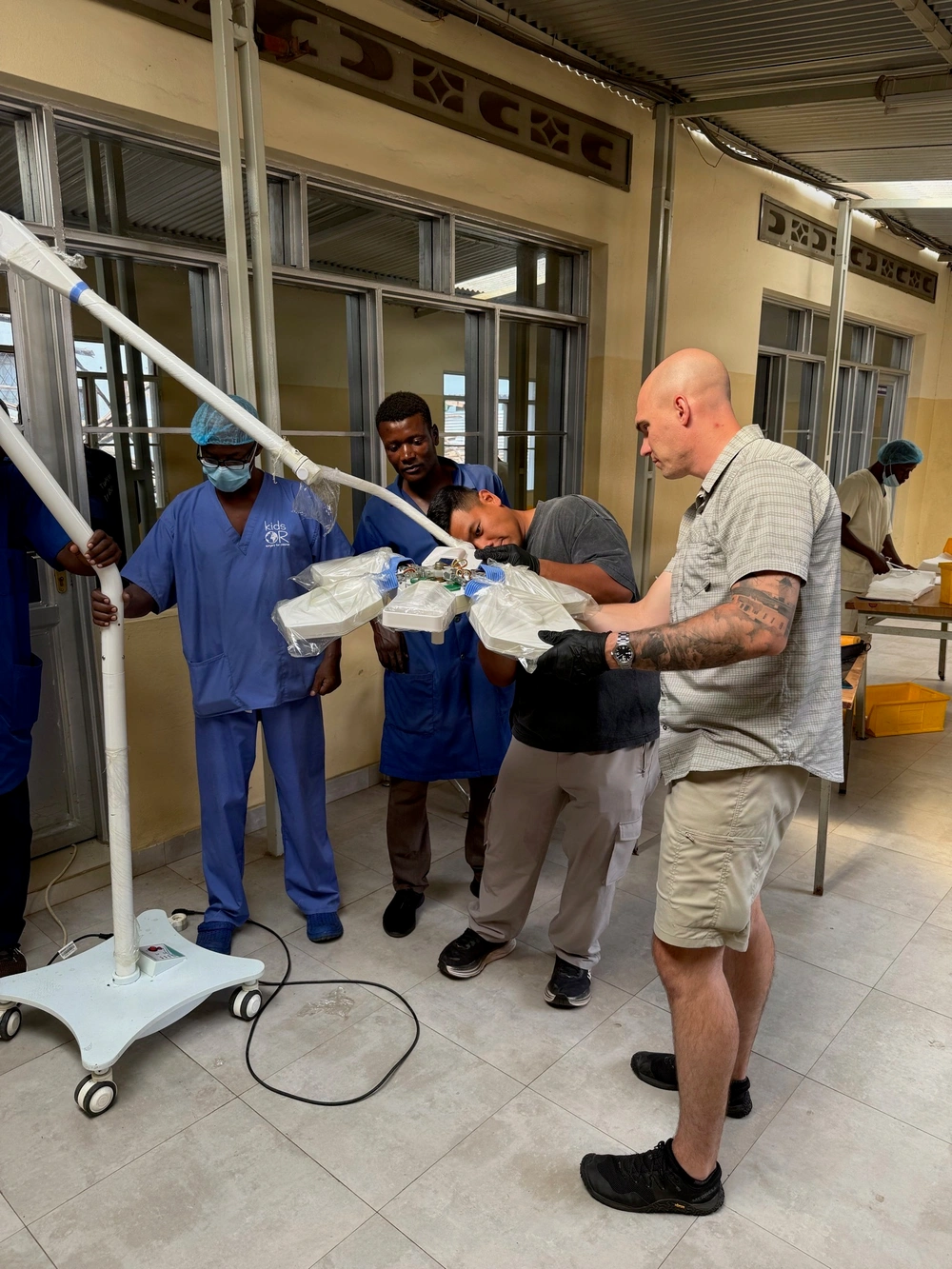
U.S. Army biomedical maintenance professionals from the 30th Medical Brigade conducted a joint readiness exercise with Burundi National Defence Force medical professionals on August 26, 2026. The teams worked together at Kamenge Military Hospital in Bujumbura, Burundi, focusing on assessing medical equipment. During the exercise, participants collaboratively addressed a range of simulated medical scenarios, including trauma, surgical, and infectious disease cases. The joint effort aimed to enhance the operational capabilities and interoperability of both nations' medical personnel in handling diverse health challenges. This collaborative engagement specifically involved U.S. Army biomedical maintenance professionals from the 30th Medical Brigade working side-by-side with their Burundian counterparts from the Burundi National Defence Force. Their primary focus was on the assessment and maintenance of critical medical equipment, a vital component of any effective healthcare system in both military and civilian contexts.
Exercise Details and Scope
The medical readiness exercise, known as MEDREX, took place at Kamenge Military Hospital in Bujumbura, Burundi. This specific MEDREX event saw U.S. Medical personnel embedded directly within the Burundian military hospital, fostering a close working relationship and immediate knowledge transfer. The exercise involved a series of practical scenarios designed to test and improve the participants' ability to respond to various medical emergencies. These scenarios included managing mass casualty incidents, performing complex surgical procedures under simulated conditions, and implementing rigorous infectious disease control protocols to prevent outbreaks. The integration of U.S. Personnel directly into the hospital's operations allowed for real-time collaboration and knowledge exchange with their Burundian counterparts, particularly in the treatment of trauma, surgical, and infectious disease cases. This hands-on approach facilitated a deeper understanding of each other's medical practices and equipment, ensuring that both teams could effectively work together in future joint operations or humanitarian missions. The focus on practical application during the MEDREX aimed to ensure that the skills and procedures practiced were directly applicable to real-world situations. The exercise concluded with a full review session, where participants discussed lessons learned, identified areas for further development, and outlined strategies to enhance their collective readiness and interoperability. This direct embedding of U.S. Personnel into the Burundian military hospital structure was a key feature of the MEDREX, promoting an immersive and highly collaborative training environment.
Objectives and Outcomes
The engagement significantly contributed to building U.S. Readiness, strengthening crisis response capabilities, and sharpening medical skills. For the American participants, the joint exercise allowed U.S. Army medical professionals to operate in an unfamiliar environment, adapting to local conditions, resource availability, and specific operational challenges. This experience is key for preparing personnel for deployments to diverse global settings, ensuring they can provide high-quality medical care regardless of location. For the Burundian medical teams, the collaboration provided an invaluable opportunity to refine their own procedures, integrate new techniques, and enhance their existing capabilities through direct interaction and shared expertise with their U.S. Counterparts. The shared experience aimed to enhance the ability of both nations to respond effectively to potential medical crises, whether these involve natural disasters, public health emergencies, or other situations requiring coordinated humanitarian aid and medical support. Both sides focused on practical applications, ensuring that the skills and knowledge exchanged could be directly applied in future operational contexts, thereby increasing the overall effectiveness of any joint response. This focus on practical, real-world application showed the strategic importance of the MEDREX in enhancing the preparedness of both the 30th Medical Brigade and the Burundi National Defence Force.
Context and Logistics
The exercise materials related to this joint readiness effort were created on August 25, 2026, one day prior to the exercise itself, ensuring all documentation was prepared for the event. Related information was officially posted on September 1, 2026, making the details of the exercise publicly available. The location for the exercise documentation is consistently listed as BUJUMBURA, BI, confirming the central role of Burundi's capital in this initiative. This information was issued by the U.S. Army Southern European Task Force, Africa, noting the strategic oversight and involvement of this command in fostering partnerships across the African continent. Digital assets related to the event include a specific Visual Information Record Identification Number (VIRIN) of 260826-D-A0963-8697. The associated image or document has a resolution of 1536x2048 pixels, indicating a high-quality visual record of the event. With a size of 897.65 KB, the digital content is readily accessible. As of the reporting date, the digital content has accumulated 10 web views, demonstrating initial public interest, and recorded 0 downloads, suggesting that the primary access has been direct viewing rather than local storage.