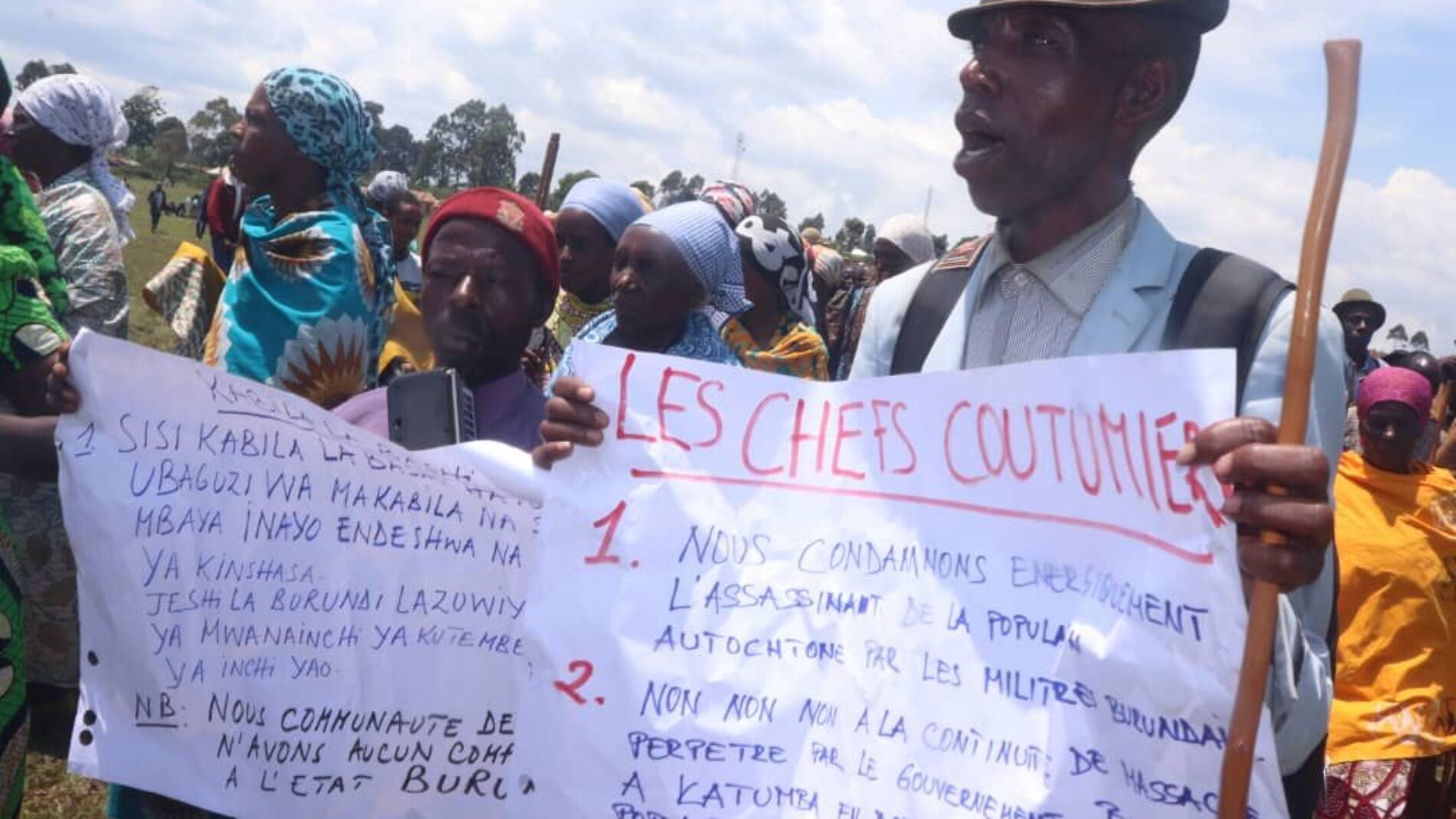
Two people were killed and six others injured in bombardments that struck the village of Ilundu/Basita, located in the Minembwe locality of Fizi territory, South-Kivu province, eastern Democratic Republic of Congo. The incident, which unfolded during the overnight hours, resulted in significant casualties and material damage within the rural community. The projectiles impacted a dwelling belonging to pastor Ruberanganizi and several school infrastructures, indicating a direct hit on civilian areas. This attack has further escalated concerns regarding civilian protection and regional stability in an already volatile part of the country.
The deceased were identified as 19-year-old Prince Runezerwa Mahiyaho, who tragically died upon arrival at the general hospital, and Résor Kigeri Mazuru, who reportedly died at the scene of the attack, succumbing immediately to the impact. The sudden loss of these individuals has cast a pall over the community, noting the devastating human cost of the ongoing conflict. Other victims, ranging in age from 18 to 58, were reported with varying conditions following the incident, requiring immediate medical attention for their injuries. The wide age range of those affected shows the indiscriminate nature of the bombardments, impacting various segments of the local population.
Attack Details and Victims
The bombardments took place during the overnight hours of Saturday, June 6, leading into Sunday, June 7, 2026. The timing of the attack, under the cover of darkness, likely contributed to the surprise and severity of the casualties. The projectiles caused significant material damage, including to two classrooms at the Ilundu Primary School. The destruction of educational facilities not only represents a loss of infrastructure but also disrupts the learning environment for children in the village, adding another layer of hardship to the affected community. The damage to civilian structures, including a pastor's home and a primary school, raises serious questions about the targeting and conduct of military operations in densely populated areas.
Among the six people injured in the attack were children, who are particularly vulnerable in such conflict situations. Bajeneza Murontsi, a 7-year-old second-year primary student, was one of the victims, sustaining injuries that required medical care. Another child, Nzabakiza Osée, aged 12, sustained serious wounds across multiple parts of his body, indicating the severe impact of the projectiles. The presence of these young victims among the injured shows the profound and tragic consequences of the bombardments on the most innocent members of society. The incident added to the toll of the overnight attack in the village of Ilundu/Basita, leaving a community grappling with loss and injury.
Attribution and Local Context
The bombardments were attributed to a joint operation involving the Armed Forces of the Democratic Republic of Congo (FARDC) and the National Defence Force of Burundi (FDNB). These forces are reported to be conducting operations in the wider Minembwe area, a region that has long been a flashpoint for conflict. The village of Ilundu/Basita, where the incident occurred, is situated within the Hauts Plateaux region, an area predominantly inhabited by members of the Banyamulenge minority community. This demographic context is often central to understanding the dynamics of conflict in the broader South-Kivu province, where ethnic tensions frequently intertwine with political and military objectives. The presence of the Banyamulenge minority in the Hauts Plateaux is a significant factor in the region's complex socio-political landscape, often placing them at the center of various armed confrontations.
Local civil society groups swiftly condemned the attack, expressing outrage over the civilian casualties and material destruction. The Network for the Protection of Civilians in the Hauts Plateaux issued a statement strongly criticizing the incident, noting the severity of the situation. The organization specifically noted that the victims of the recent bombardments were Banyamulenge civilians, emphasizing the disproportionate impact on this particular community. This assertion by the Network for the Protection of Civilians in the Hauts Plateaux adds a critical dimension to the understanding of the attack, suggesting that the Banyamulenge community continues to bear a heavy burden in the ongoing conflicts. In response to the violence, the Network for the Protection of Civilians in the Hauts Plateaux made an urgent appeal. The organization called upon both the competent national authorities and the international community to take decisive action to address the deteriorating security situation in the Hauts Plateaux of Minembwe. Their appeal showed the urgent need for intervention to protect civilians and stabilize the volatile region, preventing further loss of life and displacement.
Regional Conflict Dynamics
The bombardments occur within a complex regional conflict in eastern Democratic Republic of Congo, characterized by state rivalries, numerous armed groups, and shifting local alliances. This intricate web of actors and interests often leads to unpredictable and devastating outcomes for civilian populations. The M23, an ex-rebellion, is active in several areas of eastern Congo and is presented as having local allies in Minembwe, notably the Twirwaneho armed group, which is composed mainly of young Banyamulenge fighters. This alliance further complicates the conflict landscape, as local groups become entangled in broader regional power struggles.
The Democratic Republic of Congo and Burundi regularly accuse Rwanda of supporting the M23 and playing a destabilizing role in the region. These accusations fuel diplomatic tensions and contribute to the prolonged instability in eastern DRC. Rwanda, however, rejects these accusations, claiming instead that Kinshasa and Gitega cooperate with the Democratic Forces for the Liberation of Rwanda (FDLR), a group hostile to Rwanda. This counter-accusation notes the deep-seated mistrust and conflicting narratives among the regional powers, making a resolution to the conflict exceedingly difficult. Burundi maintains that its forces operating in eastern DRC do so under a bilateral agreement with Kinshasa, with the stated objective of restoring security. This justification for the presence of Burundian troops in Congolese territory is often met with skepticism by various observers and local populations, especially when such operations result in civilian casualties.
Official Response and Verification
No official reaction from the Armed Forces of the Democratic Republic of Congo (FARDC) or the National Defence Force of Burundi (FDNB) had been obtained regarding the allegations at the time of publication. This lack of immediate official comment leaves many questions unanswered regarding the circumstances of the bombardment and the responsibility for the civilian casualties. An independent verification of the exact circumstances of the incident, including the type of projectiles used and their trajectory, was not yet available. The absence of such verification makes it challenging to definitively ascertain the precise details of the attack and its perpetrators, further complicating efforts to hold those responsible accountable and to provide justice for the victims. The ongoing silence from the implicated military forces only adds to the urgency for a thorough and impartial investigation into the tragic events in Ilundu/Basita.