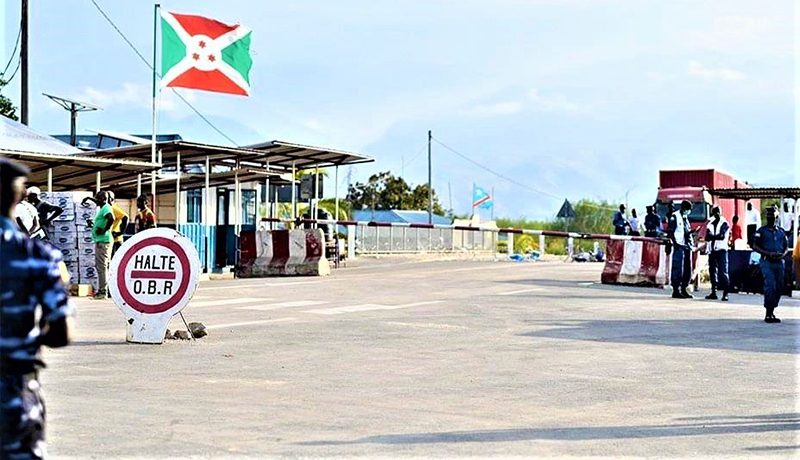
Burundi's Ministry of Public Health announced new prevention measures against Ebola virus disease (EVD) on Wednesday, May 27, 2026, effective May 28, 2026. The full set of measures, detailed in an official statement from the Ministry, are being implemented at all entry points for travelers, following the declaration of EVD on May 15, 2026, in the Democratic Republic of Congo and Uganda. The World Health Organization (WHO) considers EVD a public health emergency of international concern, prompting Burundi's proactive stance to safeguard its population and prevent the cross-border spread of the virus. This swift action shows the gravity with which public health authorities are treating the regional outbreak.
New Travel Protocols Detailed
Travelers arriving from or transiting through the Democratic Republic of Congo or Uganda are required to complete a traveler surveillance form truthfully upon their arrival at Melchior Ndadaye International Airport. This mandatory form is a key component of the enhanced surveillance strategy. Health checks, which include temperature taking, will be conducted for all individuals entering Burundi at all designated entry points, encompassing the airport, land borders, and ports. These rigorous checks are designed to identify potential cases early and prevent further transmission within the country.
Anyone exhibiting signs or symptoms consistent with Ebola virus disease will be managed in accordance with established national standard operating procedures. These procedures ensure that suspected cases receive immediate and appropriate medical attention, while also implementing strict infection control protocols to protect healthcare workers and the community. Travelers are strongly encouraged to report any abnormal signs or symptoms to the nearest health facility or by calling the toll-free number 117. This dedicated hotline provides an accessible channel for individuals to seek guidance and report concerns, reinforcing community-level vigilance. All travelers and transport operators are mandated to adhere to critical prevention and infection control measures, such as maintaining hand hygiene and practicing physical distancing. These basic yet essential practices are vital in curbing the spread of infectious diseases. Should any transport vehicle be used by a sick or suspected individual, it will undergo a thorough decontamination process to eliminate any viral contamination before further use.
Ebola Outbreak Context
The Ebola virus disease (EVD) strain identified in the Democratic Republic of Congo and Uganda has been confirmed as the Bundibugyo strain. This particular strain is one of several known to cause Ebola virus disease in humans, and its presence in neighboring countries has significantly heightened regional health concerns. The declaration of this strain in neighboring countries prompted Burundi's Ministry of Public Health to implement its full prevention measures, recognizing the potential for rapid cross-border transmission. While the article details the specific travel and health screening protocols now in effect, the identification of the Bundibugyo strain provides critical context for the public health response, informing the specific strategies for detection and containment. The World Health Organization (WHO) has classified the overall situation as a public health emergency of international concern, influencing regional health authorities to heighten surveillance and control efforts and emphasizing the global significance of this health crisis.
Ongoing Vigilance and Adaptation
Burundi's Ministry of Public Health indicated that the implemented prevention measures are subject to review and revision. Official communications from the Ministry stated the protocols would be adapted as necessary, reflecting an ongoing commitment to public health safety in response to the evolving situation concerning Ebola virus disease in neighboring countries. This approach allows for flexibility in adjusting strategies based on new information or changes in the epidemiological landscape. The initial set of measures, which include traveler surveillance forms, health checks, and adherence to infection control, represent a foundational response aimed at rapidly containing any potential spread. Future adjustments could encompass modifications to screening procedures, updates to public awareness campaigns, or changes in resource deployment, depending on the observed effectiveness of current measures and the regional progression of the disease. This commitment to continuous evaluation is key for an effective and sustained public health response.