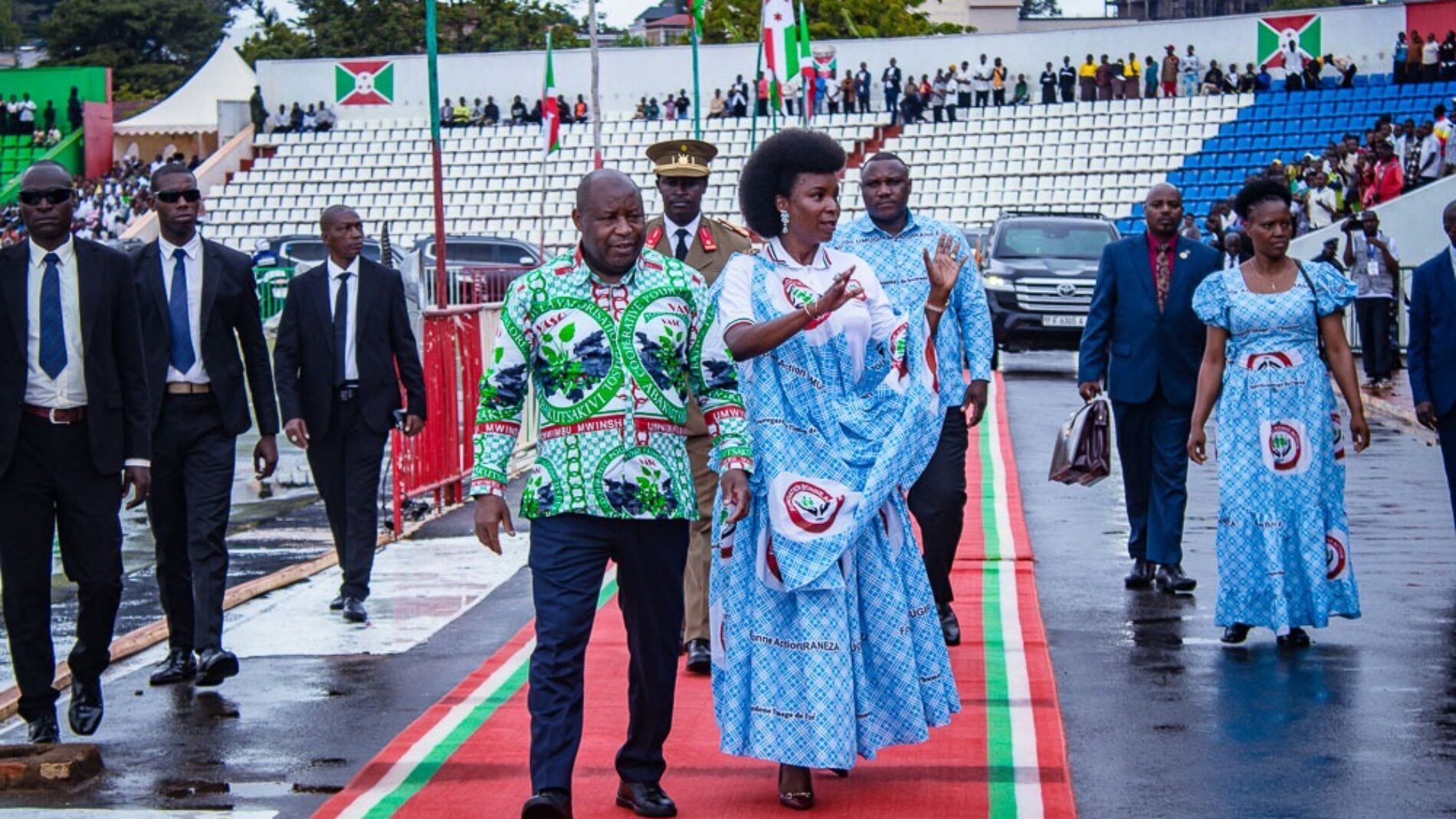
International Labour Day was celebrated on May 1, 2026, at the Ingoma stadium in Gitega, Burundi's political capital, amidst strong tensions between workers' representatives and Burundian authorities. The celebration occurred against a backdrop of a rising cost of living and a national purchasing power crisis, according to reports. This context of economic hardship fueled the strong tensions observed between workers' representatives and Burundian authorities throughout the Labour Day celebration.
President Évariste Ndayishimiye acknowledged the economic difficulties facing the country during the event. He stated that general salary increases were "quasiment impossible" due to a persistent budget deficit. President Ndayishimiye further claimed that "95 %" of complaints regarding the cost of living originated from civil servants based in Bujumbura, rather than being a widespread national issue. This assertion by President Ndayishimiye suggested a localized rather than universal impact of the economic challenges.
Economic Woes Fueling Worker Discontent
Many families in Burundi are reportedly struggling to access essential needs such as food, housing, and healthcare. Workers also face increasing difficulties in meeting children's basic needs, including paying school fees. These struggles highlight the severe impact of the economic climate on daily life for many Burundian households. Compounding these issues, persistent fuel shortages are significantly disrupting both the transport of people and goods across the country, according to reports. The widespread fuel shortages have a cascading effect, impacting various sectors of the economy and the daily routines of citizens. Several urban centers also lack potable water, further exacerbating daily challenges and contributing to the overall hardship experienced by residents. The road infrastructure connecting provincial capitals is described as being in a degraded state, adding to logistical complications and hindering economic activity and connectivity across the nation.
Civil servants' salaries are widely characterized as 'below the poverty line' and disconnected from the prevailing inflation rates. This disparity between income and cost of living leaves many public sector employees in a precarious financial situation. For instance, an unnamed teacher earns approximately 350,000 FBu per month, a sum considered insufficient to cover rent, schooling, and food expenses. This specific example illustrates the broader challenge faced by many civil servants. In response to these conditions, workers are demanding salary increases and the restoration of annual advancements, seeking tangible improvements to their economic standing. The overall quality of work across various sectors is also affected by fuel shortages, difficulties with internet access, a lack of foreign currency, and the degraded public infrastructure. These systemic issues collectively hinder productivity and efficiency across the Burundian workforce.
Burundian President Évariste Ndayishimiye called for citizens to invest more in productive activities, which he stated would help generate foreign currency for the nation. This call to action aims to stimulate economic growth and address the country's foreign currency shortages. President Ndayishimiye also issued a warning to public enterprise officials, cautioning them against malversations, showing a commitment to combating corruption within state-owned entities. Despite these economic challenges, May 1st is officially recognized as a public holiday and a paid day off in Burundi, offering workers a respite from their daily routines and a moment for reflection on labour rights.
Global Labour Day Context
Workers are gathering in cities worldwide to mark International Labour Day, with demonstrations and events noting various economic and political concerns. These global observances show the universal nature of labour struggles and the collective desire for improved working conditions and economic justice. In Istanbul, Turkiye, roads around Taksim Square were closed to accommodate marches, which later led to scuffles with police, illustrating the intensity of some of these demonstrations.
Concerns about the global economy are rising, with reports indicating apprehension over the United States-Israeli war on Iran and increasing energy costs. These geopolitical and economic factors contribute to a climate of uncertainty for workers globally. Fears of a global recession are also looming over Labour Day rallies, adding another layer of anxiety for employees and unions. The European Trade Union Confederation, which represents 93 trade union organisations across 41 European countries, issued a statement on these global economic anxieties. This broad representation notes the widespread nature of the concerns. "Working people refuse to pay the price for Donald Trump’s war in the Middle East," the European Trade Union Confederation stated. "Today’s rallies show working people will not stand by and see their jobs and living standards destroyed." This declaration reflects a strong stance against policies perceived as detrimental to workers' welfare.
Across Asia, labour leaders are vocal about workers' rights and the need for fair treatment. Josua Mata is a leader of the SENTRO umbrella group of workers’ groups in the Philippines, actively advocating for the rights of Filipino labourers. Renato Reyes leads the left-wing political group Bayan in the same country, contributing to the broader discourse on social and economic justice. Said Iqbal serves as president of the Indonesian Trade Union Confederation, playing a key role in representing the interests of Indonesian workers. These leaders exemplify the diverse and active labour movements across the continent.
In South America, demonstrations are being held in Chile, Bolivia, and Venezuela, reflecting regional concerns about economic policies and worker protections. In Argentina, workers protested on Thursday in the capital of Buenos Aires against President Javier Milei’s recent overhaul of long-held labour protections. These protests highlight strong opposition to reforms perceived as undermining worker benefits and security. Meanwhile, in Cuba, the foreign ministry hosted a gathering on Thursday, and Cubans are expected to mark International Labour Day with a mass rally and a march in Havana on Friday. This planned event demonstrates the government's role in organizing Labour Day observances in the country. In Europe, workers’ unions in France called for protests in Paris and other cities as part of the global observances, joining the international chorus of voices advocating for workers' rights.
Calls for Change and Government Response
The Confederation syndicale du Burundi (COSYBU) is advocating for increased urban transport options, specifically calling for the expansion of moto-taxis and tuk-tuks. This initiative aims to alleviate transport difficulties for urban dwellers and improve accessibility. Concurrently, the organization PARCEM has denounced the prevalence of nepotism and favoritism in accessing employment opportunities. PARCEM's critique notes systemic issues within the labour market that hinder fair access to jobs. President Évariste Ndayishimiye, addressing concerns about productivity, criticized public servants for what he described as excessive use of phones and social media during working hours. This commentary from the President shows a focus on improving efficiency within the public sector. Meanwhile, First Lady Angeline Ndayishimiye received recognition for her dedication to combating obstetric fistula and promoting maternal health initiatives. Her work notes efforts in public health and social welfare alongside the economic discussions.
Globally, income inequality is reported to be growing, creating significant disparities between the wealthy and the working class. The International Trade Union Confederation disclosed that at least four chief executive officers of major corporations each earned over $100 million in pay and bonuses last year. This stark figure illustrates the extreme concentration of wealth at the top of the corporate ladder. In response to these disparities, workers' rights coalitions are urging immediate action to curb extreme wealth. These groups are pressing governments to impose higher, fairer taxes on the wealthiest individuals and to limit what they consider excessive executive compensation. Their demands reflect a global movement towards greater economic equity and social justice. An umbrella group of activist and workers' organizations, known as May Day Strong, has called for protests across the United States. May Day Strong declared its stance as "workers over billionaires," encapsulating the central theme of their advocacy for economic rebalancing.
Divergent Perspectives on Labour Day
In Gaza, Palestinian workers canceled traditional May Day events, a somber reflection of the ongoing crisis in the region. This cancellation comes as approximately 550,000 workers across Gaza and the West Bank currently have no income, according to figures released by the Palestinian General Federation of Trade Unions. The situation notes the severe economic impact on the workforce in the region, where a significant portion of the population faces extreme financial hardship and unemployment. This stark reality in Gaza and the West Bank stands in contrast to the celebratory and protest-driven observances in many other parts of the world, showing the diverse circumstances under which Labour Day is marked globally. The cancellation of events and the widespread lack of income for Palestinian workers serve as a poignant reminder of the profound challenges faced by labour forces in conflict zones.