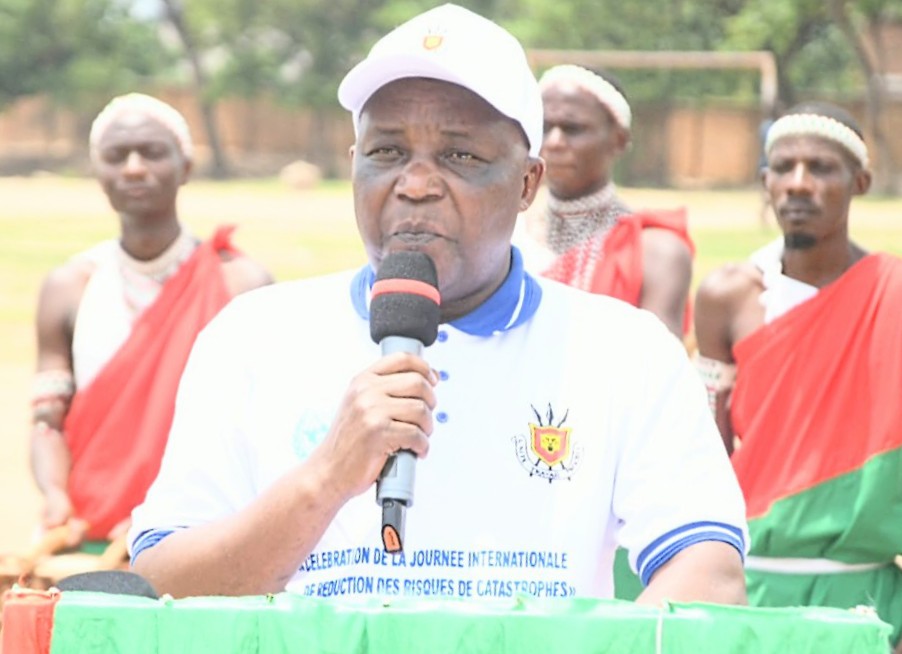
Burundi marked the 2026 edition of the International Day for Disaster Risk Reduction on 27 October 2026. The official gathering took place at the ETS Kamenge grounds. Burundi celebrated the International Day for Disaster Risk Reduction, 2026 edition, on October 27, 2026. The event took place at the ETS Kamenge grounds.
Emmanuella Muscara, head of the International Organization for Migration (IOM) commission, used the occasion to address the importance of individual responsibility in safety efforts. "Chaque famille doit contribuer à la prévention des risques," she stated. "Elle doits rester informée, prendre des mesures de précaution et appliquer des consignes de sécurité." Participants at the event focused on these disaster mitigation strategies to better protect local communities. As part of the proceedings, attendees engaged in discussions regarding how household-level actions contribute to broader national resilience. These discussions emphasized the necessity of public awareness and the practical application of safety guidelines in daily life to mitigate the impact of potential disasters.
Government Disaster Management Strategy
Léonidas Ndaruzaniye, the Minister of the Interior, Community Development and Public Security, leads the government response to climate-related threats within the country. Léonidas Ndaruzaniye is the Minister of the Interior, Community Development and Public Security. Authorities are currently implementing the National Strategy for Disaster Risk Prevention and Management to guide these efforts. The government is implementing the National Strategy for Disaster Risk Prevention and Management. This administrative framework aims to standardize response protocols and improve institutional readiness against natural hazards. The strategy integrates multiple sectors to ensure that disaster mitigation remains a priority for the government. Officials intend for these measures to reduce the vulnerability of communities across Burundi. By centralizing these efforts, the ministry seeks to ensure that resources are allocated efficiently to areas identified as high-risk.
Long Term Development Frameworks
Burundi integrates disaster risk reduction into its broader economic and social planning through two primary frameworks. Officials currently utilize the National Development Plan 2018-2027 and the National Vision 2040-2060 to align local safety initiatives with the country's long-term developmental goals. The government is utilizing the National Development Plan 2018-2027 and the National Vision 2040-2060. These documents serve as the foundational policy instruments for coordinating government efforts across various sectors. By linking disaster risk reduction to these long-term visions, the government ensures that safety and resilience are embedded into the structural development of the nation.
Complementing these long-term frameworks, the government is updating the Multi-risk Contingency Plan 2026-2028. This specific plan provides a targeted approach to managing immediate threats and seasonal hazards. By revising this document, authorities aim to strengthen institutional preparedness and ensure that response mechanisms remain current with evolving climate and environmental conditions. The updated plan establishes specific protocols for emergency actions, providing a technical bridge between overarching national strategies and the operational needs of local communities. Through these coordinated efforts, the administration works to maintain a consistent and effective approach to national security and public safety.