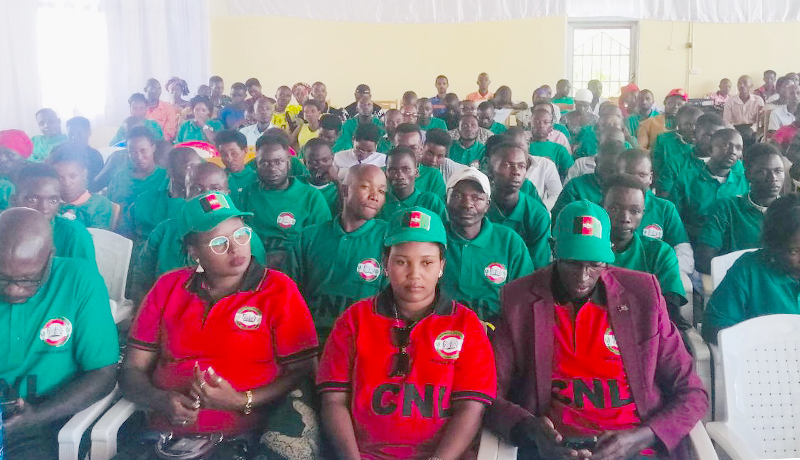
A leadership dispute has emerged within Burundi's Congrès national pour la liberté (CNL) party, pitting its founder, Agathon Rwasa, against Nestor Girukwishaka, ahead of the 2027 elections. The conflict centers on the party's presidency, prompting Mr. Rwasa to file a complaint with the Supreme Court. The CNL party was established by Agathon Rwasa in February 2019, and a verdict in the ongoing legal battle is anticipated on July 16, 2026.
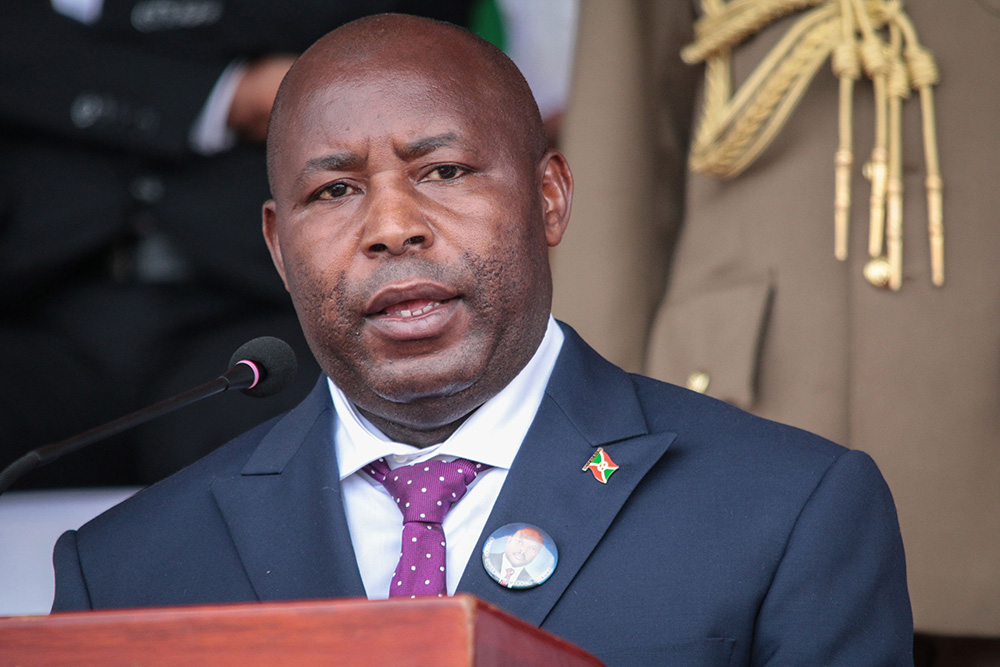
Agathon Rwasa stated, "May the Supreme Court say what is right because the Burundian nation thirsts for it and needs it to emerge from the quagmire." He added, "As long as I still breathe, it is my duty to contribute to Burundi's development." Nestor Girukwishaka, however, maintained that the "so-called camp of Agathon Rwasa does not exist, given that legality has been established in due form." Mr. Girukwishaka expressed confidence that "the Burundian justice will continue to read the law as the authorized bodies did in 2024 after the congress."
The Legal Battle Unfolds
An extraordinary congress was convened on March 10, 2024, in Ngozi by a group described as 'frondeurs' against Mr. Rwasa. This event resulted in Nestor Girukwishaka being placed at the head of the party. The faction supporting Mr. Rwasa, however, considers the Ngozi congress to have been held in violation of the party's statutes. Mr. Girukwishaka stated that for the current CNL party leadership, "the so-called camp of Agathon Rwasa does not exist, given that legality has been established in due form." He questioned whether Mr. Rwasa was unaware of the party's governing texts from its 2019 creation until his 2024 replacement. "We think that Burundian justice will continue to read the law as the authorized bodies did in 2024 after the congress," Mr. Girukwishaka added.
A hearing in the case, initially scheduled for November 7, 2024, was subsequently postponed to February 27, 2025. The trial was again adjourned, this time to September 25, 2025. Mr. Girukwishaka indicated his readiness to accept the legal process, stating, "If the law is read as such, we do not think there will be any disfavor. And in that case, nothing would push us not to accept the trial." He affirmed that if the law is not interpreted as expected, "we will plead our case like any Burundian citizen."
Mr. Girukwishaka clarified the party's stance on political engagement, noting, "Each party has the full right to discuss with other political formations for a common position on one or another question of national interest that it deems necessary. But, this in no way signifies steps towards forming a coalition." He reiterated that "coalitions are permitted in Burundi provided that what the law says on the matter is observed."
Regarding the internal dissent, Mr. Girukwishaka asserted, "We have no relations with the so-called camp of Agathon Rwasa, whom we consider as lost sheep." He added, "But, we continue to call on those who have gone astray to come to their senses and return to the fold because we have only one CNL party." Mr. Girukwishaka emphasized that "the party is not anchored around a single person," but relies on the "combined efforts of all militants." He concluded that if Mr. Rwasa or any other militant "goes astray and takes the wrong path, it will not prevent the party from continuing to strive for the triumph of its ideals."
Party Dynamics and Rwasa's Stance
Nestor Girukwishaka currently holds the presidency of the CNL party, a position he assumed after an extraordinary congress in March 2024. In April 2024, Agathon Rwasa and his team filed a complaint at the Supreme Court challenging Mr. Girukwishaka's leadership. Mr. Rwasa remains a member of the CNL, despite the internal divisions. Speaking on the legal proceedings, Mr. Rwasa stated, "May the Supreme Court say what is right because the Burundian nation thirsts for it and needs it to emerge from the quagmire." He added, "Indeed, it is written: 'Righteousness exalts a nation, but sin is a disgrace to any people.' (Proverbs 14:34)."
Mr. Rwasa also affirmed his commitment to Burundi's future, stating, "I am a citizen and at the same time a patriot. As long as I still breathe, it is my duty to contribute to Burundi's development, regardless of the stratagems of those who want to keep it under the yoke of exploiters and other spoilers." Addressing potential future political avenues, he remarked, "Regarding the 2027 presidential election, the principle is simple: when one door is closed, there are several others that are open." He distanced himself from the current leadership, noting, "I do not maintain relations with them because I am the antithesis of vassalage. To be on the same wavelength, they must free their minds from sectarianism and compromises with those who are plunging Burundi into precarity and mediocrity."
Regarding the 2027 elections, Mr. Rwasa expressed concerns about the electoral commission. "The CENI is like another cell of the presidential party. It is not up to the task it is supposed to accomplish," he said. He suggested that if the President is aware of the country's "pitiful state," then inclusive discussions are needed "to rectify the situation and project elections capable of providing our nation with worthy institutions." Mr. Rwasa concluded that "the preparations for the next presidential election in 2027 in their current state do not inspire hope." He recommended "a surge of awareness among leaders and led alike to prevent our country from continuing to sink and to come together to restore the image of this nation."
Electoral Commission Concerns
Organizers of the extraordinary congress that elevated Nestor Girukwishaka to the CNL party presidency accused Agathon Rwasa of embezzlement of funds and assets, alongside prolonged absences from statutory party meetings. The Minister of the Interior, Martin Niteretse, formally acknowledged the report and decisions emanating from this extraordinary congress on March 13, 2024. Despite these developments, Agathon Rwasa has voiced significant concerns regarding the impartiality of Burundi's electoral bodies ahead of the 2027 elections.
Provincial electoral commissions (CEPI) are currently being established and are operational across the country. However, Agathon Rwasa contends that the formation of these CEPIs has not met demands for inclusion, neutrality, or respect for political diversity. Rwasa stated that the National Independent Electoral Commission (CENI) "is like another cell of the presidential party" and "is not up to the task it is supposed to accomplish." He added that if the President recognizes the country's "pitiful state," then inclusive discussions are necessary "to rectify the situation and project elections capable of providing our nation with worthy institutions."
Rwasa concluded that "the preparations for the next presidential election in 2027 in their current state do not inspire hope." He recommended "a surge of awareness among leaders and led alike to prevent our country from continuing to sink and to come together to restore the image of this nation."
Implications for 2027
The presidential election is approaching in 2027, with a critical legal decision expected to shape the political landscape. The verdict in the leadership dispute within the Congrès national pour la liberté (CNL) is anticipated on July 16, 2026, during a public hearing at the Administrative Chamber of the Supreme Court.
This legal outcome will likely influence the CNL party's strategy for the upcoming elections. The CNL faction led by Nestor Girukwishaka has indicated it may either field its own candidate or engage in coalitions with other political entities. This flexibility suggests a strategic approach to the 2027 polls, depending on the legal resolution and evolving political dynamics.
However, the CNL under Mr. Girukwishaka also shares concerns about the National Independent Electoral Commission (CENI). The party considers the CENI to be far from meeting positive appreciation regarding its composition and modus operandi, echoing sentiments from other opposition figures. This perspective notes potential challenges regarding electoral integrity as the country moves closer to the 2027 presidential contest.