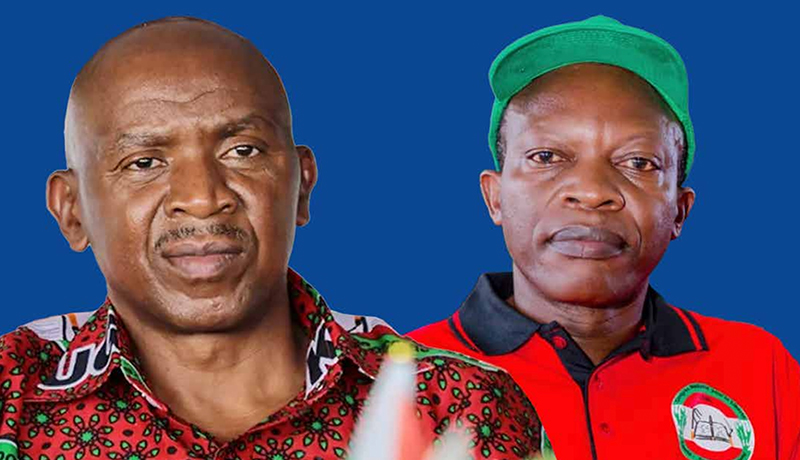
Rumors of a potential rapprochement within Burundi's Congrès National pour la Liberté (CNL) party are circulating two years after Agathon Rwasa's ousting as its head, though current leader Nestor Girukwishaka and Rwasa offer conflicting accounts. These rumors suggest a possible reconciliation between Rwasa's camp and the current leadership under Nestor Girukwishaka, an idea that has gained traction in political circles. Girukwishaka stated, "Aucune démarche de réunification n’est actuellement engagée. Personne n’a encore pris une telle initiative," adding, "Donc on n’a jamais exclu qui que ce soit, y compris Rwasa." He affirmed the CNL's readiness for 2027, saying, "Le CNL dispose de beaucoup de candidats capables de conduire son programme politique." However, Rwasa dismissed the idea, asserting, "C’est du blabla. Je n’en suis pas au courant. Epargne-moi ces suppositions !" He further claimed, "Nestor Girukwishaka et compères ont agi par procuration et ils sont sous le contrôle de ceux qui les ont manipulés."
Internal Divisions Persist
The judicial case concerning Agathon Rwasa's ousting from the CNL party, which he founded in 2019, has been pending before the administrative chamber of the Supreme Court for over two years. This prolonged legal battle shows the deep-seated nature of the divisions within the party. Kefa Nibizi believes that neither Agathon Rwasa, despite his electoral base, nor the CNL led by Nestor Girukwishaka, weakened by internal divisions, can dominate the political scene alone before the 2027 presidential election. This assessment notes the potential vulnerability of both factions if they remain fragmented.
The CNL party, under Girukwishaka, desires a presidential election in 2027 that meets democratic standards, organized by an an independent national electoral commission. "The CNL wants a competition that responds to the norms of a democratic election, organized by an independent national electoral commission, capable of organizing transparent, free and fair elections," Nestor Girukwishaka stated, emphasizing the party's commitment to electoral integrity. This call for an independent commission reflects a broader concern for democratic processes in Burundi. The Frodebu-Nyakuri party did not achieve electoral success in the 2010 communal elections, serving as a historical example of how internal divisions can impact electoral outcomes.
Leaders Express Skepticism
Kefa Nibizi, president of the Codebu party, commented on the internal dynamics of political parties, stating in an interview on June 6, 2026, that both factions would benefit from overcoming their current differences. He emphasized the importance of dialogue over ongoing legal proceedings, suggesting that a negotiated solution would be more constructive than continued litigation. Nibizi observed that "Les causes profondes demeurent généralement internes aux partis concernés," indicating that fundamental issues often originate within the parties themselves and require internal resolution. He also noted that "La séparation devient parfois brutale mais, la réconciliation est souvent lente," noting the difficulty of mending internal rifts once they have formed. This perspective suggests that while divisions can emerge quickly, healing them requires significant time and effort.
Agathon Rwasa, however, dismissed the notion of reconciliation as "du blabla," stating he was "pas au courant" of any such initiatives. He claimed that "Nestor Girukwishaka et compères ont agi par procuration et ils sont sous le contrôle de ceux qui les ont manipulés." Rwasa characterized any supposed rapprochement as merely a "marché de dupes," implying that any overtures for unity are disingenuous or designed to mislead. Rather than focusing on internal party reconciliation, Rwasa proposes a national conference to analyze the state of governance in Burundi and redefine future perspectives for the country. He asserted, "Quant aux élections de 2027, je pense que le point de repère est à chercher ailleurs," suggesting broader issues beyond the CNL's internal divisions need to be addressed for the country's future. This proposal indicates Rwasa's desire to shift the focus from party-specific disputes to national-level discussions.
This internal conflict echoes historical precedents within Burundian politics. The party Frodebu-Nyakuri was born from a split of Sahwanya-Frodebu in 2008, demonstrating a pattern of significant political fragmentation. Sahwanya-Frodebu subsequently experienced a loss of influence following this rupture, illustrating the detrimental impact of such divisions on a party's political standing. The Frodebu-Nyakuri party's lack of electoral success in the 2010 communal elections further solidifies this historical lesson, indicating that internal rifts can severely hinder a party's ability to compete effectively.
External Perspectives on Unity
The presidential election in Burundi is scheduled for 2027, a timeline that shows the urgency of internal cohesion for political parties like the Congrès National pour la Liberté (CNL). Observers suggest that the divisions within the CNL could impact its competitive standing in the upcoming electoral cycle, potentially weakening its ability to present a united front to the electorate. The broader political landscape is already preparing for the contest, with various parties assessing their strategies and internal strengths. The timing of the election places pressure on factions to resolve their differences or risk diminished influence on the national stage. The 2027 election represents a significant benchmark for Burundi's political future, and the ability of parties to overcome internal strife will be a key determinant of their success. The continued fragmentation within the CNL could therefore have broad consequences not only for the party itself but also for the broader political dynamics of Burundi.