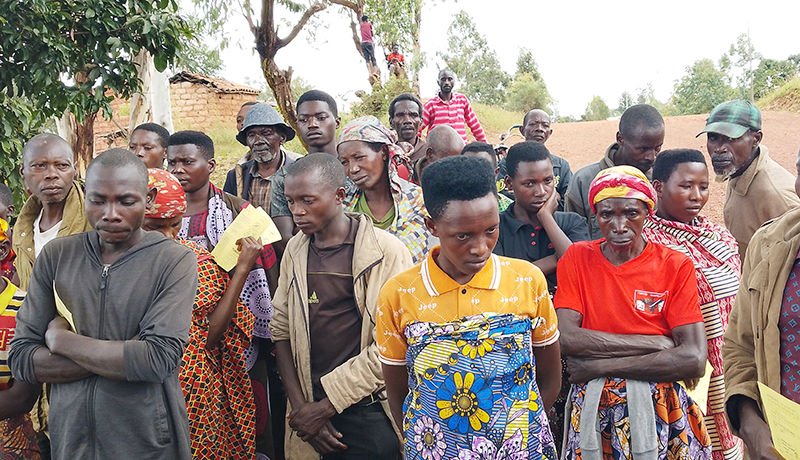
In Burundi, the invocation of past suffering is actively fueling social divisions and impeding development, according to local residents. This persistent focus on historical grievances is creating deep rifts within society, making it difficult for communities to move forward. Espérance Nibigira, an inhabitant of Mpongwe in Ruyigi commune, stated that recalling past violence incites hatred and tensions, showing the destructive impact of such rhetoric. Nibigira emphasized the critical need to "transcender les violences et les souffrances du passé pour arriver au développement intégral" (transcend the violence and suffering of the past to achieve integral development), noting a path towards collective progress.
Bernard Nishemezwe observed that some individuals evoke historical suffering and assign blame, which perpetuates resentment within communities. This tendency to point fingers at past wrongs prevents genuine healing and instead keeps old wounds open. The use of past suffering in public discourse is reportedly causing anger, fueling social divisions, weakening cohesion, and making reconciliation impossible among Burundians. This rhetoric actively fuels divisions, hindering efforts toward national unity and stability. The continuous dwelling on historical conflicts creates an environment where mistrust flourishes, making it arduous to build a shared future.
Echoes of Trauma and Division
Asmani Bimazubute, chief of the Nankage sub-hill, noted that past trauma continues to influence current behavior, noting that many families disappeared, leaving survivors deeply traumatized. The lingering effects of these experiences shape individual and collective responses to current events, often through the lens of past pain. Psychologist Alexis Niyibigira observed that recalling past crises often reactivates hatred rather than fostering healing, concluding that such remembrance is not reparative. Instead of offering a path to closure, these recollections frequently reignite animosities. Niyibigira further explained that this type of language is frequently employed to designate culprits and justify feelings of hatred or vengeance within the community. It serves as a tool to assign blame and validate retaliatory sentiments, thereby perpetuating cycles of conflict. He warned of the significant danger posed by the transmission of intergenerational trauma to children, perpetuating cycles of suffering and division across generations. Children, exposed to these narratives, inherit the emotional burdens and divisions of their predecessors, making it harder for future generations to break free from the past. The continued emphasis on historical grievances, rather than reconciliation, contributes to a climate where past wounds remain open and impede societal progress. This dynamic creates a complex challenge for Burundi, as it seeks to move forward while addressing the deep-seated impacts of historical conflict. Addressing these lingering effects requires careful consideration to avoid reigniting tensions and to instead foster an environment conducive to peace.
The Manipulative Power of Hate
Some individuals actively manipulate public sentiment and sow discord by continuously invoking past suffering, according to Mélissa Iratabara. Iratabara indicated that some people manipulate consciences and sow hatred and division by constantly recalling past suffering, creating an atmosphere of perpetual strife. Iratabara stated that the objective of these actions is to "manipuler certaines consciences, semer la haine et les divisions afin de déstabiliser la société" (manipulate certain consciences, sow hatred and divisions in order to destabilize society). This deliberate recall of historical grievances is used to create societal instability and deepen existing rifts, serving a clear manipulative purpose.
Pierre Nshimirimana observed that individuals are spreading hate messages specifically to recall ethnic crises that have affected Burundi. Nshimirimana noted that people spread hate messages to recall ethnic crises that have plagued Burundi, intentionally stirring up painful memories. Nshimirimana explained, "Le Burundi a été endeuillé par des crises ethniques. Des gens diffusent des messages de haine pour rappeler ce qui s’est passé" (Burundi has been plunged into mourning by ethnic crises. People spread hate messages to recall what happened). This dissemination of messages aims to revive memories of past conflicts, particularly ethnic strife, further contributing to division rather than reconciliation. Such actions hinder efforts to build a unified and stable society by exploiting historical trauma for manipulative purposes, preventing communities from moving past their painful history.
Pathways to Reconciliation
The article chronicles hate messages observed in Mpongwe, Ruyigi, providing specific insight into where these divisive narratives are taking root. Psychologist Alexis Niyibigira advocates for a constructive approach to address historical suffering and promote reconciliation. He suggests this includes open recognition of past pain, fostering inclusive dialogue among communities, and implementing educational initiatives. Niyibigira’s full strategy emphasizes that acknowledging the hurt is the first step towards healing. Niyibigira also stresses the importance of engaging communities directly in reconciliation efforts to build lasting peace. This direct involvement ensures that solutions are locally relevant and sustainable, fostering a sense of ownership over the peace process. This full strategy aims to move beyond divisive narratives by acknowledging trauma while simultaneously creating pathways for understanding and healing within Burundian society. The approach seeks to counteract the proliferation of hate speech by providing structured avenues for communities to process historical grievances constructively, rather than allowing them to be exploited for division. By focusing on these proactive measures, Burundi can hope to transition from a cycle of suffering to one of genuine national unity and development.