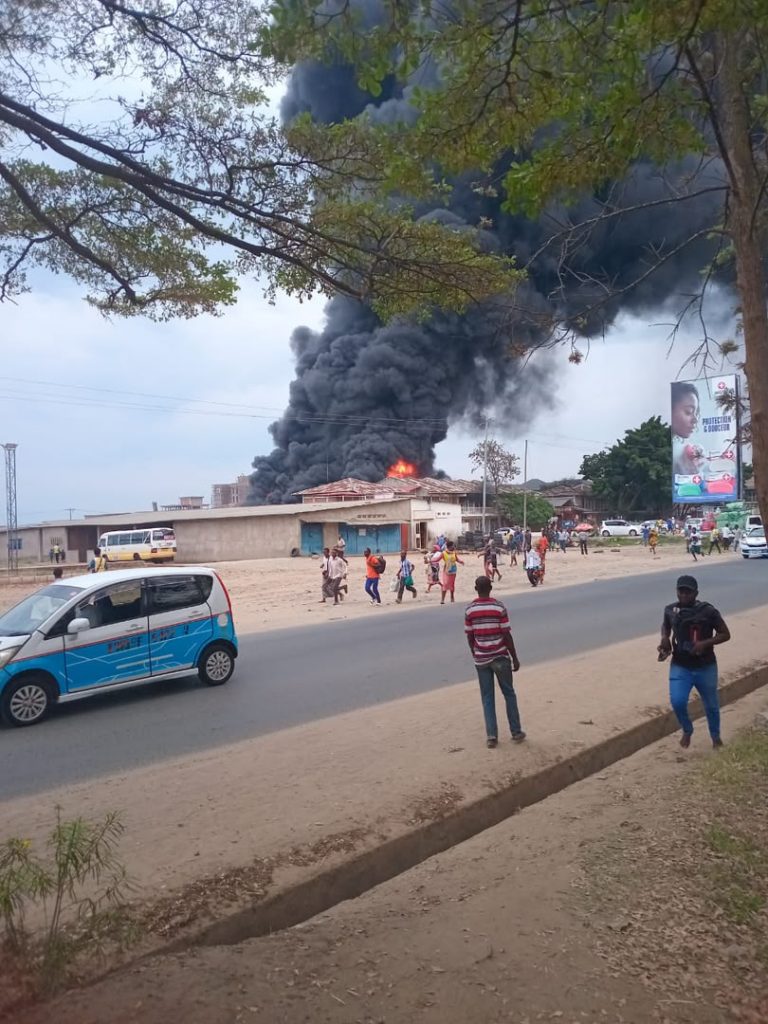
The Kinindo market in Bujumbura caught fire on the morning of Tuesday, August 25, 2026. The blaze caused extensive damage at the market, which is a significant commercial hub in the city's Kinindo neighborhood. This incident marks another challenge for local traders and residents in Bujumbura, compounding anxieties about urban safety and economic stability in the capital. The widespread impact of the fire and the rapid response from emergency services showed the severity of the situation.
Market Fire Details
According to initial testimonies gathered at the scene, the fire at Kinindo market originated from the mattress stands, a section typically densely packed with highly flammable materials. The blaze, fueled by these materials, quickly spread through the area, prompting an urgent and large-scale response from emergency services. Residents and witnesses in surrounding neighborhoods reported hearing the distinct sound of fire trucks racing towards the market. The persistent wail of sirens was audible from several kilometers away, indicating the immediate and widespread attention the incident drew across various parts of Bujumbura. Emergency services mobilized rapidly to contain the fire, deploying multiple units to battle the intense flames which threatened to engulf additional sections of the bustling market. The sheer scale of the response noted the potential for even greater devastation had the fire not been met with such swift action. The source of the initial ignition within the mattress stands remains under thorough investigation as authorities assess the full extent of the damage and search for any potential causes.
Pattern of Recent Fires
The Kinindo market fire has intensified concerns regarding a recent pattern of similar incidents in Bujumbura, leading to a palpable sense of unease among the populace. The frequency of these fires is seen as increasingly worrying, and their recurrence bodes ill for the city's commercial infrastructure and the livelihoods of its citizens. Just days before the Kinindo blaze, on Friday, August 22, two commercial centers located in the bustling city center of Bujumbura also burned down, adding to the growing list of destructive fires. This sequence of events has drawn significant attention to the escalating challenges faced by businesses and residents alike in the capital, raising questions about the underlying causes and preventative measures in place. The repeated nature of these incidents suggests a broader issue that requires urgent and full addressing.
Location and Response
The Kinindo market, which was the scene of the recent destructive fire, is strategically situated in the commune of Mugere. This location places it in the southwestern part of Bujumbura, which serves as the economic capital of the nation. Its position as a vital commercial artery for the region meant that the fire had an immediate and broad impact on local commerce and daily life. The response from local authorities and emergency services was swift, aiming to prevent the fire from spreading further into adjacent residential or commercial zones. The coordinated efforts involved not only firefighting teams but also local police to manage crowds and ensure safety around the affected area.
Rising Worries
The recent series of fires, culminating dramatically in the Kinindo market blaze, has led to growing anxiety among Bujumbura's residents and the business community. The repeated incidents, particularly after two commercial centers in the city center burned down on August 22, have created a palpable sense of unease and vulnerability. Many are questioning the causes behind these recurring disasters, whether accidental or otherwise, and are scrutinizing the effectiveness of current preventative measures and urban planning. The economic impact on traders, who often lose their entire livelihoods, stock, and business premises in such catastrophic events, further compounds the distress and poses a significant threat to their ability to recover. This pattern raises significant concerns about urban safety, the resilience of the capital's commercial infrastructure, and the long-term economic stability for countless families dependent on these markets. The cumulative effect of these fires is fostering a climate of uncertainty that demands immediate attention from city authorities.