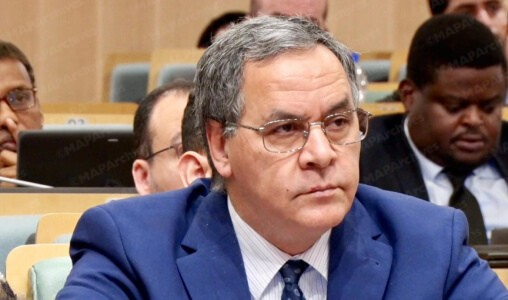
Morocco's permanent representative to the African Union (AU) and the United Nations Economic Commission for Africa (UNECA), Mohamed Arrouchi, affirmed on June 5, 2026, that the Kingdom places humanitarian action at the core of its foreign policy and African cooperation. This declaration, made during a public session of the AU Peace and Security Council (CPS of the AU) focusing on refugees, internally displaced persons (PDI), and humanitarian aid in Africa, aligns with the enlightened vision of King Mohammed VI. Arrouchi stated that "Morocco places humanitarian action at the heart of its foreign policy and its African cooperation, in accordance with the enlightened vision of King Mohammed VI." This full approach shows Morocco's unwavering commitment to addressing the continent's pressing humanitarian challenges.
He emphasized that "the Kingdom's permanent representative to the AU and UNECA, Mohamed Arrouchi, stresses that Morocco spares no effort to contribute to mitigating humanitarian crises, wherever they may be in Africa." Arrouchi noted the urgent need to concentrate on operational and pragmatic solutions, adopting a rational approach to address the continent's "particularly worrying humanitarian situation," marked by unprecedented human displacement due to conflicts, climate shocks, economic slowdowns, and rising food insecurity. "This situation has created humanitarian needs of exceptional scale," he noted, calling for strengthening data management mechanisms for refugees and internally displaced persons to improve humanitarian responses and resource allocation. His remarks showed the necessity for a unified and effective African response to these multifaceted crises.
Morocco's Holistic Humanitarian Approach
Morocco's humanitarian action encompasses more than immediate emergency aid and the deployment of field hospitals. This broader approach focuses on implementing sustainable initiatives for populations affected by various crises. The Kingdom's strategy integrates principles of co-development, facilitating the exchange of expertise, and pooling best practices among partners. This full framework aims to build long-term resilience within vulnerable communities. Morocco's humanitarian action extends beyond emergency aid and field hospitals, to include sustainable actions for affected populations, incorporating co-development, expertise sharing, and the pooling of best practices among partners. This strategic vision aims to foster self-sufficiency and long-term stability in regions grappling with humanitarian challenges.
Morocco's humanitarian efforts address the critical challenges posed by climate change and desertification. The country actively works to mitigate these environmental impacts, which often exacerbate humanitarian crises by displacing populations and impacting livelihoods. A central objective of this multifaceted approach is to guarantee the direct delivery of humanitarian aid to its intended beneficiaries, preventing any diversion or exploitation of resources. This commitment ensures that assistance reaches those most in need without intermediaries compromising its effectiveness. This integrated strategy notes the Kingdom's dedication to not only providing immediate relief but also tackling the root causes of vulnerability and ensuring the integrity of aid delivery.
Africa's Growing Humanitarian Challenges
Africa is currently experiencing a concerning humanitarian situation marked by conflicts, climate shocks, economic slowdowns, and rising food insecurity and malnutrition, according to the Kingdom's permanent representative to the AU and UNECA, Mohamed Arrouchi. Arrouchi stated that "Africa is today going through a particularly worrying humanitarian situation, marked by the succession of unprecedented human waves fleeing the torments of conflicts and perils caused by multiple climate shocks, the slowdown in economic activity, and the rise of food insecurity and malnutrition in several regions of the continent." This situation has created humanitarian needs of exceptional scale, he noted, adding that "the collective response has remained, in many respects, insufficient and ineffective, due to national, regional, and continental constraints." This assessment shows the urgency of a more strong and coordinated continental response.
Arrouchi emphasized the urgent need to concentrate on operational and pragmatic solutions, calling for a rational approach to address the continent's humanitarian crisis. He urged for "adopting a rational approach, proposing sustainable solutions, and extracting proactive proposals, capable of guiding us on the optimal path for establishing a new African humanitarian order." He also showed the necessity of strengthening mechanisms for registering, monitoring, and managing data related to refugees and internally displaced persons. Arrouchi explained that this should be "based on credible, verified, and regularly updated data, in order to improve the effectiveness of humanitarian responses and ensure adequate resource allocation." He noted that the current collective response to these humanitarian needs has been insufficient and ineffective, pointing to constraints at national, regional, and continental levels.
Humanitarian responses in Africa should be integrated and multidimensional, combining humanitarian action, conflict prevention, mediation, peacebuilding, and development. Arrouchi called for prioritizing preventive action in the face of increasingly frequent and complex shocks. He emphasized the need to strengthen the resilience of communities affected by conflicts, natural disasters, and climate shocks. African capacities for anticipation, prevention, and response to future humanitarian crises, particularly those related to climate change, require significant strengthening. This holistic perspective aims to move beyond reactive measures towards proactive strategies that build lasting stability and well-being.
Strengthening African Humanitarian Capacity
Mechanisms for transparency, accountability, control, and evaluation of humanitarian action in Africa require reinforcement, according to officials. The registration, monitoring, and management of data on refugees and internally displaced persons also need strengthening. Morocco's permanent representative to the African Union (AU) and the United Nations Economic Commission for Africa (UNECA), Mohamed Arrouchi, emphasized the necessity "to strengthen mechanisms for registering, monitoring, and managing data related to refugees and internally displaced persons, based on credible, verified, and regularly updated data, in order to improve the effectiveness of humanitarian responses and ensure adequate resource allocation." This critical data management is essential for ensuring that aid reaches those who need it most and for optimizing the deployment of resources across the continent.
Arrouchi stated that facing the continent's humanitarian crisis, the urgent focus should be on operational and pragmatic actions. He called for "adopting a rational approach, proposing sustainable solutions, and developing proactive proposals, capable of guiding us on the optimal path for establishing a new African humanitarian order." He also stressed the importance of preventive action in the face of increasingly frequent and complex shocks. This includes strengthening the resilience of communities affected by conflicts, natural disasters, and climate shocks, thereby reducing their vulnerability to future crises. The call for a "new African humanitarian order" reflects a desire for a more effective, coordinated, and African-led approach to humanitarian challenges. The article, published on June 5, 2026, reflects the ongoing commitment and strategic discussions at the highest levels of African policy-making regarding these critical issues.