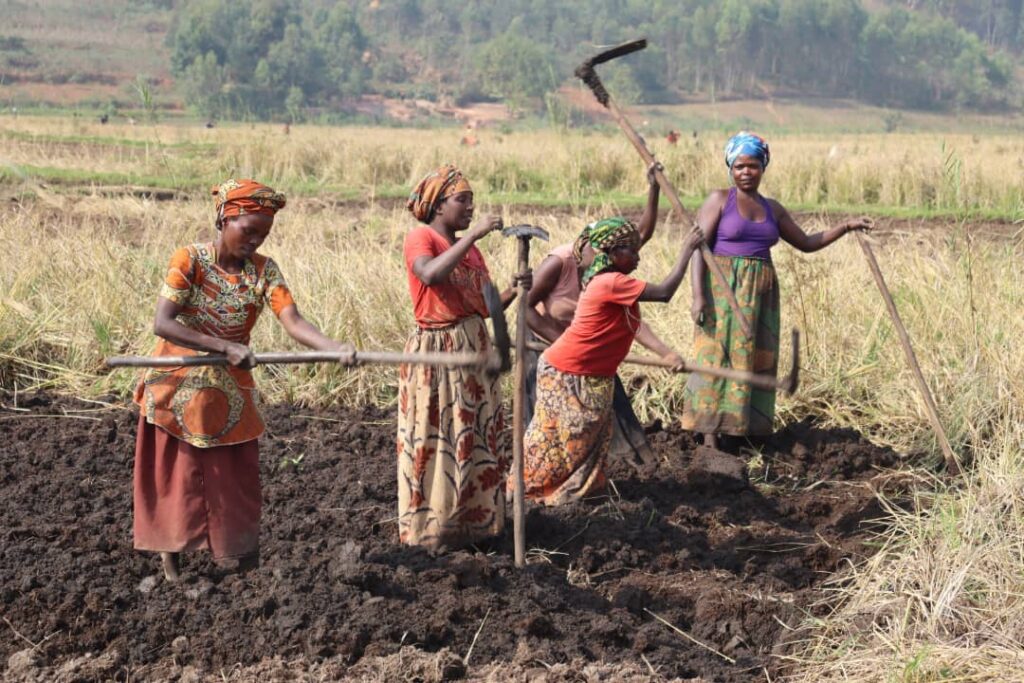
Farmers cultivating the Nyakijima marshland in Commune Ngozi, Butanyerera province, are experiencing significantly increased yields after adopting modern agricultural techniques. These residents, actively involved in cultivating the land, shared their experiences and the tangible benefits derived from the new agricultural approaches. Inhabitants discussed their improved harvests during interviews with the newspaper 'Le Renouveau du Burundi' on July 9, 2026. Marcienne Baransananiye, a farmer in the region, reported a substantial increase in her harvest. She stated that her yield was previously only 50 kg before implementing new methods, but has now risen to 300 kg. This represents a six-fold increase in output for her farm, specifically for her rice harvests. The significant jump from 50 kg to 300 kg shows the effectiveness of the new practices introduced in the marshland.
Cooperative's Impact on Yields
Karita Ndereyimana noted that collective work has considerably improved harvests compared to past periods. Ndereyimana stated that her family "ne souffre jamais de la faim, grâce aux récoltes abondantes obtenues, notamment pendant la saison sèche," and expressed satisfaction with the agricultural knowledge gained through the cooperative. The collective effort has fostered a sense of community and shared success among the farmers. Claver Bucumi, president of the Abatazerinze cooperative, explained that farmers benefit from knowledge transfer and achieve better harvests due to the guidance provided. This guidance includes best practices for planting, pest control, and irrigation, all tailored to the specific conditions of the Nyakijima marshland. Additionally, farmers receive selected seeds and fertilizers when these resources are available. This provision of key agricultural inputs, such as high-quality seeds and essential fertilizers, further supports the farmers in maximizing their yields. This support is integral to the cooperative's strategy for enhancing agricultural output within the community and ensuring sustainable farming practices.
Marshland and Cooperative Scale
The Abatazerinze cooperative currently manages operations across the Nyakijima marshland, which spans 108 hectares. This extensive area provides ample space for the cultivation efforts of its numerous members. A total of 3,102 members from the cooperative cultivate this marshland, demonstrating the large scale of their communal farming initiative. The cooperative's infrastructure includes storage facilities capable of holding up to 650 tons of rice. This substantial storage capacity is critical for managing the large volumes of produce harvested by the cooperative members, allowing them to store their yields safely and strategically. This capacity supports the substantial harvests achieved through their communal farming efforts and the adoption of modern agricultural techniques, ensuring food security and economic stability for the community. The organized management of such a vast marshland by over three thousand members notes the cooperative's significant role in the region's agricultural landscape.
Individual Success Stories
Individual farmers in the Nyakijima marshland have reported significant gains from the new agricultural practices. Marcienne Baransananiye, a cultivator in the marshland, shared her personal experience with increased yields. She stated that her previous rice harvests amounted to 50 kg, but through the adoption of modern techniques and communal farming, her output has now reached 300 kg. This represents a six-fold increase in her individual harvest, noting the direct impact of the cooperative's initiatives on farmer productivity. Marcienne Baransananiye specifically noted that before adopting modern agricultural techniques, she harvested only 50 kg, compared to 300 kg today. Her success story is a testament to the effectiveness of the cooperative's training and resource provision. Such individual successes contribute to the overall improvement in food security and economic well-being for participants in the Abatazerinze cooperative, inspiring other members to fully embrace the new methods.
Cultivation and Future Outlook
Farmers in the Nyakijima marshland primarily cultivate rice, beans, corn, soy, and potatoes during the dry season, known locally as saison C. These crops form the core of the agricultural output, contributing to food security and economic stability for the cooperative members. The main crops cultivated during this critical dry season include a diverse range of staple foods. The consistent cultivation of diverse staple foods reflects the strategic approach adopted by the Abatazerinze cooperative to maximize productivity across different agricultural cycles. This diversified crop portfolio helps farmers mitigate risks associated with single-crop dependency and ensures a steady supply of various agricultural products, contributing to both local consumption and potential market sales. The continued success of the Abatazerinze cooperative through these modern agricultural techniques and communal efforts promises a brighter future for the farmers of Nyakijima marshland.