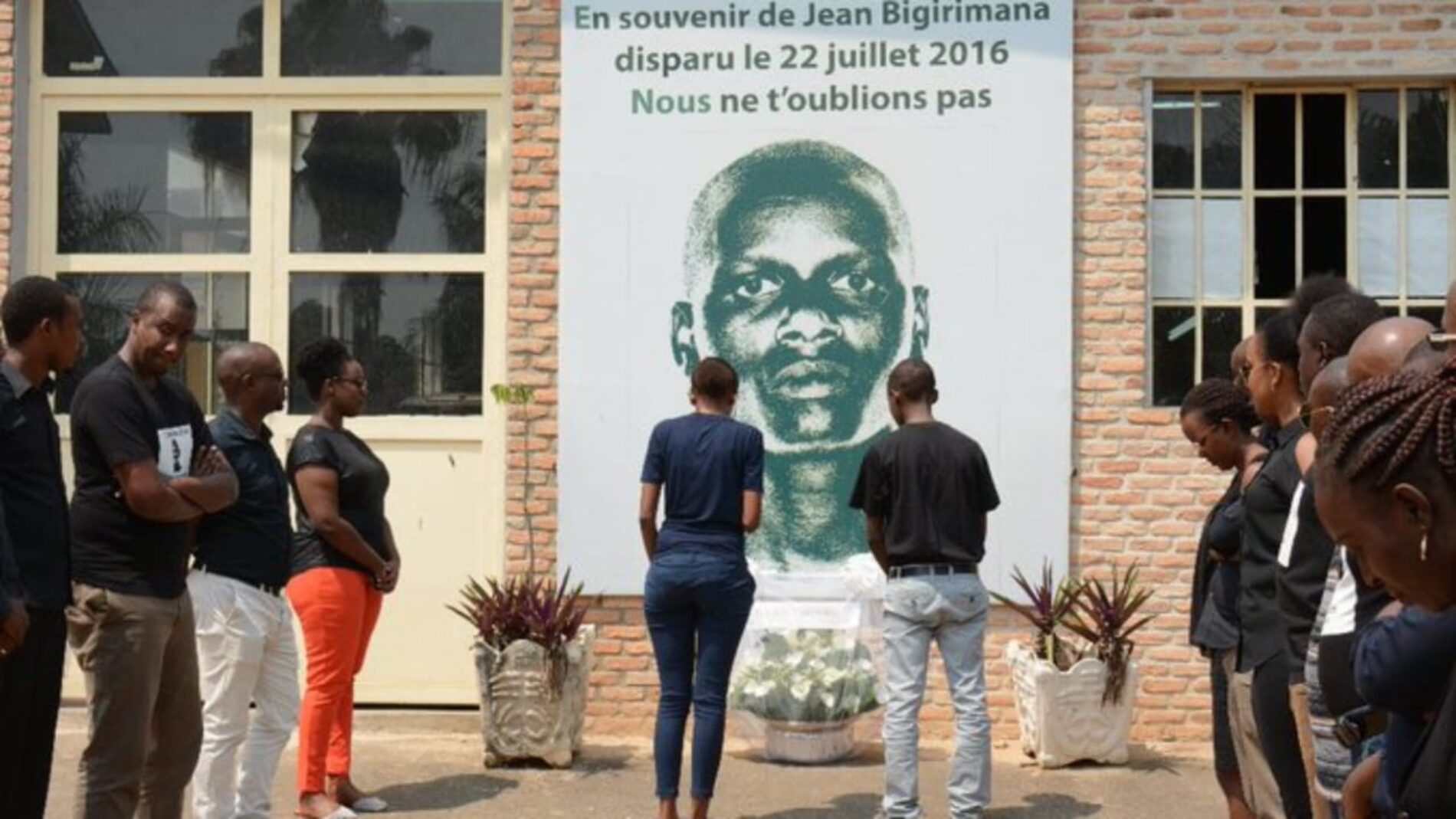
Journalist Jean Bigirimana disappeared in Burundi on July 22, 2016, marking a decade this year since his unresolved case. The 10th anniversary of Bigirimana's disappearance notes continued concerns among press freedom advocates regarding accountability in the country and the broader state of independent journalism in Burundi. Burundian authorities have consistently denied any involvement in detaining Jean Bigirimana since his disappearance, maintaining a stance that has been a point of contention for international organizations. The Committee for Protection of Journalists (CPJ) considers Jean Bigirimana a disappeared journalist, emphasizing the persistent lack of clarity surrounding his fate and the circumstances that led to it. This enduring mystery casts a long shadow over the media landscape in the East African nation.
The Disappearance and Initial Search
Journalist Jean Bigirimana was last observed in Bugarama on July 22, 2016, a rural area in Muramvya Province. Reports indicate that he was subsequently transported in the direction of Muramvya itself, the provincial capital, after his last sighting. The precise details of what transpired immediately after his reported transportation remain elusive, contributing to the prolonged uncertainty surrounding his case. Weeks following his disappearance, a grim discovery was made when two bodies were found in the Mubarazi river. Godeberthe Hakizimana, Bigirimana's wife, was called upon to identify the bodies. After a painstaking examination, she confirmed they were not her husband, leaving the family and press freedom advocates still searching for answers regarding Bigirimana's whereabouts.
The immediate aftermath of Bigirimana's disappearance saw efforts by international press freedom organizations to engage with Burundian officials. Reporters sans frontières (RSF), also known as Reporters Without Borders, made attempts to contact key Burundian officials for information regarding Bigirimana's case and to press for a thorough investigation. The organization reached out to the prosecutor general, the president of the Supreme Court, and the spokesperson of the Supreme Court, but received no response from any of them. This silence from high-ranking judicial officials was noted as a significant impediment to progress in the investigation. Similarly, the Committee for Protection of Journalists (CPJ) contacted Jérôme Niyonzima, the Burundian government spokesperson, seeking information and clarity. Niyonzima, in turn, directed CPJ inquiries to the prosecutor general for any relevant information, effectively deferring responsibility and offering no direct insight into the government's efforts, if any, to locate the missing journalist. Jean Bigirimana's disappearance took place within a period marked by significant pressure on Burundi's independent media outlets, a direct and severe consequence of the 2015 political crisis that plunged the country into turmoil. This context is key for understanding the environment in which such a disappearance could occur and remain unsolved for so long.
Journalist's Background and Media Context
Jean Bigirimana initially pursued legal studies, demonstrating an early inclination towards understanding justice and societal structures, before embarking on his career in journalism. This background in law provided him with a unique perspective when he began working in the field in 2010 at Rema FM, a private radio station. His commitment to independent reporting quickly became evident. Bigirimana later joined the group de presse Iwacu, a prominent independent news outlet, after Rema FM was destroyed during the 2015 political crisis in Burundi. His transition to Iwacu showed his dedication to continuing his work in a challenging environment. His disappearance occurred during a period of significant pressure on independent media outlets in the country, a direct consequence of that crisis, which saw many journalists flee, go into hiding, or face severe repercussions for their reporting. The climate for independent media professionals was extremely hostile, characterized by government crackdowns, censorship, and a general erosion of press freedoms.
Iwacu, where Bigirimana worked, faced its own severe challenges in the years following his disappearance, noting the broader risks associated with independent journalism in Burundi. In October 2019, four journalists from Iwacu – Christine Kamikazi, Agnès Ndirubusa, Egide Harerimana, and Térence Mpozenzi – were arrested while reporting in Musigati, Bubanza province. They were subsequently detained for an alarming 430 days, a testament to the government's repressive tactics against critical reporting. The news outlet's website was blocked within Burundi for an extended period, from 2017 until 2022, severely limiting access to independent news for the local population. These incidents reflect the broader environment for independent journalism in Burundi during the time surrounding Bigirimana's unresolved case, illustrating a systematic effort to stifle dissent and control narrative through intimidation and legal means. The destruction of Rema FM and the subsequent challenges faced by Iwacu are emblematic of the shrinking space for media pluralism in the country.
Calls for Justice and Official Silence
The profound impact of the political crisis and the subsequent crackdown on media freedom forced many prominent figures into exile. Antoine Kaburahe, the founder of Iwacu, has lived in exile since November 2015, having left the country months before the disappearance of Jean Bigirimana, who worked for his publication. His departure was a stark indicator of the dangers faced by those associated with independent media. Bigirimana's wife, Godeberthe Hakizimana, also lives in exile with their two sons, having fled after reportedly receiving death threats. Her decision to seek refuge abroad shows the widespread climate of fear and the lack of security for families connected to disappeared journalists. The family's displacement not only represents a personal tragedy but also notes the broader climate for those connected to independent media in Burundi, where seeking truth can come at an immense personal cost.
Reporters Without Borders (RSF) has consistently noted concerns about the investigation into Bigirimana's disappearance, pointing to significant shortcomings and a perceived lack of genuine effort by authorities. According to the organization, individuals who witnessed his arrest were never interviewed by the police, a critical oversight that could have provided key leads. This alleged oversight has contributed significantly to the lack of progress in the case, leaving key questions unanswered regarding the precise circumstances of his disappearance and who might have been responsible. The absence of official engagement with potential witnesses has been a recurring point of criticism from international press freedom organizations, who argue that a thorough and impartial investigation is impossible without following such basic investigative procedures. The failure to interview key witnesses suggests either an intentional neglect or a severe deficiency in the investigative process, both of which undermine trust in the Burundian justice system.
Enduring Impact and Press Freedom
The group de presse Iwacu has repeatedly renewed its call for truth and justice in the case of Jean Bigirimana, whose disappearance remains unsolved a decade later. This persistent advocacy from his former colleagues demonstrates an unwavering commitment to his memory and to the principles of press freedom he embodied. The independent media outlet, where Bigirimana worked, took concrete legal action by filing a complaint against X (unknown perpetrator) regarding his disappearance in August 2016, shortly after he vanished. This legal action showed the publication's persistent efforts to seek accountability and to push for a formal investigation, even in the face of official silence and obstruction. Iwacu's continued efforts serve as a powerful reminder of the unresolved nature of the case and the ongoing struggle for justice in Burundi.
The broader context of justice in Burundi was recently addressed by President Évariste Ndayishimiye, whose statements have drawn attention from advocates for Bigirimana. In July 2023, President Ndayishimiye declared, "We cannot live in a country where there is no justice," a statement that has resonated with advocates for Bigirimana and his family. While this declaration offers a glimmer of hope for a renewed commitment to justice, press freedom organizations continue to monitor the situation closely, emphasizing the need for concrete steps to resolve the journalist's disappearance and ensure justice for his family and colleagues. They stress that such pronouncements must be followed by tangible actions, particularly in high-profile cases like Bigirimana's, which symbolize the challenges faced by independent media. The ongoing calls for a transparent and thorough investigation highlight the enduring impact of Bigirimana's case on the media landscape in Burundi, serving as a constant reminder of the risks journalists face and the imperative for accountability. The decade-long silence surrounding his fate continues to be a source of profound concern for both national and international observers of human rights and press freedom.