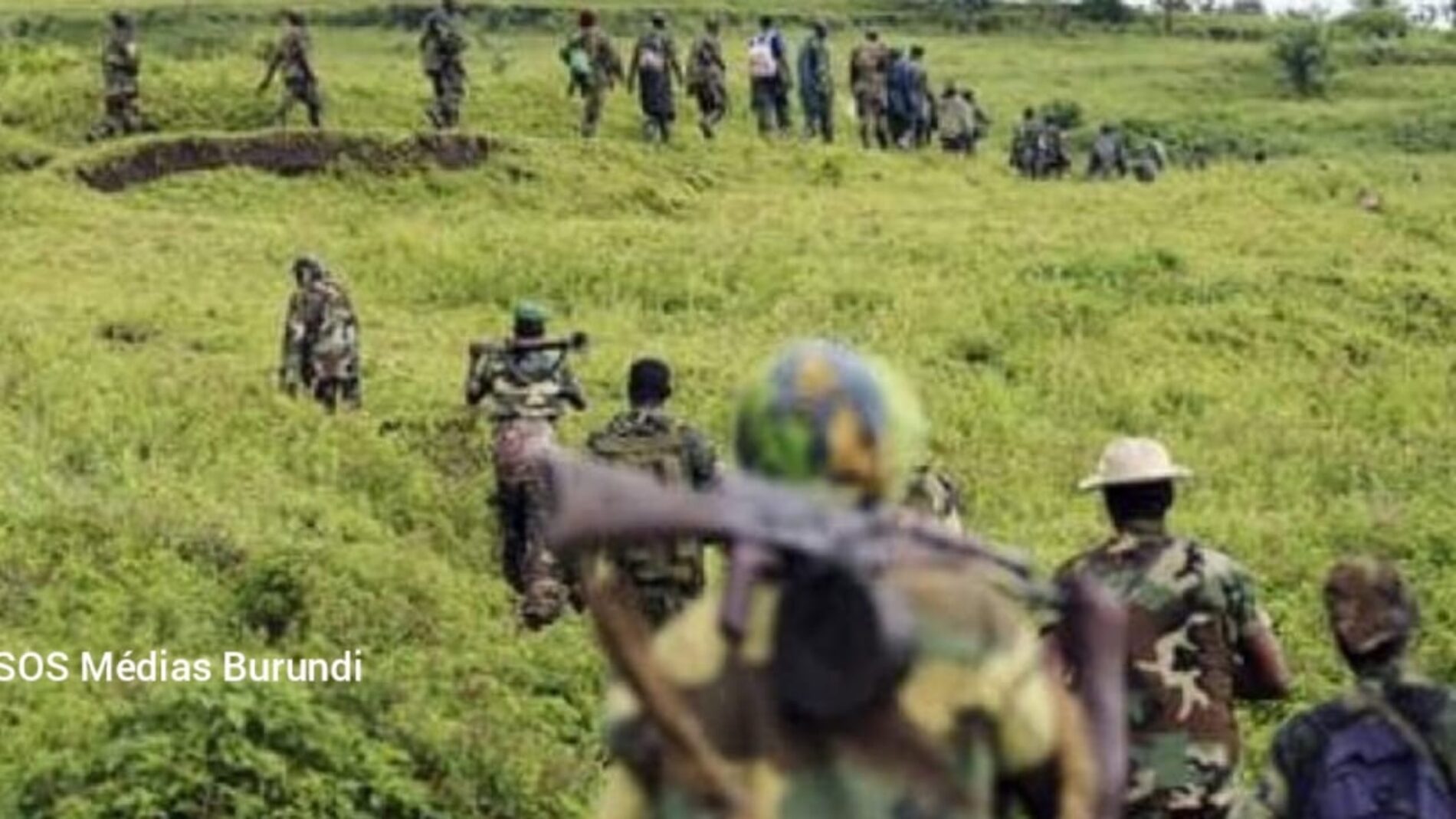
Violent clashes erupted between Wazalendo militiamen and M23 rebels on Wednesday, May 6, 2026, in Kigurwe, a locality within the Ruzizi plain in Sud-Kivu's Uvira territory, resulting in significant casualties among the militia. These intense combats opposed the two factions, marking a continuation of the volatile security situation in the region. More than a dozen Wazalendo militiamen were killed in these combats, according to several concordant sources. The fighting was particularly fierce, leading to substantial losses for the Wazalendo. Reports indicated that Colonel David, described as the deputy to self-proclaimed General Kamama, was among the Wazalendo victims, a significant blow to the militia's command structure.
The Wazalendo confirmed Colonel David's death and acknowledged the scale of losses suffered during the engagement. While the Wazalendo claimed to have launched an offensive against M23 positions and succeeded in dislodging M23 from Kigurwe, testimonies from local inhabitants contradicted this version. According to these testimonies, the M23 maintains control of the locality following the fighting, casting doubt on the Wazalendo's operational claims. The situation on the ground remains confused, and no independent official toll has been published, making it difficult to ascertain the full extent of the casualties or the true victor of the engagement. These new clashes highlight the persistent insecurity in the Ruzizi plain, a region that has been a focal point of conflict for an extended period.
Escalating Conflict Dynamics
The new clashes show persistent insecurity within the Ruzizi plain, a strategic area in Sud-Kivu. These Wazalendo groups are local armed formations supported by Kinshasa, and they are increasingly operating alongside government forces against M23 rebels. Their integration into the broader military strategy of the Democratic Republic of Congo (DRC) signifies a deliberate effort by the government to leverage local militias in its fight against the M23. Reports also indicate that the Wazalendo benefit from Burundian military support, provided under the framework of bilateral cooperation between Burundi and the Democratic Republic of Congo. This external backing further complicates the regional dynamics and introduces an additional layer of international involvement in the conflict. The support from Burundi is a critical factor in the operational capabilities of the Wazalendo, enabling them to sustain their engagements against the M23.
Since early 2025, M23 rebels have reportedly retaken several areas in both North Kivu and Sud Kivu provinces. This resurgence marks a significant shift in the conflict, with the M23 demonstrating increased operational strength and territorial control. The M23 has retaken significant urban centers, including Goma and Bukavu, which are the respective provincial capitals. The capture of these major cities represents a strategic victory for the M23, providing them with control over key administrative and economic hubs in eastern Congo. Additionally, the rebel group has reportedly seized control of the Rubaya mining site, known as one of the world's most important coltan deposits. The acquisition of such a valuable resource provides the M23 with substantial financial leverage, potentially funding their military operations and further entrenching their presence in the region. The M23 is now integrated into the Alliance Fleuve Congo (AFC), which is led by Corneille Nangaa, a former president of the Independent National Electoral Commission (CENI). This integration into a broader alliance suggests a more coordinated and expansive rebel movement, posing a more significant challenge to the Congolese government.
The Congolese army (FARDC) and its allied forces have reportedly clashed with M23-aligned militia fighters in the South Kivu highlands. These confrontations indicate the widespread nature of the conflict, extending beyond the immediate areas of M23 control. M23 and M23-aligned media sources claimed that FARDC and allied forces engaged M23-aligned Twirwaneho fighters in several villages around Minembwe town in Fizi district on April 15, 2026, and initiated drone attacks during these encounters. The reported use of drones by FARDC and allied forces signifies an escalation in military tactics and the introduction of advanced warfare technology into the conflict. M23 also stated that FARDC and allied forces attacked M23 positions in various villages, including Chambombo, located in northern Kalehe district in South Kivu on April 17, 2026. These reports from M23-aligned sources provide a different perspective on the ongoing engagements, often noting perceived aggressions by government forces. Separately, in a development related to the DRC's economic activities, the state mining company Gécamines has committed to exporting 500,000 tons of copper to the United States through its joint venture with the Swiss trading company Mercuria. This economic agreement shows the DRC's efforts to maintain its vital mining sector amidst the ongoing conflict, providing a source of revenue for the government.
Background and Rebel Origins
The M23, reactivated in 2021, is an older Tutsi rebellion that claims Congolese authorities have not honored reintegration commitments made in past peace agreements. The group's resurgence is rooted in these unfulfilled promises, fueling their renewed armed struggle. Congolese authorities accuse Rwanda of supporting these rebels, allegations which Kigali denies. This accusation forms a central point of contention in the regional diplomatic landscape, with the DRC consistently pointing to external interference.
A United Nations experts' report cited the deployment of 5,000 to 7,000 Rwandan soldiers fighting alongside the M23. This significant number, if accurate, would indicate substantial military backing from Rwanda, further substantiating the DRC's claims. Rwanda, in turn, accuses Burundi and the Democratic Republic of Congo (DRC) of supporting the Democratic Forces for the Liberation of Rwanda (FDLR), a Rwandan Hutu armed group. This group is largely composed of individuals implicated in the 1994 Rwandan genocide, making their alleged support a highly sensitive and politically charged issue. The mutual accusations highlight the deep-seated mistrust and complex historical grievances that continue to fuel the conflict in the Great Lakes region.
Between August 2022 and December 2025, Burundi deployed over 29,000 soldiers in eastern Congo, according to reports. This substantial military presence by a neighboring country further illustrates the regionalization of the conflict and the involvement of multiple national armies. The complex regional dynamics involve multiple armed groups and national armies operating across the borders of the DRC, Rwanda, and Burundi. These cross-border movements and interventions contribute to the perpetual instability, making a lasting peace agreement challenging to achieve. The M23's resurgence and the mutual accusations of state support for various armed factions contribute to the ongoing instability in the eastern part of the Democratic Republic of Congo, creating a cycle of violence and displacement.
Wider Regional Instability
Hostilities continue across the region despite several signed agreements, including the Washington agreement of December 4, 2025, between Rwanda and the Democratic Republic of Congo. The failure of such high-level diplomatic efforts to halt the fighting shows the deeply entrenched nature of the conflict and the difficulties in enforcing peace deals. Thousands of civilians continue to flee to neighboring countries, seeking refuge from the violence, while others remain trapped in areas where humanitarian assistance struggles to reach, according to reports. This ongoing displacement crisis notes the severe human cost of the protracted conflict, with vulnerable populations bearing the brunt of the instability. The humanitarian situation remains dire, with limited access for aid organizations exacerbating the suffering of those affected.
Wazalendo fighters had recaptured Chambombo and several other villages from the M23 on April 13, 2026, as part of fighting ongoing in Kalehe since late March. This advance by Wazalendo fighters was part of broader engagements, demonstrating their active role in the conflict and their ability to reclaim territory. Wazalendo fighters also attacked M23 near the RP1030 in Walikale district in North Kivu. Wazalendo fighters initiated an attack against the M23 in Ihula village, located within the Kisimba group in Walikale, on April 16, 2026. These engagements highlight the persistent and widespread nature of the conflict in eastern Congo, with fighting occurring across multiple districts and provinces. The ongoing clashes demonstrate that despite diplomatic efforts, armed groups continue to vie for control over key territories, impacting civilian populations and regional stability. The strategic importance of areas like Kalehe and Walikale, including their proximity to vital supply routes and natural resources, contributes to the sustained fighting. The continued displacement of civilians shows the severe humanitarian consequences of these recurring conflicts, necessitating urgent international attention and intervention. The control of these territories is key for both sides, influencing supply lines, resource access, and overall strategic positioning in the eastern DRC.
International Calls for Peace
The United States reiterated its call for the Democratic Republic of Congo and Rwanda to immediately implement their peace commitments during a recent United Nations Security Council meeting. This repeated call from a major international power shows the global concern over the ongoing conflict and the imperative for diplomatic solutions. The international community continues to press for de-escalation and the adherence to previously agreed-upon peace frameworks. In a related development concerning regional reporting, the Congo War Security Review announced a change to its publication schedule. Beginning April 17, 2026, the review will be released every Friday, shifting from its previous three-times-per-week frequency. This adjustment in publication frequency suggests a change in the operational approach of the review, possibly to consolidate information or adapt to reporting capacities. The publication is expected to revert to a triweekly schedule from June 1 through August 21, 2026, indicating a temporary nature to the change. The data cutoff for this specific reporting period was April 17, 2026, at 1 P.M. EST, providing a clear timestamp for the information presented in the review.