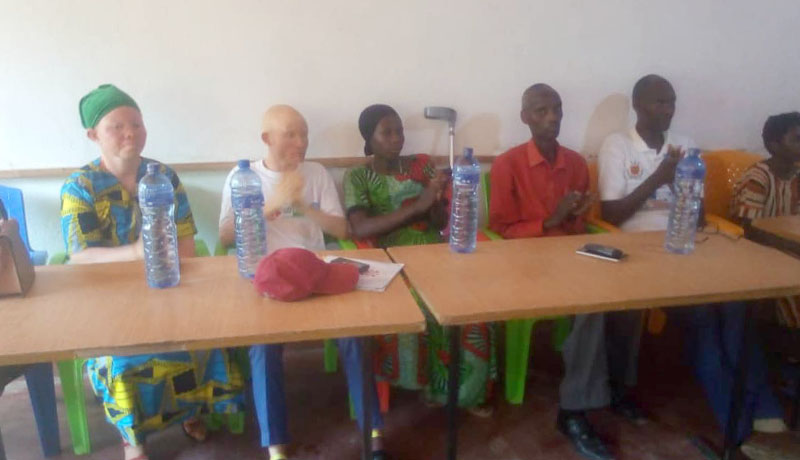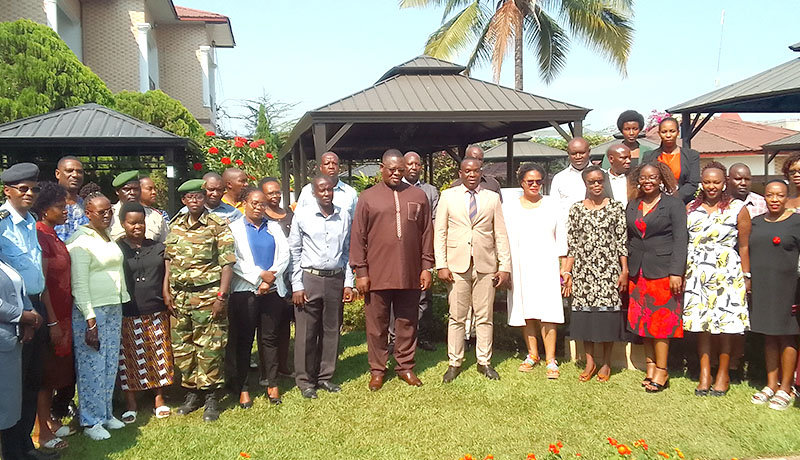
Bujumbura, Burundi – The United Nations Development Programme (Pnud), in collaboration with the Ministry of Justice, Human Rights and Gender, recently organized a series of key awareness sessions focused on gender equality. These sessions, held in Bujumbura from June 16 to 18, 2026, served as a platform to present the Gender Seal to a diverse array of stakeholders, including public institutions, private sector companies, and civil society organizations. The initiative showed Burundi's commitment to fostering a more equitable society.
Jonas Mfouatie, Deputy Resident Representative of UNDP in Burundi, addressed the participants, emphasizing the multifaceted importance of gender equality. He articulated that gender equality transcends being merely a matter of social justice or human rights; it is, fundamentally, a development imperative critical for the nation's progress. Mfouatie's address noted that the pursuit of gender equality is an integral component of sustainable development, asserting that no society can achieve sustainable development by leaving behind a part of its population.
Mfouatie further elaborated on the significance of the Gender Seal, stating that "Le Gender Seal ne constitue pas seulement une simple certification. Il s’agit avant tout d’un processus de transformation institutionnelle qui aide les organisations à renforcer leurs gouvernances, leurs politiques internes, leurs mécanismes de gestion des ressources humaines ainsi que leurs programmes et services afin qu’ils puissent répondre au mieux aux besoins de tous et de toutes." He clarified that this certification is not an end in itself, but rather "une preuve que la transformation institutionnelle en faveur de l’égalité des genres est une réalité au Burundi." In a direct call to action, Mfouatie urged participants to "devenir un acteur de changement au sein de vos organisations et au sein de vos communautés," thereby encouraging widespread engagement in the gender equality movement. This transformative process, he explained, aims to embed gender considerations deeply within the operational frameworks of participating entities, ensuring that policies, human resource management, and service delivery are inclusive and responsive to the needs of all individuals.
Progress and Pnud's Role in Driving Change
Significant and remarkable progress has been made in Burundi in recent years regarding the promotion of women's and girls' rights. This progress is a testament to sustained efforts and strategic interventions. The Pnud places gender equality at the heart of its action through the Gender Seal, which is described as an innovative and strategic tool designed to accompany organizations in evaluating, improving, and recognizing their gender equality performance. The Gender Seal provides a structured framework for organizations to assess their current standing, identify areas for improvement, and implement concrete measures to advance gender equality within their operations. This systematic approach ensures that gender considerations are not merely superficial but are deeply integrated into the institutional culture and practices.
A notable achievement in this regard is that PNUD Burundi obtained the gold medal in the 2021-2023 Gender Seal certification cycle. This prestigious certification is considered one of the highest levels of recognition for the Pnud program globally and testifies to the extensive efforts deployed by PNUD Burundi in its internal operations and its support for national gender initiatives. This accolade shows the organization's commitment to leading by example in promoting gender equality.
Beyond organizational certifications, Burundi has also registered significant advances in promoting gender equality through the establishment of strong legislative and policy frameworks. These include the full Penal Code of 2017, which addresses various forms of gender-based violence and discrimination, and the specific law on gender-based violence (GBV) enacted in 2016, providing a dedicated legal instrument to combat this widespread issue. The National Gender Policy, covering the period from 2012 to 2025, outlines strategic objectives and actions to integrate gender perspectives across all sectors of national development. The government of Burundi has further solidified its commitment by establishing a dedicated department for the prevention of gender-based violence, signaling a proactive approach to tackling this critical challenge. These legislative and policy measures collectively form a strong foundation for advancing gender equality and protecting the rights of women and girls across the country.
Benefits for Institutions and Society at Large
The integration of gender equality principles yields substantial benefits across various sectors. For public institutions, gender equality strengthens the effectiveness of public policies by ensuring they are designed to meet the diverse needs of the population. This, in turn, improves the quality of services provided to citizens and fosters more inclusive and representative governance, leading to greater public trust and efficiency.
In the private sector, gender equality contributes significantly to improved organizational performance. Companies that prioritize gender equality often experience enhanced innovation, increased productivity, and a greater ability to attract and retain top talent. A strong commitment to gender equality positively impacts a company's reputation, making it more appealing to employees, customers, and investors alike.
Civil society organizations engaging in the Gender Seal process can similarly strengthen their institutional credibility, enhancing public trust and support. This engagement also improves the quality of their interventions, ensuring their programs are more relevant and impactful. Ultimately, it amplifies the positive impact of their actions within communities, leading to more sustainable and equitable development outcomes. The Gender Seal acts as a catalyst for these organizations to refine their strategies and operations, ensuring their advocacy and service delivery are truly inclusive.
Jacques Ndihokubwayo, an advisor at the Ministry of Justice, Human Rights and Gender, showed the foundational role of gender equality, emphasizing that it is not merely a social concern but a critical element of social stability and institutional strength. Ndihokubwayo stressed that "L’intégration du genre n’est pas la responsabilité exclusive du seul ministère en charge du genre. Elle est l’affaire de tous les ministères, de toutes les institutions publiques et de tous les secteurs impliqués dans la mise en œuvre des politiques publiques." He further articulated the practical benefits, adding, "Elle nous montre que l’intégration du genre n’est pas uniquement une exigence normative, mais constitue également un facteur d’efficacité, de qualité de ses services, de bonne gouvernance et de performance institutionnelle." This statement notes that gender integration is a shared responsibility across the entire governmental and institutional landscape, contributing directly to better governance and overall performance.
The government of Burundi's development vision is centered on the conviction that the country's development cannot be fully realized unless women and men participate equally in economic, socio-political, and institutional processes. This conviction forms a cornerstone of national planning. Burundi aims to build an emerging nation by 2040 and a developed nation by 2060, a future founded on the valorization of its human character. Ndihokubwayo noted that "Cette ambition exige que chaque citoyenne et chaque citoyen puisse accéder équitablement aux opportunités, aux ressources et aux services publics," emphasizing that equitable access is critical to achieving these ambitious national goals. This vision recognizes that unlocking the full potential of its population, regardless of gender, is essential for sustainable and inclusive growth.
Persistent Inequalities and Challenges Ahead
Despite the commendable progress made in establishing legal frameworks and increasing awareness regarding gender equality, significant inequalities persist for women and girls in Burundi. These disparities are particularly pronounced in access to economic resources, professional opportunities, decision-making bodies, and essential services. Women continue to face particular constraints in obtaining productive resources, such as land and credit, limiting their economic independence and entrepreneurial endeavors. They also encounter barriers to accessing economic opportunities in various sectors, often being relegated to informal or lower-paying jobs. Their representation in certain services and decision-making roles, both in public and private spheres, remains disproportionately low.
These disparities are not uniformly distributed; inequalities often affect rural women, young girls, people with disabilities, and other vulnerable groups more severely, exacerbating their marginalization. For instance, rural women frequently have limited access to education, healthcare, and economic opportunities compared to their urban counterparts, while young girls may face higher risks of early marriage and limited educational attainment. People with disabilities, particularly women and girls with disabilities, often encounter compounded discrimination, facing both gender-based and disability-based barriers.
Participants in recent discussions acknowledged the advancements made in gender equality, praising the legislative and policy progress. However, they also voiced criticism regarding the non-application of existing laws designed to promote gender equality and protect women's rights. This gap between legislation and implementation remains a significant hurdle. They further noted a critical challenge: the lack of adequate budget allocation for gender units within various sectoral ministries. This budgetary constraint severely hinders the operational capacity of these units, preventing them from effectively implementing gender-sensitive programs, monitoring progress, and providing necessary support, thereby undermining the overall effort to achieve gender equality.
Call for Integrated and Sustained Action
The key message emanating from recent discussions emphasized that sustainable development remains unattainable for any society that leaves a segment of its population behind. This principle strongly advocates for gender integration to become an essential, non-negotiable component of public action. It necessitates that the aspirations and needs of both women and men are considered and addressed from the initial design phase of policies and legislation, ensuring that all interventions are inclusive and equitable from conception.
Organizers stressed that such integration is not confined to a single entity or ministry. Instead, it is the shared responsibility of all ministries, public institutions, and other sectors involved in implementing public policies, rather than solely the ministry in charge of gender affairs. This holistic approach ensures that gender perspectives are mainstreamed across all governmental functions, from education and health to infrastructure and economic development. Participants at the sessions further showed the need for continuous awareness campaigns and training initiatives focused on sensitive gender issues. These ongoing efforts are key to challenge stereotypes, promote understanding, and foster a culture of equality throughout society, ensuring that the progress made is sustained and expanded upon in the years to come.