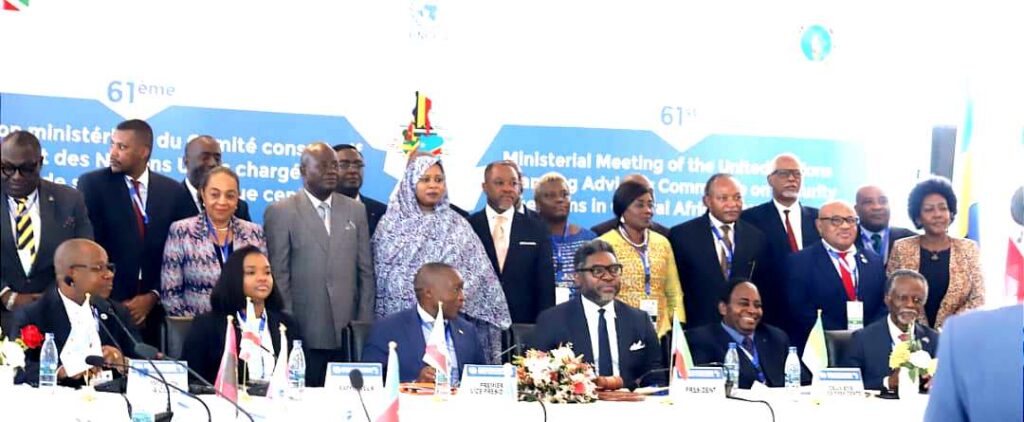
Burundi assumed the presidency of the United Nations Standing Advisory Committee on Security Questions in Central Africa (UNSAC) at its 61st Ministerial Meeting. The meeting took place on Friday, May 29, 2026. The handover occurred between the incoming Burundian Minister of Foreign Affairs and the outgoing Equato-Guinean minister, marking a significant transition in leadership for the regional security body. This rotation of the presidency is a standard practice within UNSAC, ensuring shared responsibility and diverse perspectives in addressing regional challenges.
Focus on Regional Stability
The 61st Ministerial Meeting of UNSAC centered on the theme of 'Strengthening regional mechanisms for conflict prevention, mediation, and peaceful resolution for lasting peace and resilient development in Central Africa'. This full theme shows the committee's commitment to addressing the complex security challenges within the region, which often manifest as internal conflicts, cross-border tensions, and humanitarian crises. The meeting's agenda was meticulously prepared by experts of the Advisory Committee, whose works began several days prior, specifically on May 25, 2026. Their preliminary work involved detailed discussions and analyses, laying the key groundwork for the ministerial discussions and decisions. This preparatory phase is vital for ensuring that the ministerial deliberations are well-informed and targeted, aiming to foster greater stability and cooperation among member states. The emphasis on conflict prevention and mediation notes a proactive approach to regional peace, seeking to address root causes before conflicts escalate.
A Milestone Meeting
The 61st UNSAC Ministerial Meeting occurred as the mechanism completed its 33rd year of existence. The United Nations Standing Advisory Committee on Security Questions in Central Africa (UNSAC) has supported Central African states in their pursuit of peace, security, and stability throughout this extended period. For over three decades, UNSAC has served as a critical platform for dialogue, cooperation, and the implementation of security initiatives across the sub-region. The longevity of the committee notes its enduring relevance and its key role in regional security dialogues and initiatives. Its ongoing function shows the sustained efforts by member states to address complex challenges collaboratively, adapting to evolving security landscapes. The meeting's proceedings reflected this continuing commitment to fostering a secure environment across the region, building on decades of engagement and shared responsibility among member states.
Diplomatic Exchange and Mandate
Burundi officially assumed the rotating presidency of the United Nations Standing Advisory Committee on Security Questions in Central Africa (UNSAC) for a six-month mandate. This marks a significant diplomatic exchange within the regional security body, placing Burundi at the helm of its operations and strategic direction for the coming half-year. The transition occurred during the 61st Ministerial Meeting, showing Burundi's role in guiding the committee's agenda and efforts for the upcoming period. This mandate positions Burundi at the forefront of discussions concerning conflict prevention, mediation, and resolution for lasting peace in Central Africa. The incoming Burundian Minister of Foreign Affairs will now lead the committee's efforts, working closely with other member states to advance its objectives and address pressing security concerns.
Ministerial Statements
The 61st Ministerial Meeting of the United Nations Standing Advisory Committee on Security Questions in Central Africa (UNSAC) was held in Bujumbura, Burundi's economic capital. The discussions showed the significant security challenges facing the region, which continue to demand concerted and coordinated responses from member states. Among these challenges, the committee noted with grave concern that Central Africa currently accounts for nearly twelve million forcibly displaced persons. This staggering figure notes the urgent need for reinforced regional mechanisms to address conflict prevention and resolution, as displacement often stems directly from instability and violence. The humanitarian implications of such widespread displacement were a key point of discussion, emphasizing the human cost of ongoing conflicts and the imperative for sustainable peace.