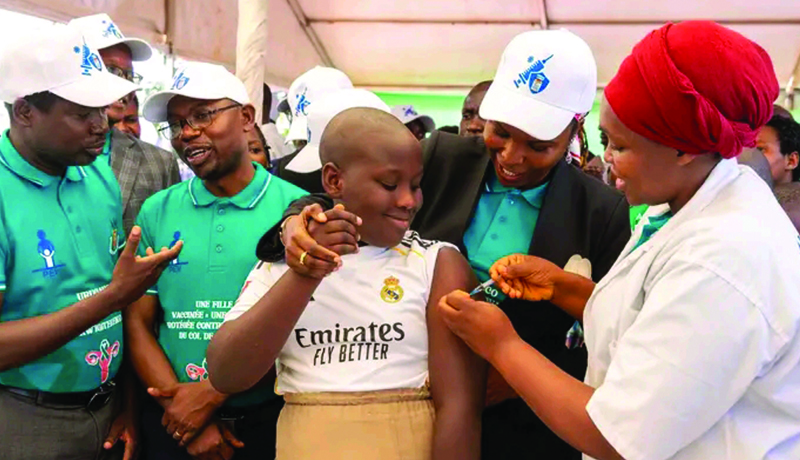
Burundi's First Lady, Angeline Ndayishimiye, officially launched a national vaccination campaign against cervical cancer on Wednesday, April 29, 2026. The initiative aims to protect young girls across the country from the disease, marking a key moment in the nation's public health efforts. The launch event took place in Kibimba, located within the Gitega commune, marking the commencement of the nationwide effort. This strategic location for the launch showed the government's commitment to reaching all corners of the country with this vital health intervention. The campaign represents a significant public health undertaking for Burundi, focusing on preventative measures against a prevalent form of cancer affecting women. This coordinated national program shows the country's commitment to improving health outcomes for its female population and reducing the burden of a preventable disease.
The campaign specifically targets young girls aged 9 to 14 years, recognizing the critical window for vaccination before potential exposure to the Human Papillomavirus (HPV). The theme chosen for this key public health drive is « Ensemble, protégeons nos filles contre le cancer du col de l’utérus », which translates to "Together, let's protect our girls against cervical cancer." This theme emphasizes collective responsibility and the importance of community involvement in ensuring the success of the vaccination program. By focusing on this age group, health authorities aim to provide strong protection against HPV infection, which is the primary cause of cervical cancer. The long-term objective is to significantly reduce the incidence of cervical cancer among future generations of Burundian women.
The Urgent Need for Prevention
Cervical cancer poses a significant public health challenge in Burundi, presenting a substantial burden on the healthcare system and causing immense suffering. Approximately 1,457 women are diagnosed with cervical cancer each year in Burundi, noting the widespread nature of the disease within the population. The mortality rate is also alarmingly high, with an estimated 1,081 women dying from the disease annually. These statistics show the urgent need for effective preventative strategies and early detection programs. Data further indicates that 4.65% of women screened for cervical cancer present signs of the disease, showing the prevalence of early indicators and the necessity for widespread screening alongside vaccination efforts.
The risk factors associated with cervical cancer are varied and often interconnected with human papillomavirus (HPV) infection. Medical understanding suggests that having multiple sexual partners increases the risk of HPV infection, which is a primary cause of cervical cancer. This emphasizes the importance of full sexual health education alongside vaccination. Additionally, multiple pregnancies can contribute to an increased risk of developing the disease, adding another layer of complexity to the epidemiological profile of cervical cancer in the region. The compromised immune system resulting from HIV infection further hinders the body's ability to eliminate HPV, thereby elevating the risk for affected individuals. This makes HIV-positive women particularly vulnerable and notes the need for integrated health interventions. These factors collectively highlight the urgent need for preventative measures and early intervention strategies across the country, with vaccination being a cornerstone of this approach.
Vaccine's Efficacy and Safety
Cervical cancer is essentially caused by a persistent infection with the Human Papillomavirus (HPV). Medical understanding indicates that HPV is transmitted mainly through sexual contact, making vaccination before sexual debut a highly effective preventative strategy. Certain high-risk types of HPV can lead to the development of precancerous lesions, which have the potential to progress into cancer over an estimated period of 15 to 20 years if left untreated. This prolonged progression period offers a key window for intervention, either through vaccination to prevent infection or through screening and treatment of precancerous lesions.
The HPV vaccine offers a key preventative measure against this progression, effectively targeting the root cause of the disease. The World Health Organization (WHO) has validated the efficacy and safety of the HPV vaccine through rigorous scientific study and extensive clinical trials. This global endorsement provides a strong foundation for national vaccination programs like Burundi's. Data suggests that the vaccine could prevent up to 80% of cervical cancer cases, significantly reducing the incidence of the disease and saving countless lives. This preventative capacity is central to public health strategies aimed at eliminating cervical cancer as a major public health threat, aligning with global goals for cancer control. The widespread adoption of the HPV vaccine is therefore seen as a critical step towards achieving a future where cervical cancer is rare.
Addressing Rumors and Promoting Uptake
The national vaccination campaign targets young girls aged 9 to 14 years, a demographic chosen for maximum preventative impact. Its theme, « Ensemble, protégeons nos filles contre le cancer du col de l’utérus » (Together, let's protect our girls against cervical cancer), aims to foster a sense of community responsibility and shared purpose in this health initiative. The campaign shows that while cervical cancer most often appears in women aged 30 years and older, infection can occur from adolescence. This understanding is key for public awareness, as it clarifies why vaccination is targeted at younger girls, long before the typical onset of cancer symptoms.
Early initiation of sexual intercourse, specifically before 20 years old, is identified as a risk factor for the disease, further emphasizing the importance of vaccinating girls before they become sexually active. This proactive approach aims to protect them throughout their lives. Public health information emphasizes that when detected early at the precancerous lesion stage, cervical cancer can be treated effectively, often with minimally invasive procedures. However, the campaign's primary goal is to prevent these later stages through early vaccination, thereby avoiding the need for treatment altogether. By providing clear, evidence-based information, the campaign seeks to counteract misinformation and encourage widespread acceptance and uptake of the HPV vaccine among parents, guardians, and the community at large. This full strategy, combining vaccination with public education, is essential for tackling cervical cancer effectively in Burundi.