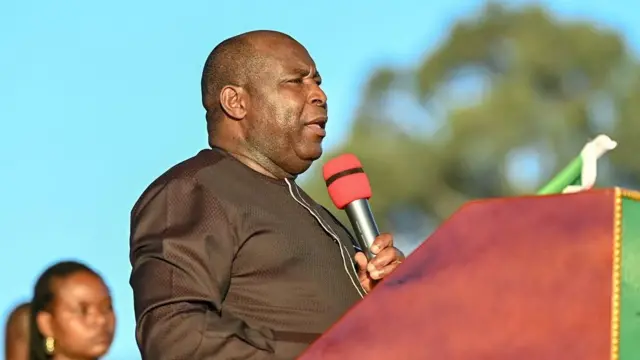
Burundi's President Evariste Ndayishimiye attributed the 1972 "genocide" against Hutus to the leadership of that era rather than ethnicity, stating that it was orchestrated and carried out by the leaders of that time. President Ndayishimiye made these remarks on Thursday in the former Muyinga province, now Buhumuza province, during the official launch of prayers of thanksgiving for his six years in office. He expressed sadness, stating, "It saddens me greatly when they hear about the 1972 genocide and immediately assume that Tutsis committed it."
President Ndayishimiye reassured Tutsis, emphasizing that the "genocide" was not perpetrated by Tutsis. He stated, "I want to reassure you. That genocide was not committed by Tutsis. It was committed by the leaders who were governing the country. And they do not have an ethnicity." He further added, "Therefore, no Tutsi should ever fear again. We want to show how bad leadership destroys a country." Ndayishimiye stressed that people cannot heal if the truth, however painful, is not brought to light, urging all ethnic groups to collectively heal past wounds. He called for thorough examination and treatment of these historical grievances, stating, "Let's uncover it, even if it hurts, let's treat it, and then we will be called Burundians." He concluded, "No one should look at each other badly, or think of revenge." The President's address showed a commitment to confronting the nation's past honestly, aiming to foster unity and prevent future conflicts.
Truth Commission Report Released
The President's statements followed the submission of a final report by the Truth and Reconciliation Commission (CVR) to the joint parliament, which confirmed that a "genocide" was committed against Hutus in 1972. According to the CVR report, over 300,000 Hutus were killed during these events. This staggering figure notes the immense scale of the atrocities committed during that period. The CVR first released a report confirming the "genocide" of Hutus in 2021, and this was subsequently approved by the parliament. Despite these confirmations, the Burundian government has not yet issued a decree officially recognizing the "genocide of Hutus." The CVR's findings represent a critical step in acknowledging a painful chapter of Burundi's history, providing a basis for national dialogue and reconciliation efforts. The report's detailed accounts aim to ensure that the victims' experiences are documented and remembered.
The 1972 killings, which primarily targeted Hutus, are considered the most devastating conflict in Burundi's recent history. The CVR commenced its work in 2016, with its primary focus directed towards investigating and documenting the events of the 1972 conflict. This extensive work culminated in the full report submitted to the joint parliament, documenting the atrocities and identifying the conflict as a genocide against the Hutu population. The commission's findings laid the groundwork for the ongoing national dialogue regarding historical accountability and reconciliation. The CVR's mandate has been to shed light on these dark periods, providing a factual basis for understanding the complexities of the nation's past. The careful investigation into the 1972 events aimed to provide a definitive account, key for the healing process.
Historical Context of Violence
Burundi has experienced political conflicts involving mass killings based on ethnicity, particularly between Hutus and Tutsis, since gaining independence in 1962. These periods of widespread violence have shaped the country's post-colonial history. Beyond the 1972 events, other significant periods of mass killings in Burundi include 1965, 1988, and 1993. These conflicts have contributed to a complex history of inter-ethnic tension and violence, leaving deep scars on the national psyche. Each wave of violence added layers of trauma and mistrust, making the task of reconciliation particularly challenging.
The country's Truth and Reconciliation Commission (CVR) was established to investigate these historical events. The CVR extended its historical period of investigation to begin in 1885, marking the start of the colonial era in Burundi. This broader scope aimed to provide a full understanding of the root causes and historical trajectory of the conflicts, recognizing that colonial policies often exacerbated existing social divisions. The commission's mandate covers the period from 1885 to 2008, encompassing critical eras of colonial rule, independence, and subsequent civil unrest. By examining this extended timeline, the CVR sought to document human rights violations and acts of violence that occurred across multiple generations, leading to its recent findings regarding the 1972 killings. This extensive historical review was intended to offer a holistic perspective on the factors contributing to the nation's cycles of violence.
Concerns and Reconciliation Efforts
The Truth and Reconciliation Commission (CVR) was established as a result of the Burundian peace accords of 2000. These accords aimed to end the conflicts that had plagued Burundi from its independence until 2008, setting a framework for national healing and historical accountability. The CVR's formation was a key component of these efforts, designed to investigate past atrocities and contribute to lasting peace. The establishment of the commission was seen as a key step towards addressing the grievances of various communities and fostering a shared understanding of the past.
Despite its mandate, some Burundian groups have expressed dissatisfaction with the CVR's process. For instance, AC-Génocide Cirimoso has noted that the commission did not collaborate with the United Nations, a collaboration that was agreed upon in the 2000 Arusha peace accords. This lack of perceived external oversight and partnership has led to questions regarding the impartiality and comprehensiveness of the CVR's work among certain segments of Burundian society. Such concerns highlight the delicate balance required in truth and reconciliation processes, where trust and broad acceptance are critical for success. The absence of UN collaboration, as stipulated in the accords, has been a point of contention for some stakeholders, potentially impacting the perceived legitimacy of the commission's findings.
Concerns have also been raised by experts who warn about the potential ramifications if the CVR's work is not handled with extreme care. These experts suggest that an improperly managed process could risk reopening old wounds and potentially lead Burundi back into conflict. The sensitive nature of the historical events under investigation, coupled with the deeply entrenched ethnic divisions, necessitates a delicate approach to avoid exacerbating existing tensions or creating new ones within the country. The path to reconciliation is fraught with challenges, and the manner in which historical truths are presented and accepted can have profound implications for future stability. The calls for careful management show the fragility of peace in a nation still grappling with its violent past.