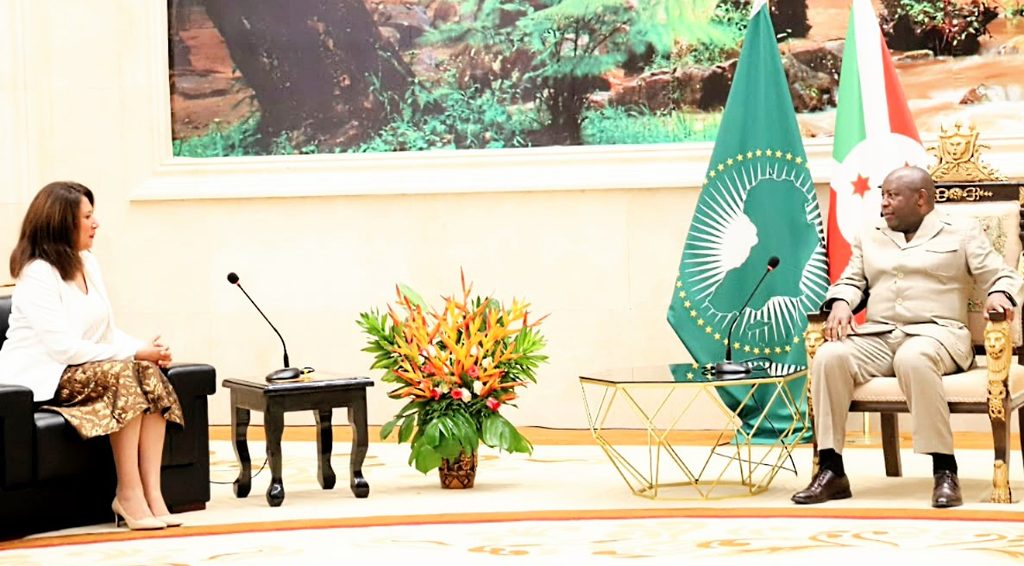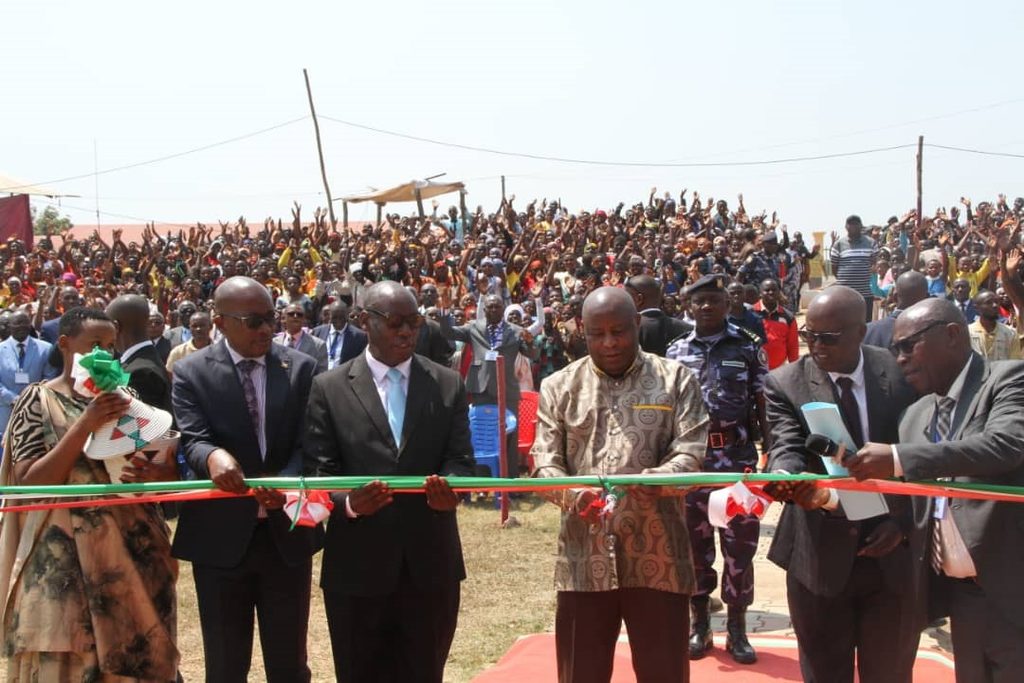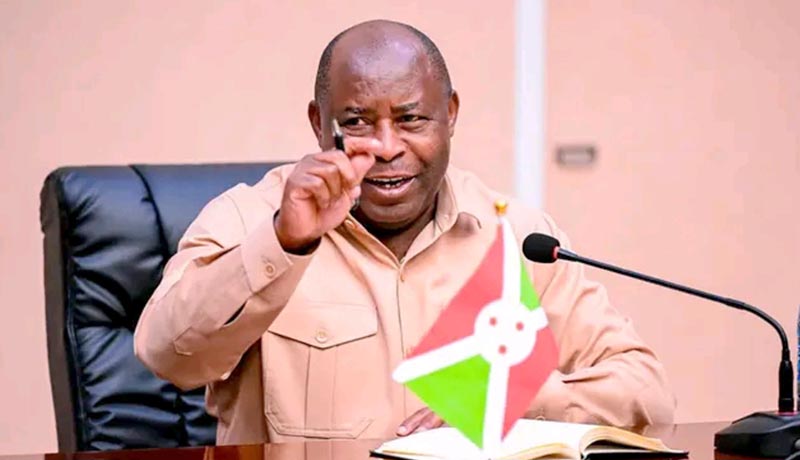
Burundian President Evariste Ndayishimiye addressed high-ranking officials from the Ministry of Mining, Energy, Industry, Commerce, and Tourism on August 14, 2026, at Ntare House in Bujumbura. During the critical meeting, President Ndayishimiye expressed strong dissatisfaction with the performance of various economic sectors, asserting that they were not contributing sufficiently to the nation's wealth. He unequivocally stated, "Il n’y a aucun secteur qui apporte de la richesse au pays. Aucun" (There is no sector that brings wealth to the country. None), showing the severity of his concerns regarding the country's economic output.
President's Bold Financial Mandate
President Evariste Ndayishimiye outlined a stringent financial mandate for key economic ministries, demanding a significant overhaul in their operational effectiveness and revenue generation capabilities. His remarks noted a perceived systemic failure across key economic pillars. Sotrevo Mining Limited, a company holding an industrial mining permit for valuable minerals, was specifically cited as an example of underperformance and inefficiency. The company's permit covers the extraction of Cassiterite, Colombo-Tantalite, and other associated minerals within the Murehe perimeter, an area located in Busoni commune, Buhumuza province. Despite its operational scope and the potential for substantial returns, the head of Sotrevo Mining Limited reportedly failed to execute an order valued at $147,000. This failure occurred despite the company possessing sufficient liquidity to complete the transaction, a detail that particularly irked the President and served as a stark illustration of the issues he sought to address.
The President's directive comes at a critical juncture, as the Ministry of Mining, Energy, Industry, Commerce, and Tourism faces significant financial targets and challenges. The planned expenses for this vital ministry for the upcoming period amount to a substantial 188,865,854,181 BIF. This considerable expenditure necessitates a strong revenue stream to ensure fiscal balance. Concurrently, the nation's broader financial outlook projects a substantial deficit, adding further pressure on these sectors to perform. For the 2026-2027 fiscal year, a deficit of up to 572 billion BIF is anticipated. This significant projection shows the urgency of the President's demand for increased revenue generation and improved efficiency across all economic sectors. The President's expectation is clear: the Ministry of Mining and Commerce is tasked with contributing at least 50% of the current fiscal year's budget, with an ideal target set at an ambitious 100%. This mandate reflects a determined effort to harness the economic potential of these sectors to address the national budget shortfall.
Deep-Rooted Governance and Structural Issues
President Ndayishimiye articulated his profound frustration with sector performance, using strong language to convey his discontent. He lamented, "Commerce yarapfuye. Mines yarapfuye…" (The commerce is dead. The mines are dead…), indicating a widespread stagnation that he believes is hindering national progress. The president's remarks highlight broader concerns about the nation's economic output, particularly as the general state budget for the 2026-2027 fiscal year exceeds 7,020.6 billion Burundian Francs (BIF). This substantial budget, outlined in the law of June 30, 2026, which specifies a total of 6,347,217,693,221 BIF, shows the immense pressure on all sectors to contribute effectively to national revenue and justify their operational costs.
Beyond underperformance, accusations of corruption have also surfaced, notably against Regideso, Burundi's public utility company responsible for water and electricity. Officials within Regideso are reportedly demanding bribes from customers seeking essential services like electricity connections or meters. These allegations point to systemic issues that undermine public trust and economic efficiency. President Ndayishimiye issued a direct and stern warning to Regideso officials regarding these allegations, stating unequivocally, "Attendez-vous à une visite de l’Inspection générale!" (Expect a visit from the General Inspectorate!). This presidential warning signals a potential crackdown on corruption within state-owned enterprises, indicating that such practices will not be tolerated and will be met with rigorous investigation and accountability. The President's firm stance aims to restore integrity and efficiency in public service delivery.
Despite the current challenges and the president's strong criticisms, the general state budget for the 2026-2027 fiscal year projects economic growth of 5.5%. This growth projection indicates an optimistic outlook for the nation's economy, even as governance and structural issues in key sectors require urgent attention and reform. The government's optimism suggests a belief that with targeted interventions and improved oversight, the country can still achieve significant economic expansion.
Expert Analysis and Path Forward
President Ndayishimiye has set an ambitious expectation for the Ministry of Mining and Commerce to contribute at least 50% of the current fiscal year's budget, with an ideal target of 100%. This directive aims to leverage the nation's natural resources and commercial activities to significantly bolster state coffers. The general state budget for the 2026-2027 fiscal year, as stipulated by the law of June 30, 2026, totals 6,347,217,693,221 BIF. This substantial figure notes the scale of the financial challenge and the magnitude of the President's expectations for these key ministries.
A closer look at current contributions reveals the extent of the challenge. Mining revenues are currently estimated at a modest 4,256,619,353 BIF, which constitutes approximately 0.067% of the overall budget. This figure starkly contrasts with estimates for artisanal gold production, which is thought to range between three and four tons annually. This estimated artisanal output is significantly higher than the approximately 1.2 tons officially exported in 2025, suggesting a substantial portion of mineral wealth is not being formally captured by the state. The discrepancy between estimated artisanal production and official exports points to potential issues with traceability, formalization, and revenue collection within the mining sector.
Economist Jean Ndenzako described the president's objective as politically relevant but challenging to achieve in the short term. Ndenzako noted that if the target solely pertains to revenues directly generated by the mining, energy, industrial, and tourism sectors, it appears unrealistic in the immediate future. He emphasized the multifaceted approach required for success. "L’enjeu est donc d’augmenter simultanément la production, la traçabilité et la conformité," Ndenzako stated, stressing the critical need to increase production, traceability, and compliance concurrently across these sectors. He further elaborated on the interconnectedness of these economic drivers: "L’énergie permet de réduire les coûts de production. L’industrie stimule la demande en intrants locaux. Le commerce relie les producteurs aux marchés et le secteur minier peut fournir les devises nécessaires à l’importation des équipements." This notes a holistic view where improvements in one sector can positively impact others, creating a virtuous cycle of economic growth.
Ndenzako further elaborated on the budget target, providing a nuanced perspective on its feasibility. He stated, "Si elle concerne uniquement les recettes directement issues des secteurs minier, énergétique, industriel et touristique, elle paraît irréaliste à court terme. En revanche, si elle inclut l’ensemble des recettes fiscales générées indirectement par ces activités, une part importante du budget peut effectivement y être rattachée." This distinction is key, suggesting that indirect fiscal contributions, such as taxes on related services and employment, might make the target more attainable. The economist also noted that the mere presence of significant mineral resources does not automatically guarantee growth or substantial state revenue. "L’existence de ressources minières importantes ne garantit pas automatiquement la croissance," Ndenzako said. He continued, "Tout dépend de la qualité des institutions et de leur capacité à transformer ces ressources en investissements productifs plutôt qu’en rentes. L’opacité des contrats, des volumes produits et des bénéfices réels limite ainsi fortement l’impact budgétaire." This shows the importance of strong governance, transparent regulatory frameworks, and effective resource management to translate natural wealth into tangible economic benefits for the nation.
Ndenzako pointed out that low foreign exchange reserves contribute to critical shortages, fuel informal exports, and exacerbate tax evasion. "Les faibles réserves de change alimentent également les pénuries, les exportations informelles et l’évasion fiscale," he explained, illustrating a vicious cycle where a lack of formal currency leads to illicit activities. He concluded that "Tant que le circuit officiel reste moins attractif que le marché informel, la contrebande persistera," indicating that the government must make formal channels more appealing to economic actors. Ultimately, Ndenzako suggested that "Une convergence progressive permettrait d’améliorer le rapatriement des devises," emphasizing that aligning the incentives of the formal and informal economies is key to increasing foreign exchange repatriation and strengthening the national economy.