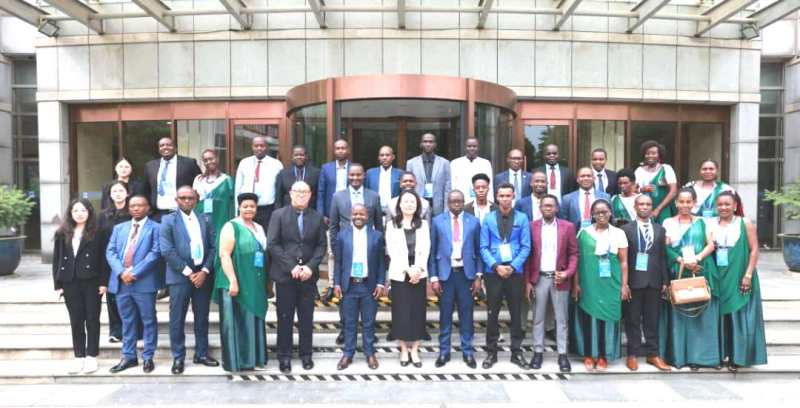
A training seminar aimed at strengthening media communication capacities in Burundi officially opened on Wednesday, May 6, 2026. This significant initiative shows the ongoing efforts to bolster media professionalism within the East African nation. The program is taking place at the Training and Research Institute of the National Radio and Television Administration (ANRT) in Beijing, People's Republic of China, providing a unique international learning environment for the participants. A Burundian delegation of thirty participants is attending the training, comprising communicators from public institutions and journalists from both public and private media outlets, reflecting a broad representation of Burundi's media landscape. This diverse group is set to benefit from an intensive curriculum designed to enhance their professional capabilities and foster international media cooperation.
Training Program Content
The training program incorporates a variety of modules designed to enhance media skills and understanding of Chinese media, offering a full and practical learning experience. Participants are receiving instruction on the history, transformation, and aesthetics of Chinese television series, examining them as popular narratives and exploring their impact on cultural communication. This module aims to provide insights into effective storytelling and production techniques from a different cultural perspective. A dedicated session focuses on "Xi Jinping's thought and China's national situation," providing insights into the country's governance and development philosophy, thereby offering a deeper understanding of contemporary China.
The curriculum also includes practical courses such as non-fictional short video production techniques, equipping journalists with contemporary content creation skills essential for modern digital media. These hands-on sessions are key for developing practical expertise in a rapidly evolving media environment. Conferences are scheduled to cover international media cooperation, exploring avenues for cross-border collaboration and exchange. Further topics include media modernization, addressing the technological and structural changes impacting the industry, and communication approaches relevant to global development, emphasizing the role of media in societal progress. Additionally, the program addresses constructive journalism, a vital approach for reporting on solutions and progress, and strategies for preventing fake news, positioning these topics within the broader context of communication for global development and responsible media practices.
Broader Cooperation Context
Diplomatic relations between China and Burundi were established in 1963, laying a foundation for ongoing bilateral engagements between the two nations across various sectors. This training initiative is part of a broader framework of cooperation, reflecting the enduring partnership between China and Burundi. A Sino-African media cooperation forum is scheduled to take place in August 2026, further emphasizing collaboration in the media sector on a continental scale. Burundi has been extended an invitation to participate in this forum, indicating its significant role in the continent-wide media partnership and its commitment to strengthening regional and international media ties. The upcoming forum aims to strengthen ties and facilitate exchanges among media professionals from African countries and China, fostering a platform for dialogue and shared learning. This broader context notes the strategic importance of media cooperation in fostering mutual understanding and development.
Official Remarks
Zou Jihong, Vice President of the Training and Research Institute of the National Radio and Television Administration (ANRT), stated at the opening ceremony that China and Burundi have always been friends. Mr. Zou emphasized that China attaches great importance to its relationship with Burundi, which he described as a "good friend" and a "good brother," showing the deep mutual respect and solidarity between the two countries. He noted the historical depth of diplomatic relations, which were established in 1963, marking a long-standing bond. According to Mr. Zou, the training program is specifically designed to strengthen communication exchanges, improve the capacity of media professionals in Burundi, and contribute to the overall development of Burundi's media sector. He also expressed hope that the participants would deepen their understanding of China and serve as a bridge for communication between the two nations, fostering stronger cultural and professional ties.
Samuel Niyonzima, a representative of the Burundian Embassy in Beijing, acknowledged the significant contributions China has made to Burundi's development. Mr. Niyonzima noted that the training program is a tangible example of the strong cooperative ties between the two countries, demonstrating China's commitment to supporting Burundi's progress. He expressed gratitude for the opportunity provided to Burundian journalists and communicators to enhance their skills in media production and communication strategies, recognizing the long-term benefits this training will bring to Burundi's media landscape.