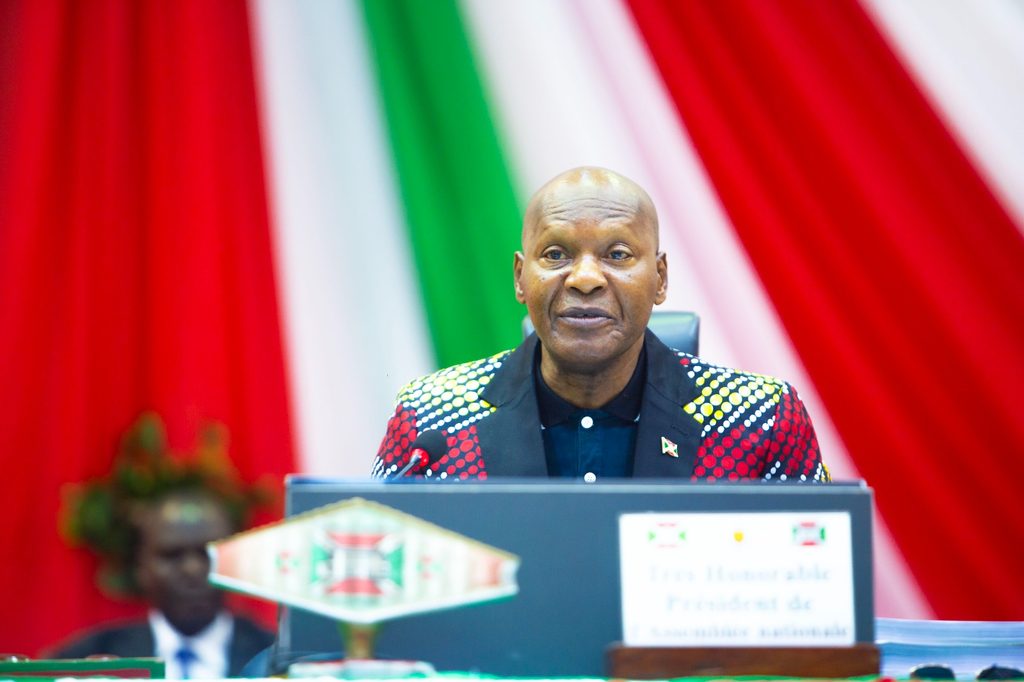
Members of the Burundian National Assembly gathered at the Kigobe hemicycle on 28 October 2026 to review the nation’s fiscal performance. Daniel Gélase Ndabirabe presided over the session, which focused on evaluating state financial management and budget execution. The proceedings took place as part of the legislative body's regular oversight functions regarding the economic direction of Burundi. This official session, held on October 28, 2026, at the Kigobe hemicycle under the leadership of Daniel Gélase Ndabirabe, served as a platform for deputies to examine the fiscal health of the nation.
Strong Tax Revenue Performance
Tax revenue realization for the third quarter of the 2025-2026 fiscal year reached 112.7 percent. Collections totaled 688,131,721,323 Fbu, surpassing the established target of 610,179,986,681 Fbu. Tax revenue realization for the third quarter of 2025-2026 reached 112.7%, totaling 688,131,721,323 Fbu against a target of 610,179,986,681 Fbu. Performance continued to exceed expectations in the fourth quarter, where revenue realization reached 128.29 percent. During this period, the state collected 715,579,886,619 Fbu against a target of 557,771,826,920 Fbu. Tax revenue realization for the fourth quarter of 2025-2026 reached 128.29%, totaling 715,579,886,619 Fbu against a target of 557,771,826,920 Fbu.
Parliamentary commission members scrutinized these figures during the assembly proceedings. The commission recommended that the assembly invite the ministers responsible for the peat and Anagessa sectors to address specific discrepancies. These ministers are expected to provide explanations regarding the zero-percent revenue realization rates recorded in their respective areas of oversight. The parliamentary commission recommended inviting ministers responsible for the peat and Anagessa sectors to explain zero-percent revenue realization rates. This recommendation notes the assembly's commitment to ensuring that every sector contributes to the national budget as planned.
Operational adjustments to the tax collection system remain a priority for the government. The Ministry of Finance intends to distribute more than 40,000 billing machines to merchants as part of its financial management strategy for the 2025-2026 fiscal year. This initiative aims to improve the tracking of commercial transactions and support the broader goals of the national budget. The Ministry of Finance plans to distribute over 40,000 billing machines to merchants during the 2025-2026 fiscal year. By implementing this technology, the government seeks to modernize its oversight capabilities and ensure that revenue collection is both transparent and efficient. The deployment of these machines represents a significant step in the administration's ongoing efforts to streamline fiscal processes and enhance accountability across all commercial sectors identified for tax compliance. As the assembly continues its oversight, the focus remains on maintaining the momentum observed in the third and fourth quarters of the fiscal year.