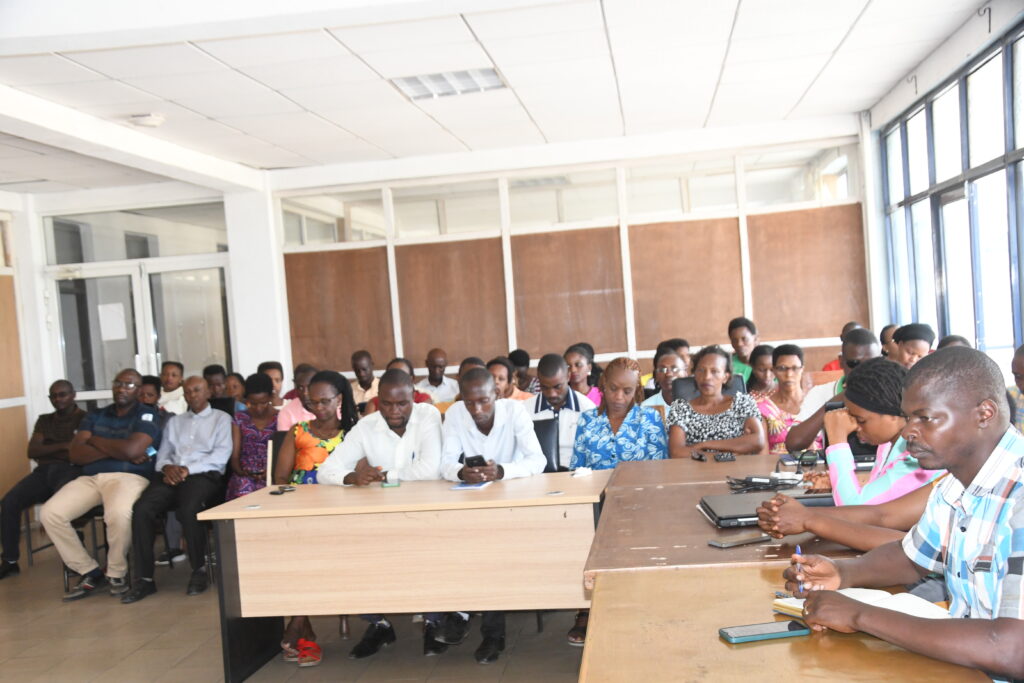
The Directorate General of Burundian Press Publications (DGPPB) reported a largely positive performance for the 2025-2026 budget year, indicating significant strides in its operational and financial management. The institution, which holds the key responsibility for state publications in Burundi, noted its contributions to the country's fiscal revenue. This positive outcome, which included a notable boost to fiscal revenue growth, was largely achieved through dedicated and collegial work within the directorate, according to the DGPPB's official statement. The interim Director General, Donat Maganya, showed this positive performance on Friday, July 3, 2026, during an ordinary general assembly meeting, where he presented the institution's achievements and future strategic directions.
Key Achievements and Future Investments
Looking ahead, the Directorate General of Burundian Press Publications (DGPPB) has made substantial financial commitments for the upcoming fiscal year. Over 1 billion Burundian francs from its 2026-2027 budget is specifically allocated to acquire a modern printing press. This significant investment is projected to be a transformative step for the institution. The DGPPB anticipates that the new printing press will not only enhance the value and quality of its publications but also significantly reduce state expenditures. This reduction in costs is particularly noteworthy given that annual expenses for printing the state newspapers, Ubumwe and Le Renouveau, previously exceeded 1 billion francs, as reported by the DGPPB.
Additional projects, also funded within the 2026-2027 budget, are poised to further modernize the institution's infrastructure and reach. These initiatives include the full digitization of the Publications de presse Burundaises (PPB)'s extensive press library, a move that will preserve historical records and improve accessibility. Plans also encompass the establishment of a new agency in the province of Buhumuza, expanding the DGPPB's physical presence and operational capacity beyond the capital. The development of a professional website for Le Renouveau is currently in its final phase, promising an enhanced digital presence for the newspaper. Following the successful launch of Le Renouveau's website, the Executive Secretariat of Information and Communication Technologies (Setic) will proceed with the creation of a dedicated website for the weekly Ubumwe. These multifaceted investments collectively aim to modernize the institution's operations, broaden its public reach, and adapt to the evolving demands of the media landscape.
Budget and Regulatory Framework
For the 2026-2027 fiscal year, Publications de presse Burundaises (PPB) has been allocated a general budget totaling 4 billion 396 million Burundian francs, reflecting the government's commitment to supporting state media. In parallel with its financial planning, the Directorate General of Burundian Press Publications (DGPPB) also completed the key task of revising and harmonizing the regulatory texts that govern the PPB. These updated texts, which are essential for providing a clear and modern operational framework, are currently awaiting official promulgation to come into full effect.
Addressing Challenges and Outlook
Despite the broadly positive performance noted by interim Director General Donat Maganya on Friday, July 3, 2026, during the ordinary general assembly meeting, employees of the Directorate General of Burundian Press Publications (DGPPB) have raised several grievances. These concerns point to operational challenges that, if addressed, could further enhance the institution's effectiveness. Among the most pressing issues is a notable lack of necessary equipment required for their daily operations, which can impede productivity and quality. Journalists within the DGPPB have also expressed dissatisfaction with insufficient opportunities for field reporting, which limits their capacity to gather news directly and produce full stories. Employees have pointed to inadequate training provisions in both journalism and photography, suggesting a need for enhanced professional development to meet evolving media demands and improve content quality. Addressing these internal concerns will be key as the DGPPB moves forward with its ambitious modernization plans.