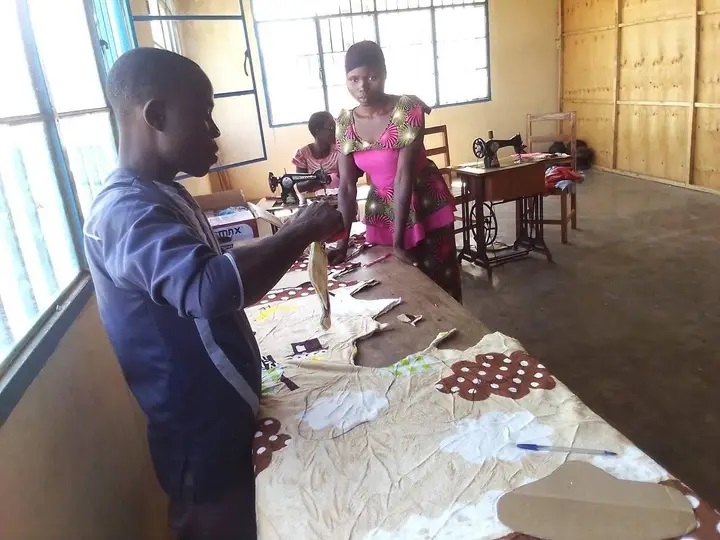
Young people in the Zone Mudubugu are increasingly embracing artisanal trades, with sewing emerging as a key skill, to construct their futures and address unemployment challenges. This initiative provides a path for economic autonomy in the community, offering a tangible solution to the widespread issue of joblessness among the youth. The development was reported on July 3, 2026, noting a growing trend where young individuals in the Mudubugu zone are actively turning to artisanal trades, particularly sewing, to build their future and combat unemployment. This shift towards vocational skills represents a proactive approach by the youth to secure their livelihoods and contribute to local economic development.
Paths to Independence
Jean Marie Nibitanga, a tailor in Mudubugu, stated that sewing has enabled him to achieve financial independence following years of unsuccessful job searching. "M. Nibitanga indique que la couture lui a permis d’acquérir une indépendance financière après plusieurs années de recherche d’emploi sans succès," Nibitanga said. His personal journey shows the transformative potential of acquiring practical skills in a community where formal employment opportunities can be scarce. He further explained his progression in the trade. "Il explique qu’après avoir appris le métier auprès d’un maître tailleur, il a progressivement attiré sa clientèle grâce à la qualité de son travail," Nibitanga added, detailing how he built his client base through the quality of his work after training with a master tailor. This dedication to craftsmanship not only secured his own financial future but also established him as a respected professional within the community. His journey notes how vocational skills can provide a direct route to self-sufficiency for young people in the community, fostering a sense of accomplishment and economic stability. The ability to learn a trade and then independently build a business is a powerful model for others seeking similar paths.
Obstacles and Opportunities
Yvette Irankunda, a seamstress, noted several challenges confronting couturiers in the Zone Mudubugu. Irankunda specifically cited the lack of capital required to acquire modern sewing machines and difficulties in accessing certain materials. "Cependant, Yvette Irankunda, la coutière, évoque plusieurs défis auxquels les couturiers sont confrontés, notamment le manque de capitaux pour acquérir des machines modernes et les difficultés d’accès à certains matériaux," Irankunda stated. These challenges represent significant barriers for young entrepreneurs looking to scale their businesses or improve efficiency. The high initial investment for advanced equipment and the inconsistent supply chain for quality fabrics and accessories can hinder growth and competitiveness.
Despite these obstacles, Irankunda maintains an optimistic outlook regarding the sewing profession's viability for young people. She believes the trade remains both profitable and a source of hope. "Malgré ces obstacles, elle estime que le métier demeure rentable et porteur d’espoir pour la jeunesse," Irankunda added. Her perspective suggests that while resource constraints exist, the potential for economic gain and self-reliance through sewing persists for the youth in Mudubugu. The inherent demand for clothing and tailoring services within the community provides a stable market for skilled individuals, making it a reliable source of income. This blend of profitability and the promise of a better future makes sewing an attractive career choice for many.
Call for Greater Support
Young couturiers in the Zone Mudubugu are advocating for increased support from authorities and development partners. Their appeal includes calls for professional training, enhanced access to credit, and the provision of suitable equipment. These young professionals seek assistance to overcome present challenges and further develop their craft and businesses. They believe that with targeted interventions, the potential of the sewing sector to absorb unemployed youth and contribute significantly to the local economy can be fully realized. The request for professional training aims to upgrade skills, introduce new techniques, and ensure that the quality of work meets contemporary standards. Access to credit is key for purchasing modern machinery, expanding workshops, and managing inventory, which are vital for business growth. The provision of suitable equipment would directly address one of the primary hurdles identified by seamstresses like Yvette Irankunda, enabling them to produce higher quality goods more efficiently. Such support would not only empower individual artisans but also strengthen the overall artisanal trade sector in Mudubugu.