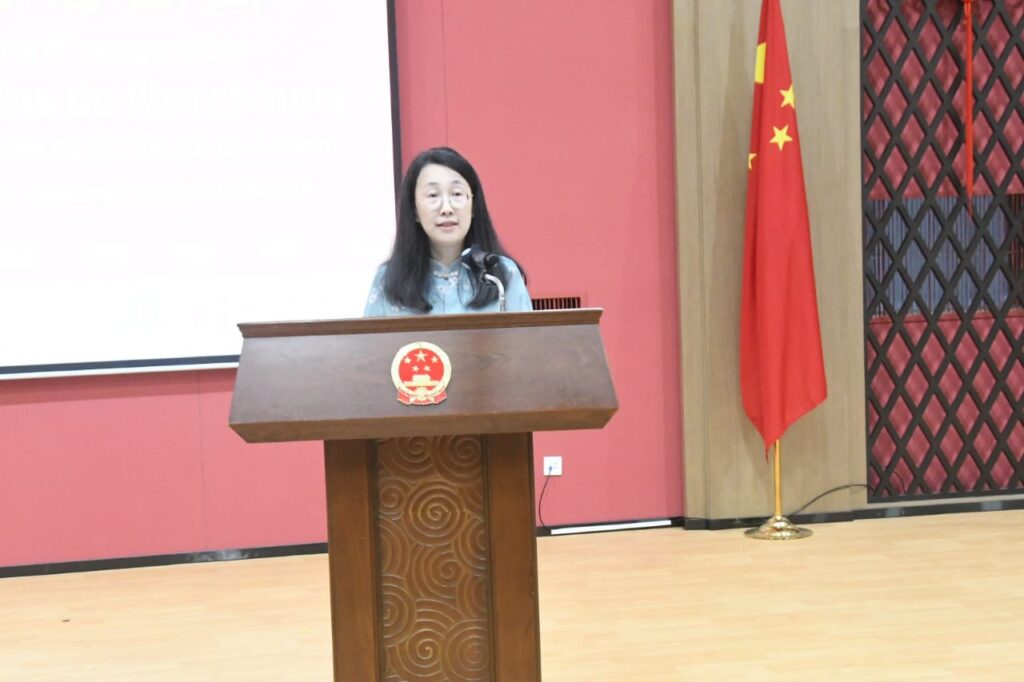
The Embassy of the People's Republic of China in Burundi held inauguration ceremonies for Chinese Film Week in Bujumbura, integrating the event into the 16th edition of Festicab (Festival international du cinéma et de l’audiovisuel du Burundi). The cultural initiative unfolded within the broader framework of the Sino-African Year of Human and Cultural Exchanges. This designation aims to foster deeper connections between China and the African continent. The current film week contributes to this ongoing exchange, which anticipates a significant milestone in 2026. That year is officially designated as the Year of Human and Cultural Exchanges between China and Africa, signaling continued efforts in cultural diplomacy. This current manifestation of cultural exchange takes place specifically in the context of the Sino-African Year of Human and Cultural Exchanges, noting the strategic importance of these initiatives.
Cultural Diplomacy and Cooperation
Ambassador Zhu Kewei expressed gratitude to individuals and friends supporting cultural exchanges between China and Burundi. Chinese Film Week has become a flagship event for human and cultural exchanges between the two nations. For the first time, these festivities were organized in collaboration with Festicab, the international film and audiovisual festival of Burundi. Ambassador Zhu stated that the event embodies a common desire to offer a cultural feast belonging to both China and Burundi, while strengthening their cultural cooperation. He noted, "L’année 2026 marque l’Année des échanges humains et culturels entre la Chine et l’Afrique. Nous venons aussi de célébrer le 10 juin la Journée internationale pour le dialogue entre les civilisations. L’événement que nous organisons aujourd’hui incarne donc la volonté commune des deux parties d’offrir un festin culturel qui appartient à la fois à la Chine et au Burundi et de renforcer davantage leur coopération culturelle." This event, therefore, embodies the common will to offer a cultural feast belonging to both China and Burundi and to strengthen their cultural cooperation, reinforcing the deep ties between the two nations.
The event also testifies to the vitality of the friendship and cooperation between China and Burundi, founded on mutual respect, solidarity, and a common vision for a shared future. This vitality is a cornerstone of the bilateral relationship, demonstrating a strong and evolving partnership. Culture, as one of the noblest expressions of a people's identity, brings individuals closer, transcends borders, fosters mutual understanding, and builds lasting bridges between nations. It serves as a powerful medium for diplomatic engagement, allowing for genuine connection beyond political and economic interests. Ambassador Zhu Kewei further expressed hope that "les cinéastes chinois et burundais renforceront leurs échanges et coopération et créerons ensemble de bonnes œuvres qui incarnent l’esprit du temps, qui portent les aspirations des peuples et qui continuent d’illuminer les cœurs et de connecter le monde." This aspiration shows the potential for cinema to act as a collaborative platform for artistic expression and cross-cultural dialogue.
The Power of Cinema
Cinema's most significant value is its capacity to transcend linguistic, geographical, and cultural barriers, fostering mutual understanding, respect, and appreciation among diverse populations. The most precious value of cinema lies in its strength to cross barriers of language, borders, and cultures, enabling peoples to understand, respect, and appreciate each other. The medium allows for the portrayal of different ways of life, traditions, and perspectives, creating connections that might not otherwise exist. Through storytelling, films can bridge divides and illuminate shared human experiences, even across vast distances. This unique ability makes cinema a powerful instrument for cultural exchange and diplomacy. Its narratives can educate and entertain, subtly influencing perceptions and promoting empathy. The visual and auditory elements of film communicate directly, bypassing the need for translation in conveying emotions and universal themes. This direct communication facilitates a deeper connection between audiences and the cultures depicted on screen. By presenting authentic representations of societies, cinema enables viewers to engage with and learn from different backgrounds, fostering a global appreciation for diversity. This capacity for universal appeal makes cinema an invaluable tool in promoting international goodwill and cooperation.
Broader Context and Future Hopes
The ceremonies marking the launch of Chinese Film Week were held in Bujumbura on Wednesday, July 15, 2026. This event forms part of a broader cultural initiative, showing ongoing efforts to foster international dialogue. The timing of the film week follows another significant cultural observance. June 10th was celebrated globally as the International Day for Dialogue Among Civilizations. These events collectively highlight a sustained focus on cultural exchange and mutual understanding between nations. The Film Week's integration into Festicab further demonstrates a collaborative approach to cultural diplomacy. This strategic alignment aims to amplify the reach and impact of such initiatives, promoting deeper connections through shared artistic experiences. The commitment to these cultural exchanges reflects a long-term vision for strengthening international relations and fostering a more interconnected global community, with 2026 serving as a key year for Sino-African human and cultural exchanges.