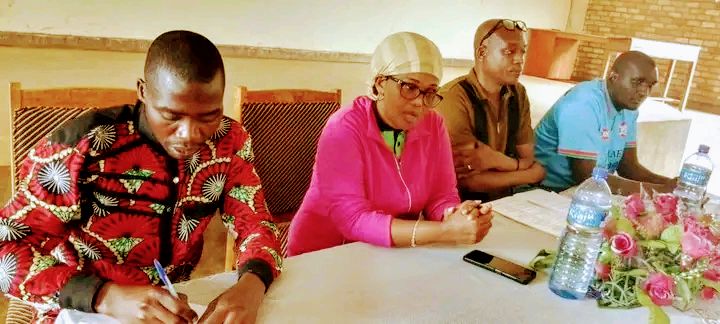
Commune Muhanga hosted a capacity-building session on legal texts on Thursday, July 2, 2026, for authorities from zone Gahombo and zone Nzewe. The session, which focused on key legal frameworks, aimed to enhance the capacities of local leaders. The training included chefs collinaires, chefs des conseils des notables collinaires (Abahuza), présidents des tribunaux de résidence, and conseillers chargés de l’administration et des affaires juridiques. This important initiative aimed to consolidate participants' knowledge of legal texts governing their functions, ensuring they are well-versed in the legal landscape relevant to their roles. Its objective was to promote governance rooted in transparency, equity, accountability, and respect for the law within the commune, thereby fostering a more just and efficient local administration. The full session was designed to equip these local officials with the necessary tools to uphold legal standards and serve their communities effectively.
Guidance on Competencies and Procedures
Fidèle Nibigira, one of the trainers, emphasized the distinction between the responsibilities of chefs de collines and chefs des conseils des notables collinaires to prevent overlapping competencies. Nibigira insisted on the clear delineation of these roles to ensure smooth operation and avoid conflicts arising from ambiguous duties. Nibigira also noted the importance of adhering to legal procedures in conflict resolution and fostering close collaboration between administrative services and judicial bodies. He recalled that respecting legal procedures is critical for fair and impartial conflict resolution, underpinning the rule of law at the local level. Close cooperation between administrative and judicial branches was presented as essential for effective governance and timely justice delivery.
Annonciatte Nizigiyimana urged local authorities to combat corruption, demonstrate transparency in the management of public affairs, and consistently act in accordance with legal texts. Nizigiyimana's exhortation showed the critical need for integrity in all aspects of local governance. She invited them to serve the population with integrity and professionalism to provide quality services and contribute to the sustainable development of Commune Muhanga. This call for dedicated service aimed to inspire officials to prioritize the well-being of their constituents and work towards long-term progress for the commune. "Mme Nizigiyimana a rappelé qu’une population en bonne santé constitue un facteur essentiel pour la concrétisation de la Vision nationale « Burundi pays émergent en 2040, Burundi pays développé en 2060 »," she stated, linking local efforts to broader national aspirations. Nizigiyimana further encouraged these local authorities "à poursuivre les actions de sensibilisation en faveur de l’hygiène et de l’assainissement, à contribuer à la préservation de la santé publique et à intensifier la lutte contre les boissons alcoolisées prohibées ainsi que toute autre pratique susceptible de compromettre le bien-être de la population."
Promoting Public Health and National Vision
Annonciatte Nizigiyimana affirmed that a healthy population represents a fundamental factor for achieving the national Vision, articulated as "Burundi, an emerging country in 2040, a developed country in 2060." She showed the interconnectedness of public well-being and national progress during her address, stressing that a strong and healthy populace is a prerequisite for economic and social advancement. Mme Nizigiyimana emphasized that this vision, which sets ambitious goals for the nation's future, relies heavily on the health and vitality of its citizens, starting at the local level.
Nizigiyimana urged local authorities to maintain awareness campaigns focused on hygiene and sanitation practices. She called upon them to contribute actively to the preservation of public health and to strengthen efforts against prohibited alcoholic beverages. Additionally, Nizigiyimana encouraged authorities to combat any other practices deemed detrimental to the population's overall well-being. These directives aim to ensure that local governance supports both the immediate health needs and the long-term developmental aspirations of Commune Muhanga. She noted that continuous vigilance and proactive measures are necessary to safeguard public health and promote a safe environment for all residents. The fight against prohibited alcoholic beverages and other harmful practices was presented as vital for protecting the community, particularly its youth, from negative influences and health risks.
Participant Commitments and Accountability
Following the training, participants committed to exercising their functions with professionalism, impartiality, and a high sense of responsibility. This commitment included a pledge to respect current laws in their daily duties. The local authorities from zone Gahombo and zone Nzewe are expected to apply the legal knowledge gained to enhance governance within Commune Muhanga. Their pledge shows an intention to uphold the principles of transparency, equity, and accountability, which the training aimed to reinforce. The emphasis on legal compliance and integrity is intended to foster public trust and improve the delivery of services to the commune's residents. This collective commitment from the participants signifies a positive step towards stronger, more accountable local governance, promising a future where legal principles guide administrative actions and public service.