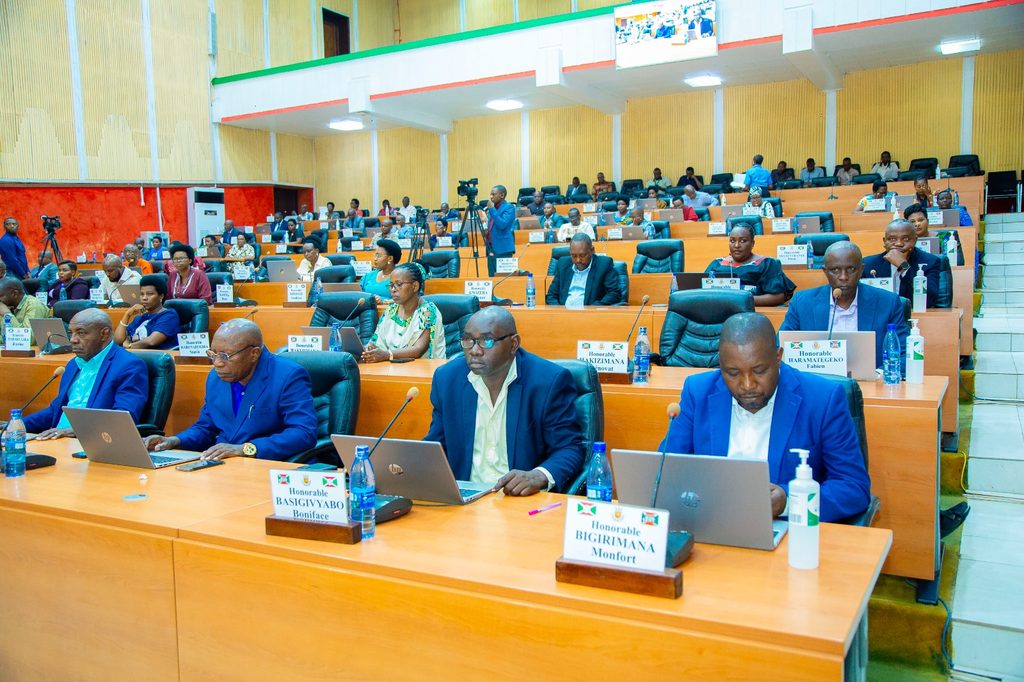
A plenary session of the National Assembly convened on August 21, 2026, with Fabrice Nkurunziza, first vice-president of the National Assembly, presiding over the proceedings. The session, a key gathering for legislative oversight and public engagement, saw a strong exchange of information between constituents' representatives and the national legislative body. During the session, deputies presented full reports detailing both the achievements made within their constituencies and the pressing public concerns that require attention from various governmental institutions. These reports serve as a vital link between the grassroots realities and national policy-making. Deputy Ernest Niyokindi delivered the report for the Buhumuza constituency, providing a detailed account of the progress and challenges observed in his area. Similarly, Deputy Dieudonné Iradukunda presented findings from the Burunga constituency, shedding light on the specific issues affecting his constituents. Throughout the session, deputies present collectively reaffirmed their unwavering commitment to convey population grievances to competent institutions and to follow up diligently on the responses received, showing their dedication to effective representation and accountability.
Buhumuza Constituency Updates
Deputies representing the Buhumuza constituency have been actively engaged in various community work initiatives, demonstrating a proactive approach to local development. These efforts included the significant undertaking of constructing a five-story provincial building, a project poised to enhance administrative capacity and public services in the region. Beyond infrastructure, these community-focused endeavors also concentrated on developing local water sources, which are essential for public health and agricultural sustainability. The deputies were involved in maintaining avocado plantations within the constituency, supporting a key agricultural product and source of livelihood for many residents. These initiatives reflect a concerted effort to improve living conditions and foster economic growth within Buhumuza.
Residents of Buhumuza, however, expressed several pressing concerns to their representatives, noting areas where further intervention is needed. Among the issues raised were the insufficient availability of chemical fertilizers, a critical input that directly impacts agricultural productivity and the livelihoods of farming communities. This scarcity poses a significant challenge to food security and economic stability in the region. Difficulties in the supply of fuel also featured prominently in public concerns, affecting transportation, commerce, and daily life for many inhabitants. Additionally, reported problems with the local electricity network, including frequent outages and unreliable service, contribute to hardships for both households and businesses.
Local authorities operating within Buhumuza formally denounced the ongoing sale of beverages deemed harmful to health. This issue was noted as a persistent problem requiring immediate and sustained intervention from relevant government agencies to protect public well-being. The continued prevalence of such products in the market shows the need for stricter enforcement and public awareness campaigns.
Inhabitants of Buhumuza formally requested the Burundi Institute of Agricultural Sciences (ISABU) to enhance the availability of specific agricultural inputs. The community specifically called for a stronger and more reliable supply of selected rice seeds, which are key for improving yields and quality in rice cultivation. They also requested improved bean seeds, recognizing the importance of beans as a staple crop and a significant source of protein for the local population. These requests show the community's desire for scientific support to boost their agricultural practices and secure better harvests.
Burunga Constituency Issues
Deputies representing the Burunga constituency recently conducted a significant visit to the water catchment and treatment project located at Lake Tanganyika. This key initiative aims to supply potable drinking water to the communities of Rumonge and Nyanza-Lac, addressing a fundamental need for public health and development in these areas. The visit allowed the deputies to assess the progress and challenges associated with this vital infrastructure project firsthand.
During their full reporting to the National Assembly, deputies from Burunga noted several concerns raised by the local population, reflecting a broad spectrum of challenges faced by residents. These issues primarily revolve around access to essential services, including a consistent supply of drinking water, reliable electricity, and the overall condition of road infrastructure within the constituency. The poor state of roads, in particular, impedes economic activities, access to markets, and the delivery of social services.
The health sector in Burunga also faces significant challenges, according to the deputies' report, which detailed critical deficiencies impacting patient care. Key problems identified include a persistent shortage of essential medicines, leading to difficulties in treating common ailments and managing chronic conditions. An insufficient number of qualified medical doctors further exacerbates the healthcare crisis, limiting access to professional medical consultation and treatment for the community's needs.
Further concerns reported from Burunga encompassed a range of issues affecting various aspects of community life and governance. These included the non-execution of certain court judgments, which impacts legal proceedings and resolutions, undermining public trust in the justice system. Agricultural difficulties were also noted, specifically the drying of avocado plants, a problem that directly affects farmers' incomes and food security. Additionally, the late supply of fertilizers was cited as a significant impediment to timely planting and optimal crop growth. The high cost of tea was also cited as a point of contention among residents, affecting household budgets and the local economy.
The sale of beverages deemed harmful to health continues to be a major concern within the Burunga constituency, mirroring the issues reported in Buhumuza. This problem, which deputies emphasized requires urgent intervention, poses a serious threat to public health and demands concerted efforts from authorities to regulate and enforce bans on such products. The continued presence of these beverages notes a widespread challenge across multiple constituencies.
Infrastructure and Development Recommendations
Deputies also extended their oversight activities to key infrastructure projects, including a visit to the Kayongozi micro-hydroelectric power station. During this assessment, they observed that the facility was unfortunately non-operational, hindering its potential to provide much-needed power to the surrounding areas. Following this critical assessment, the deputies recommended the immediate repair of the power station's cabin to facilitate its reactivation and restore power generation, emphasizing the importance of this energy source for local development.
They also suggested the involvement of the Burundi Office of Urban Planning, Housing, and Construction (OBUHA) to accelerate the master plan for the city of Cankuzo. This intervention is aimed at ensuring structured urban development and efficient resource allocation for the city's growth. Additionally, representatives followed up on health infrastructure at Kigamba hospital, where they noted specific reasons for its continued non-opening, despite the evident need for medical facilities in the area. The deputies pledged regular follow-up for the completion of works at Kigamba hospital, which are planned within the Public Investment Program (PTBA) for the 2026-2027 fiscal year, signaling their commitment to ensuring that this vital healthcare facility becomes operational as soon as possible. These recommendations and commitments show the deputies' dedication to addressing critical infrastructure gaps and improving public services across their constituencies.