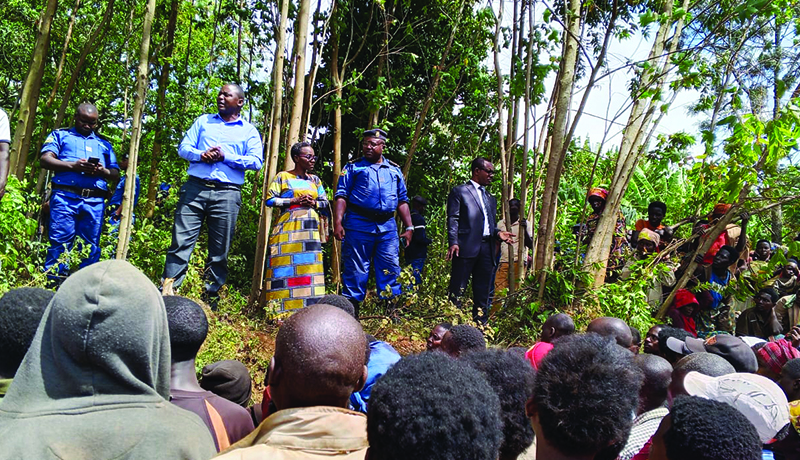
A merchant, Gaspard Ngendakumana, was tragically murdered by unknown individuals via gunfire on Murago hill during the night of May 31, 2026. The victim's wife reportedly identified one of the assailants in connection with the incident, providing key early information to the community. Local administrators, including Muyange hill chief Méthode Ndikumana and Maramvya zone chief Oscar Ndayiragije, are actively working to restore order and investigate the subsequent lynching that shocked the community. Their efforts are focused on understanding the sequence of events that led to both the initial murder and the retaliatory mob violence.
Mob Violence Erupts Following Tragic Murder
The victim, Gaspard Ngendakumana, had recently completed a significant cow sale and was reportedly carrying a substantial amount of money at the time of his death. This detail has led investigators and residents alike to speculate on the motive behind the violent act. Following the murder, residents from Muyange and Murago hills, deeply disturbed by the incident and the perceived lack of immediate justice, quickly mobilized to conduct a manhunt. Their determined efforts led to the apprehension of three individuals suspected of involvement in the incident. The community's swift and organized response showed their frustration and desire for immediate action.
The three individuals were subsequently lynched by the angry crowd. The bodies of the three men are currently located at the morgue of the Gitega regional hospital, awaiting further forensic examination and formal identification. Local authorities have not yet released the identities of the lynched suspects, as investigations continue into both the murder of Mr. Ngendakumana and the subsequent mob justice. This tragic outcome notes the volatile situation and the deep-seated anger within the community.
Deepening Trust Deficit Fuels Popular Justice
Suspicions quickly focused on three local individuals known for their delinquent behavior, who had reportedly been observed at Gaspard Ngendakumana's establishment prior to the incident. This prior observation by community members further solidified the accusations leveled against them by the enraged populace. Authorities have not yet recovered the murder weapon, leading some residents to speculate that accomplices may have fled with it, perhaps indicating a wider network of individuals involved in the initial crime. The three men who were subsequently lynched were suspected of involvement in armed robberies, with some of these alleged crimes reportedly having occurred in neighboring Tanzania. This history of alleged criminal activity, extending beyond local borders, likely contributed to the community's swift and brutal reaction, fueled by a perception of repeated offenses going unpunished. The inability to recover the weapon further complicates the official investigation into Mr. Ngendakumana's death, leaving critical pieces of evidence missing.
Gabriel Rufyiri, president of the anti-corruption organization Olucome, connected the Maramvya lynchings to broader issues of impunity and a diminishing public trust in the judicial system. Mr. Rufyiri stated, "Quand les gens constatent que des malfaiteurs restent impunis, cela conduit à la justice populaire. La population aurait perdu confiance en la justice. Elle a exécuté ce que lui dictait sa colère." This translates to: "When people see that wrongdoers remain unpunished, it leads to popular justice. The population would have lost confidence in justice. It executed what its anger dictated to it." He further commented on economic disparities, asserting, "La richesse du pays est concentrée entre les mains d’une poignée d’individus," meaning "The country's wealth is concentrated in the hands of a handful of individuals." This statement suggests a systemic issue where economic inequality might exacerbate social tensions and contribute to a breakdown of order and trust in formal institutions. The Olucome president's analysis points to a critical juncture where the public's perception of justice directly influences their actions, with dire consequences.
Officials Seek Order Amidst Overwhelmed Security Forces
Despite the presence of police and local administrative authorities, a determined crowd overwhelmed security forces, leading to the public lynching of the suspects. The three apprehended individuals were lynched to death on Murago hill, the very location where Gaspard Ngendakumana's murder had taken place hours earlier. The inability of the authorities to control the mob shows the intensity of the public's outrage and the challenges faced by law enforcement in maintaining order when community trust in the justice system is severely eroded. Muyange hill chief Méthode Ndikumana and Maramvya zone chief Oscar Ndayiragije are now tasked with the difficult challenge of restoring calm and rebuilding confidence in official channels, even as they investigate the tragic events. Their immediate priority is to ensure no further acts of violence occur and to thoroughly investigate both the initial murder and the subsequent acts of mob justice.
Vianney Ndayisaba, president of Aluchoto, stated that the event serves as a stark message to the justice system regarding its failures. His remarks echo the sentiments of many who believe that the lynchings are a direct consequence of a perceived lack of accountability for criminals and a slow, often ineffective, judicial process. The incident on Murago hill has thus become a grim symbol of a community's desperation when formal justice mechanisms are seen as insufficient or compromised. The implications of such an event extend beyond the immediate tragedy, raising serious questions about the rule of law and the stability of communities where popular justice takes precedence over institutional processes. Both local and national authorities are now confronted with the urgent task of addressing these underlying issues to prevent future occurrences of such devastating mob violence.