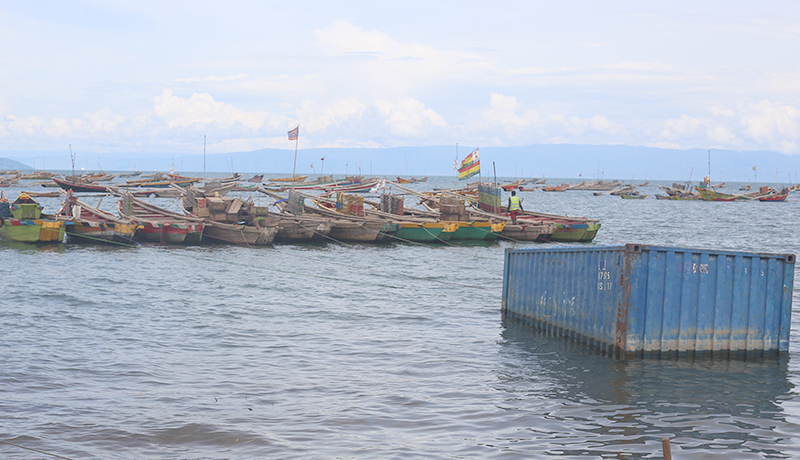
Commune Rumonge, one of the seven communes in the Province de Burunga, covers a surface area of 806.2 km². Its population is estimated at 809,769 inhabitants, and the commune extends over three natural regions: Imbo, Mumirwa, and a small part of Mugamba. Rumonge borders Commune Muhuta to the north, Commune Nyanza to the south, Commune Matana to the east, and Lac Tanganyika to the west. The area experiences high temperatures and precipitation. From March 2015 to August 2025, Rumonge was a province itself; it now comprises the former communes of Burambi and Buyengero.
Economic Opportunities Abound
Rumonge presents economic potential stemming from its location on Lake Tanganyika, fertile soils, various tourist sites, and extensive palm oil plantations. The commune borders Lake Tanganyika for over 50 km, contributing to a prosperous fishing industry that supports numerous families. Rumonge also collects taxes on fish caught within its waters. Despite this, the aquatic environment remains under-exploited, with potential for its beaches to be developed into major tourist sites. Lacustrine transport and commerce are developing slowly across Lake Tanganyika, with few boats currently transporting goods and people. Beyond the lake, tourist sites in Rumonge include thermal springs and nature reserves.
Rumonge is recognized as the leading commune for palm oil production, a commodity consumed by most Burundian households. The local economy also sees participation from individuals like Iteriteka, who began selling Ndagala fish at either 15 or 18 years old. She initiated her business in 2022 with a capital of 20,000 BIF. Iteriteka earns approximately 10,000 to 15,000 BIF per day, which she states is sufficient to feed her four children. "Since then, I have worked tirelessly. Even after giving birth to twins, I only rested for two months," Iteriteka said, adding, "Today, I cannot imagine doing another job."
Despite her success, Iteriteka faces challenges in her trade. "Sometimes, fishermen sell us fish at very high prices or clients take our fish on credit and do not repay," she explained. She expressed concerns about potential relocation efforts by authorities. "What we ask of the State is to abandon the idea of relocating us from here because many of us would cry without knowing where to go. Everything we have, we get from here," Iteriteka stated. In another example of local enterprise, the cooperative Dukundane was founded by young women with limited financial means, initially focusing on collecting palm nuts.
Persistent Development Hurdles
Commune Rumonge faces several development challenges, including poor road conditions, prevalent fraud, and subpar school results. Palm oil production, a significant local industry, has experienced a decline for several years. The fishing sector is also impacted by the actions of some fishing bosses, leading to poverty among ordinary fishermen. A project for accident insurance for fishermen, supported by INSS, has not yielded its intended results. Consequently, families and colleagues bear all costs in the event of a fisherman's death, without external assistance.
Fishermen in Rumonge lack credible representation to advocate for their interests and claim promised compensation. Elected members of fishing committees often prioritize their personal interests over those of their colleagues, despite each fisherman contributing 10,000 BIF to these committees. Fishermen stated, "The people elected within the fishermen's committees prioritize their personal interests over those of their colleagues, even though each fisherman contributes 10,000 BIF."
A clear legal framework to regulate fishing activity is currently absent. This regulatory gap contributes to challenges, including the high cost of fuel for fishermen. They are often forced to purchase fuel at exorbitant prices, sometimes reaching 700,000 BIF or over 1 million BIF for 40 liters, significantly above official station prices. Fuel is also stored in private homes, fueling a lucrative parallel market. A fisherman observed, "Fuel is sometimes stored in private homes where it feeds a parallel trade that has become very lucrative. Some fishing bosses would take advantage of the crisis by buying fuel at the regulated price before reselling it to fishermen at excessively high rates. We often work at a loss." Additionally, fishermen bear their own medical expenses when sick, as they lack any form of health coverage.
Infrastructure and Social Precarity
Rumonge commune faces shortages of electricity and water, a lack of financing opportunities, and degraded infrastructure. Despite years of requests for meetings, there is a persistent lack of dialogue between fishermen and their representatives. The benefits generated by fishing primarily go to fishing bosses, while workers receive meager sums. Fishermen can contribute to daily revenues exceeding 30 million BIF or even 50 million BIF without receiving decent pay, with individual workers often receiving only 10,000 BIF. This situation contributes to daily stress, leading many fishermen to consume excessive amounts of alcoholic beverages, such as 'Bangala'.
Samuel Karangwa, who operates a sound system business, stated that his activities are regularly disrupted by frequent power outages. "My activity requires electricity constantly, but that is almost never the case," Karangwa explained. He also noted the difficulty young people face in securing financial support from initiatives like PAEEJ or Bije. "We have many projects in gestation but, for lack of financing and support, they remain at a standstill. I myself have projects that require financial means, but until now, I have obtained nothing," Karangwa added. He observed a trend of youth exodus, with many friends and acquaintances wishing to leave Burundi. "All my friends and acquaintances wish to leave the country to go to Arab countries, to Dubai or elsewhere, in search of a better life. There are no more opportunities that encourage us to stay," Karangwa said.
The city of Rumonge is grappling with a severe shortage of drinking water, with some hotels requiring guests to use buckets for washing. Residents often spend hours at public taps hoping to obtain water. This scarcity leads to health concerns, as the commune is regularly affected by cholera outbreaks. In neighborhoods located near Lake Tanganyika, residents resort to using lake water for cooking and laundry due to the absence of alternative clean water sources.
Resilience and Cooperative Efforts
Women selling fish in Rumonge encounter difficulties, including fishermen selling their catches at elevated prices and clients failing to repay credit for fish. B. Ihorimbere, who has been selling vegetables for two years, began her business with 15,000 BIF and specialized in tomatoes. She pays a daily tax of 500 BIF. "Agents sometimes come to collect taxes when we haven't sold anything yet. If we don't have the money, they take our tomatoes. We would like to be allowed to sell first and then pay taxes," B. Ihorimbere stated, adding, "For us who have children, it's very difficult." She also noted the fluctuating availability of produce: "Sometimes we find them at the market, sometimes not, especially when prices skyrocket. To survive, I often go foraging in the forest or in abandoned fields."
The cooperative Dukundane, composed of 164 women and 10 men, produces 1,250 liters of oil per day, except during periods of poor harvest. Their brand, Tamura Oil, finances children's schooling, with some members' children reaching university. ONU-Femmes provided training to the cooperative, along with machinery and a management manual. Dukundane also mediates conflicts between repatriates and residents while combating violence against women. Despite their efforts, the cooperative lacks a vehicle for transporting palm nuts and technicians for machine repair.
Road infrastructure in the commune remains in poor condition, including the strategic RN3 national road, which increases travel time and transport costs. However, a section of approximately 20 km of the RN3, from Nkayamba to Kagongo, has been rehabilitated. Apollinaire Ndikumasabo founded the cooperative Mutambara Brick Charcoal Company, noting that "The lack of financing continues to hinder my expansion."