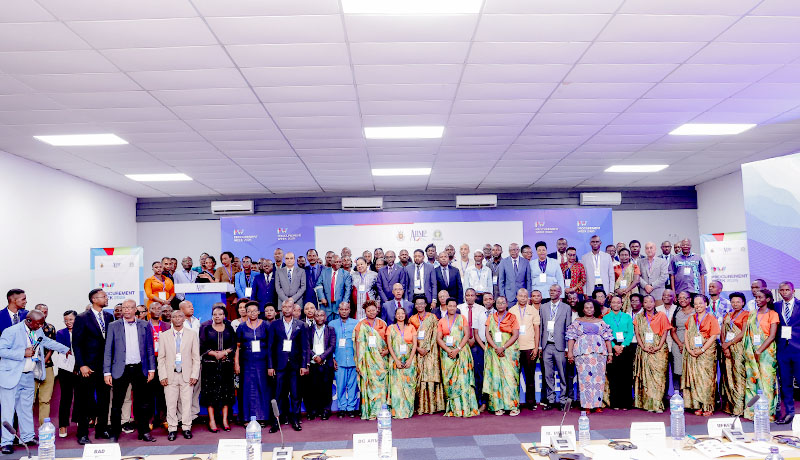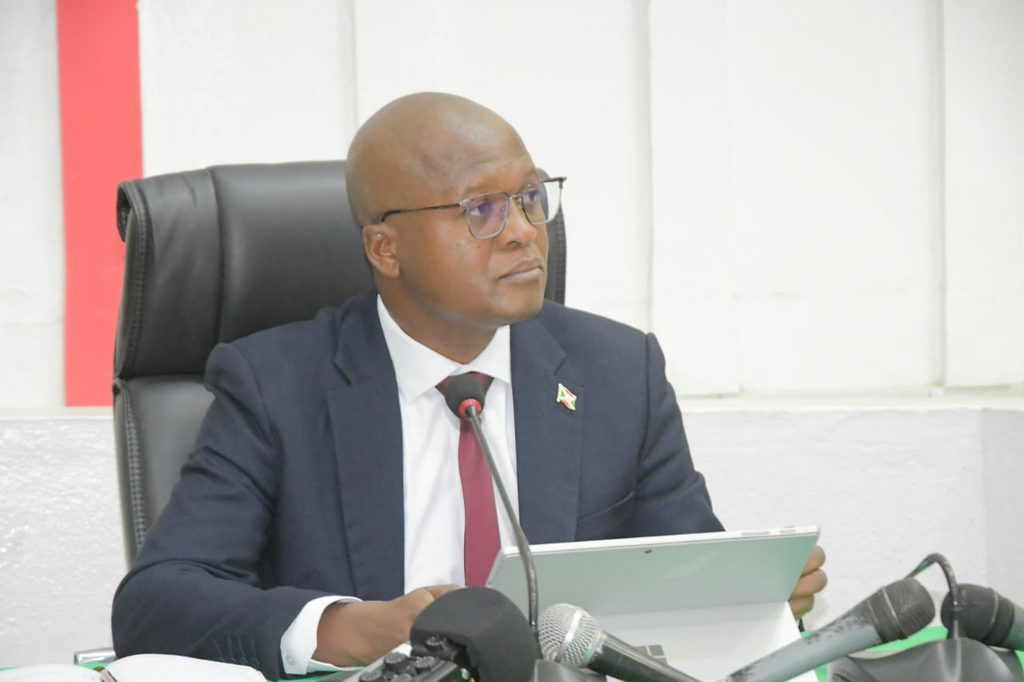
Burundian Prime Minister Nestor Ntahontuye presented the Programme, travail et budget annuel (PTBA) implementation report for the second semester of fiscal year 2025-2026 to both chambers of parliament on Friday, September 11, 2026, at the Kigobe congress palace, revealing a government performance of 67.29%. This presentation offered a full overview of the government's operational efficiency and financial management during the specified period. Ntahontuye acknowledged challenges, stating that "the new administrative division led to a delay in the deployment of certain agents, which caused dysfunctions and prevented some activities from proceeding as planned." He also noted that "some public companies, including Otraco, Onatour, and Cogerco, show poor performance in terms of revenue generation and results achieved." The Prime Minister affirmed the government's active response and consideration of parliamentary recommendations, indicating a commitment to address the identified issues.
Budget Execution Overview
Burundi's budget execution data indicates that annual realizations exceeded forecasts by 2.1%, reaching 7,806,801,768,097 FBu against a forecast of 7,643,368,022,846 FBu. The total realization rate for the annual budget stood at 102.1%, suggesting that overall financial inflows surpassed initial projections. This performance reflects the government's capacity to generate or access more funds than anticipated for the fiscal year.
However, specific revenue streams showed varying performance, noting areas of concern. Grants, with an annual forecast of 1,326.83 billion FBu, saw cumulative realizations of 844.52 billion FBu, resulting in a realization rate of 63.6%. This significant shortfall in grant receipts indicates a considerable gap between expected and actual external financial support. External loans also fell short of expectations, with cumulative realizations of 15.68 billion FBu against an annual forecast of 61.89 billion FBu. This represented a realization rate of 25.3% for external loans during the period, further showing challenges in securing anticipated foreign financing.
Identified Shortcomings and Delays
The new administrative division contributed to delays in the deployment of specific agents, which resulted in operational dysfunctions and hindered the scheduled progress of some activities. This administrative restructuring, while potentially beneficial in the long term, created immediate logistical and staffing challenges that impacted program delivery. Additionally, an imbalance has been observed between the levels of physical realization and budget execution for certain public companies, particularly Odeca (Office for the development of coffee of Burundi). This suggests that while funds may have been allocated or spent, the tangible progress on the ground did not always align, indicating potential inefficiencies in project management or implementation.
Several public enterprises have demonstrated low performance in terms of revenue generation and achieved results. These include Otraco (Office of public transport), Onatour (National peat office), and Cogerco (Cotton management company). The performance issues at these entities have been noted as significant factors affecting the overall government program implementation, as their underperformance can strain public finances and hinder sector-specific development goals. These challenges show areas requiring focused attention to improve efficiency and financial outcomes within the public sector.
Context and Future Outlook
Despite the identified challenges, including those stemming from the new administrative division and the underperformance of certain public enterprises like Otraco, Onatour, and Cogerco, the Burundian government has achieved a 67.29% program implementation rate. Prime Minister Nestor Ntahontuye acknowledged these issues during his presentation to parliament, indicating the government is actively addressing the dysfunctions and considering recommendations from the legislative body. The administration's focus remains on improving efficiency and revenue generation across public sector entities, particularly in light of varying budget execution rates for grants and external loans. Efforts are expected to concentrate on streamlining operations and ensuring a more synchronized physical and financial realization of programs, especially for entities such as Odeca. The government's stated commitment is to overcome these hurdles to enhance future program delivery and overall national development objectives, aiming for more strong and consistent performance across all sectors.