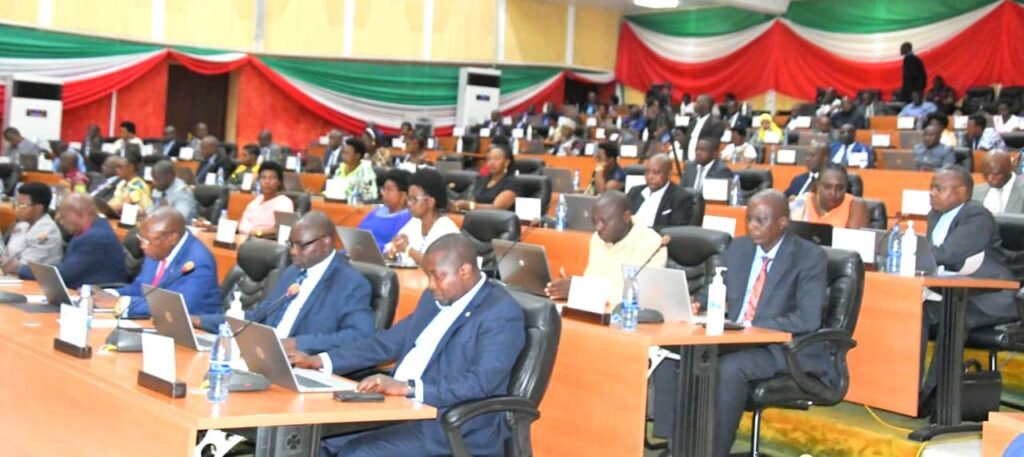
Burundi's government is intensifying efforts to boost domestic revenue, bringing the issue of fiscal exemptions back into public debate. The Burundian government is actively seeking to increase domestic revenue, a critical objective given the nation's financial landscape, thereby elevating the discussion around fiscal exemptions. Minister of Finance, Alain Ndikumana, recently alerted the National Assembly to the rapid increase in these exemptions, noting their growing impact on the national budget. Often referred to as "tax expenditures," fiscal exemptions reduce the taxable base and contribute to widening the national budget deficit, posing a significant challenge to the country's fiscal health.
Despite the challenges posed by these exemptions, the country is recording encouraging performance in tax collection for the 2025-2026 fiscal year. Ndikumana noted the government's commitment to optimizing revenue generation as part of its broader economic strategy. The ongoing discussion around tax expenditures shows the government's focus on fiscal reforms to ensure financial stability and fund public services. Authorities are evaluating measures to balance incentives with the need for strong state coffers, recognizing the delicate balance required to foster economic growth while ensuring adequate public funding. Burundi also faces low mobilization of domestic revenue, making the focus on these fiscal measures even more pronounced.
Exemptions: Rationale and Beneficiaries
Fiscal exemptions in Burundi primarily concern imports of agricultural inputs, medicines, and capital goods, alongside investments made under the Investment Code. Exemptions also apply to non-governmental organizations (NGOs) and strategic projects in sectors such as mining, agriculture, and free zones. These measures aim to offset challenges within the business climate, including limited infrastructure and low attractiveness for foreign capital, seeking to compensate for these inherent difficulties. The desire to attract foreign investment is a key factor driving these exemption policies, especially given Burundi's low ranking on various economic freedom indices, which makes it challenging to compete for international capital.
Exemptions on fertilizers, seeds, and agricultural equipment specifically support productivity in the agricultural sector, which employs the majority of the population and is vulnerable to climate shocks. The economy is dominated by agriculture, accounting for approximately 30% of Burundi's Gross Domestic Product. The needs for agricultural inputs, goods for mining and energy projects, and humanitarian aid supplied by NGOs frequently underpin many exemption requests, reflecting critical sectors targeted for development and support.
Tax advantages for investors are another component of the exemption framework, including temporary exemptions of 5 to 10 years on corporate tax, which stands at 30%, and customs duties on capital goods. These incentives support economic diversification efforts, particularly towards mining for resources like gold and nickel, and energy projects. Such measures have contributed to modest foreign direct investment flows into the country and facilitated essential imports for various development projects, key for infrastructure and industrial advancement.
With Burundi's limited foreign exchange reserves, estimated at around 1.6 months of imports, exemptions help facilitate access to critical goods without immediately pressuring the balance of payments. This mechanism is vital for maintaining the flow of essential imports, especially when the country's external financial position is constrained.
Fiscal Costs and Economic Impact
Burundi's public finances are fragile, characterized by a persistent dependence on external revenue and low mobilization of domestic revenue. Recent estimates indicate a high public debt around 70-80% of Gross Domestic Product (GDP), showing the precarious state of the nation's finances. The budgetary cost of exemptions is heavy and not very transparent, regularly representing a significant percentage of potential revenue that could otherwise be collected.
Recent overruns in exemptions have been noted, with forecasts of 135 billion BIF for a fiscal year realized at nearly 220 billion BIF, demonstrating a substantial deviation from planned expenditures. This significant increase notes the challenges in managing and predicting the fiscal impact of these measures. The country's budget deficit is projected to be around 4.8-5.1% of GDP in 2024-2025, a figure that notes the ongoing fiscal strain. This situation is further complicated by persistent inflation, projected at 20-30%, and deficit monetization, which limit the fiscal space available for priority public investments such as infrastructure, education, and health. Macroeconomic factors like moderate growth (projected around 3.7-4% in 2025-2026), high inflation, and the ongoing need to finance development contribute significantly to the challenges posed by these fiscal exemptions, creating a complex environment for economic management.
Exemptions indirectly increase the tax burden on small businesses and households through indirect taxes like Value Added Tax (VAT) and customs duties, measures which disproportionately affect the poor. The reliance on exemptions also increases Burundi's dependence on foreign aid, as the foregone revenue often needs to be compensated through external assistance.
Governance and Control Challenges
Exemptions in Burundi are frequently associated with "windfall effects," opacity in their granting process, and risks of fraud or misappropriation. A portion of these exemptions reportedly benefits importers who subsequently resell goods on the local market, rather than utilizing them for productive projects, thus undermining their intended purpose. Structural and conjunctural factors contribute to the annual increase in exemptions, including a compensation logic in an economy with a low-tax base and pressure to stimulate economic activity without raising nominal tax rates.
Inertia and political pressure present challenges in withdrawing granted exemptions, largely due to vested interests that benefit from the current system. Recurrent overruns in exemption values indicate limited administrative control and frequent mid-year amendments to policies, suggesting a lack of strong oversight. A deep reform of the tax administration is deemed necessary, as digitalization remains incomplete, simplifying the process of granting exemptions compared to combating evasion or broadening the tax base, which requires more sophisticated tools and processes.
Control over these fiscal measures primarily relies on the Burundian Revenue Office (OBR), customs authorities, and the Ministry of Finance. The Burundi Development Agency, formerly known as API, is responsible for handling exemptions under the investment code. The current system largely operates on self-declaration, yet persistent flaws exist in ex-post verification capacity. The mechanisms involved are complex, and opacity regarding the real destination of goods remains an issue, making it difficult to track the actual impact and beneficiaries of these exemptions. Ex-post evaluations of exemptions are rare and not widely publicized, with bodies such as the Court of Auditors reportedly lacking the resources for exhaustive monitoring, further hindering accountability.
Suggestions for improvement include strengthening the digitalization efforts of customs and the OBR, implementing strict conditionality for granting exemptions, introducing automatic review clauses to regularly assess their effectiveness, and developing cross-data analysis capabilities to better identify potential abuses and inefficiencies.
The National Assembly holds a key constitutional role in voting on the finance law and controlling its execution, which includes the authority to amend exemption schemes and demand reports from the executive. Deputies have the power to impose global ceilings on the total value of exemptions, establish stricter performance criteria for their beneficiaries, and request impact studies or periodic evaluations to assess their economic and social effects. They can also create inquiry commissions to investigate matters related to exemptions, providing an essential layer of parliamentary oversight. Effective control requires strengthening the resources of parliamentary Finance Committees and calls for greater transparency regarding beneficiaries, ensuring that the public and legislative bodies have a clear understanding of who benefits from these fiscal measures.
Pathways to Reform and Balanced Growth
Fiscal exemptions in Burundi are neither an absolute evil nor a panacea, indicating a need for nuanced policy. More rigorous governance, including systematic evaluations, binding ceilings, sunset clauses, and improved traceability, can maximize the benefits of these exemptions while preserving fiscal space. A balanced reform, based on evidence rather than ad hoc incentives, would consolidate the foundations for inclusive and resilient growth in Burundi, ensuring that fiscal policies genuinely contribute to sustainable development.