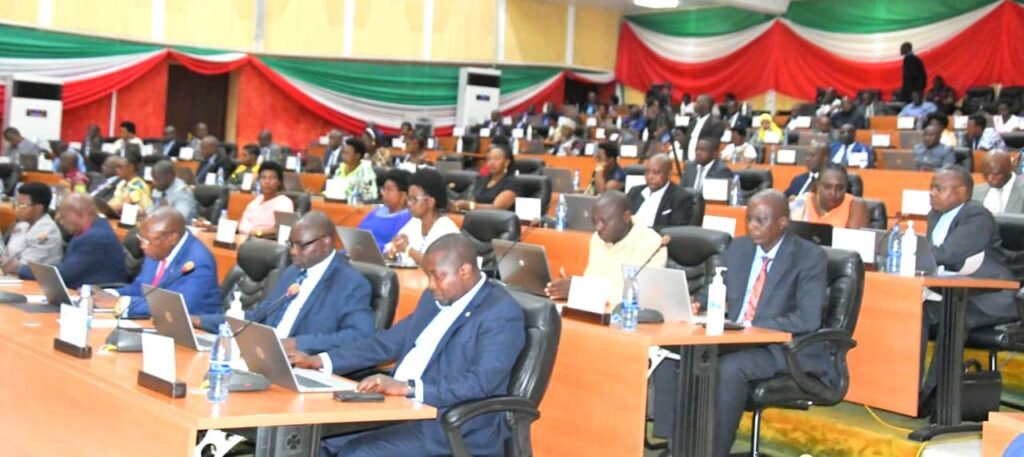
Burundi's National Assembly convened on Tuesday, May 26, 2026, at the Kigobe conference palace, where it adopted a legislative calendar outlining activities for the period from May 25 to June 9, 2026. This significant session, held under the leadership of its president, Daniel Gélase Ndabirabe, sets the legislative priorities for the coming weeks. A key item on this agenda is the scheduled presentation of the final audit report concerning the management of Sosumo, the Moso Sugar Company. The assembly's session, therefore, focuses on this significant financial review alongside other key parliamentary duties and reports.
Key Legislative Agenda Items
The legislative calendar adopted by Burundi's National Assembly includes several key presentations and analyses designed to address various aspects of national governance and development. These activities notably feature the presentation of the report from the high-level Forum on the state of Burundi's integration into the East African Community (CEA). This report is expected to provide insights into Burundi's progress and challenges within the regional bloc, fostering debate on its strategic positioning. Another scheduled item of significant financial oversight is the presentation of the report on the supervision of the Bank of the Republic of Burundi (BRB) for the 2024 fiscal year, which will offer a full look at the nation's monetary policy and financial stability.
Deputies are also expected to present reports detailing their visits to their constituencies, which occurred during the March 2026 parliamentary recess. These reports serve as a vital link between the legislative body and the populace, ensuring that local concerns and needs are brought to the national agenda. The legislative body will further analyze amendments introduced by the Senate on various draft laws. These include important legislation concerning the Court of Accounts, which plays a key role in auditing public finances, as well as agreements on double taxation with the United Arab Emirates. Additionally, protocols related to investment protection, also with the United Arab Emirates, will be reviewed, aiming to foster international economic cooperation. The budget settlement for the 2024/2025 fiscal year will also be reviewed following Senate amendments, providing a final assessment of the previous financial year's expenditures and revenues. The schedule includes the presentation of the budget execution report for the first quarter of the 2025/2026 fiscal year, alongside the budget execution report for the second quarter of the same 2025-2026 fiscal year, offering timely updates on the national budget's implementation.
Focus on Sosumo Audit
Oral questions with debate are specifically scheduled to be addressed to the Minister of Mining Resources, Energy, Industry, Commerce, and Tourism concerning the Sosumo audit report. The Burundi National Assembly will facilitate this key discussion as part of its legislative calendar, allowing for thorough scrutiny of the Moso Sugar Company's management. The Minister of Finance, Budget, and Digital Economy is also expected to be present during the session to respond to questions posed by deputies. This will allow legislators to scrutinize the findings of the audit, seek clarification on any irregularities, and understand the financial implications of the Moso Sugar Company's management. The inclusion of both ministers shows the multi-faceted nature of the audit's implications, spanning industrial, commercial, and financial oversight, noting the government's commitment to transparency and accountability in public enterprises.
Broader Parliamentary Context
The National Assembly meeting, which adopted the legislative calendar, was conducted under the leadership of its president, Daniel Gélase Ndabirabe. The extensive schedule outlines a full range of parliamentary activities, including the review of various reports and legislative amendments, reflecting the assembly's broad mandate. The assembly's pointed focus on the Sosumo audit report notes its commitment to scrutinizing public and parastatal enterprise management, a critical aspect of good governance. The presence of key ministers for the audit discussion indicates the executive's engagement with legislative oversight and its readiness to address issues raised by the parliament. The broad agenda also reflects the assembly's vital role in addressing financial, economic, and regional integration matters impacting Burundi, ensuring full legislative action for national development.