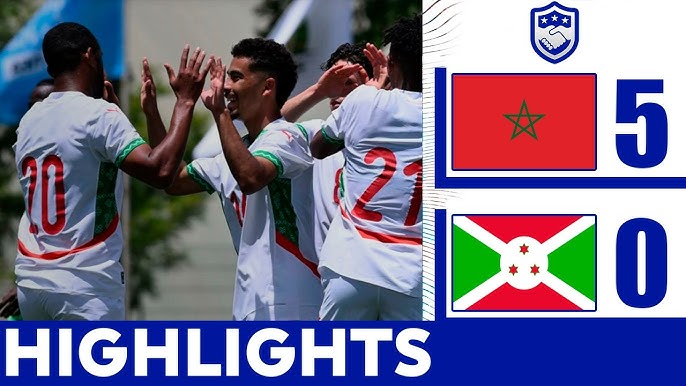
Burundi's national football team, the Swallows, suffered a significant 5-0 defeat to Morocco in a recent match. The outcome came as the Burundian squad faced challenges with key player absences, including Ndayishimiye Yussuf, Nuyukuri Claus, and Girumugisha Jean-Claude. The full 5-0 scoreline showed the difficulties encountered by the Burundian side throughout the fixture. The team's performance against Morocco now sets the stage for their upcoming fixture against Equatorial Guinea, where they aim to recover from the heavy loss and regroup for future challenges.
Key Player Shortages Impact Performance
Burundi's national team competed without more than half of its key players during the recent fixture, a factor that significantly influenced the team's overall readiness and tactical options. Several prominent players were unavailable for selection, significantly impacting the squad's composition and depth. This substantial number of absences meant that the coaching staff had to field a lineup that was notably different from their usual strong contingent. The absence of these experienced individuals created a void that proved challenging to fill against a strong opponent like Morocco.
Ndayishimiye Yussuf, known as Nyange, was among those absent, having been retained by OGC Nice for a decisive playoff match against Saint-Étienne. His club commitment, a key fixture for his professional team, prevented his participation with the national team at this critical juncture. The demands of club football often pose scheduling conflicts for national teams, particularly outside of official FIFA international match windows. This situation noted one of the complexities faced by national team coaches in assembling their strongest possible squad.
Another significant absence was Frédéric Nsabiyumva, who was sidelined due to a club injury. This injury rendered him unavailable for the match, further depleting the team's experienced ranks and defensive options. Injuries to key players are an unfortunate but common occurrence in professional football, and Nsabiyumva's absence was a notable blow to the Burundian defense. His experience and leadership would have been valuable assets on the field.
Nduwarugira Christophe, also known as Lucio, was present with the squad but remained on the bench throughout the encounter. The decision to keep Lucio out of play was made to allow newer players an opportunity to gain experience on the field, indicating a strategic choice amidst the existing player shortages. This tactical decision, while aiming to foster new talent, meant that another experienced player's immediate contributions were withheld. These combined factors, including club commitments, injuries, and strategic rotational decisions, contributed to the altered and significantly depleted lineup for Burundi's match against Morocco. The cumulative effect of these key player shortages undoubtedly presented a formidable challenge for the Burundian coaching staff and the players who took to the field.
Morocco Dominates Second Half
The match saw a cautious start from both sides, with the score remaining 0-0 at halftime, reflecting a period where neither team managed to break the deadlock. The first half concluded without either side finding the back of the net, suggesting a relatively even contest in the initial 45 minutes despite Burundi's player challenges. However, the dynamics of the game shifted dramatically in the second half.
Morocco initiated their scoring in the second half when El Kaabi netted the first goal in the 59th minute, breaking the stalemate and giving his team the lead. This opening goal provided a significant boost to the Moroccan side and put pressure on the Burundian defense. El Kaabi followed up with his second goal of the match just four minutes later, in the 63rd minute, extending Morocco's lead to two goals. This quick succession of goals demonstrated Morocco's increased attacking intensity and effectiveness after the break.
Bentayeb further solidified Morocco's advantage, scoring the team's third goal in the 71st minute, effectively putting the game beyond Burundi's reach. This third goal showed Morocco's dominance in the attacking third during the second period. Benjdida then contributed to the scoreline, registering Morocco's fourth goal in the 80th minute, adding to the growing deficit for the Burundian side. He subsequently scored his second goal, and Morocco's fifth, in the 90th minute, concluding the match with a decisive margin of 5-0. This final goal in the dying minutes of the game sealed the full victory for Morocco. The entire match took place behind closed doors, a decision made by Moroccan authorities, meaning no spectators were present in the stadium. This fixture was also played outside of FIFA-designated international match dates, which often contributes to the availability issues for national teams as clubs are not obligated to release players.
Looking Towards Next Fixture
Burundi's national team is scheduled to play its next match on June 4th against Equatorial Guinea. This upcoming encounter will be a key opportunity for the Burundian squad to demonstrate resilience and improve upon their recent performance. Equatorial Guinea currently holds a world ranking of 105th and is ranked 23rd within Africa, indicating a strong continental standing. In contrast, Burundi is ranked 142nd globally and 42nd on the continent, noting the disparity in current FIFA rankings between the two nations. The upcoming fixture will present a new challenge for the Burundian squad as they look to recover from their recent defeat and aim for a more positive outcome against a higher-ranked opponent. The team will need to address the issues that contributed to the heavy loss against Morocco and strategize effectively for their next challenge on the international stage.