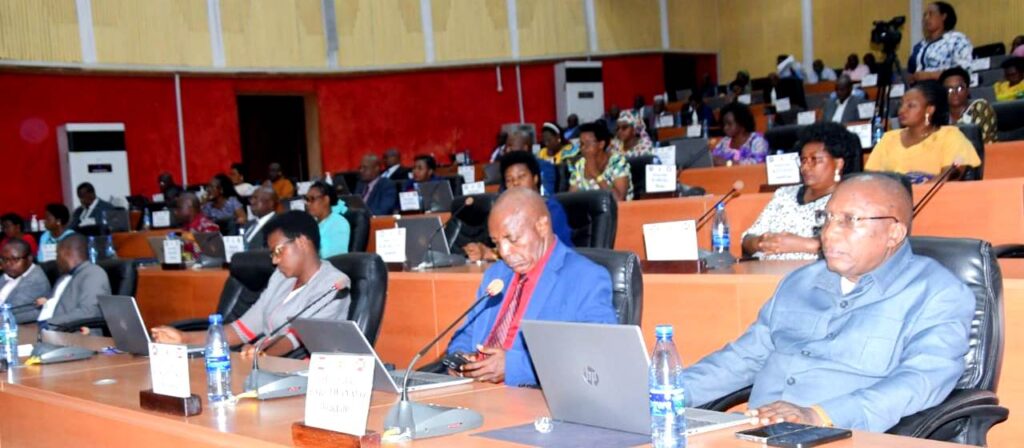
The National Assembly of Burundi convened in a plenary session on Tuesday, June 2, 2026, at the Palais des congrès de Kigobe. Legislators gathered to deliberate on significant agreements, including a double taxation treaty and an investment protection pact with the United Arab Emirates. The session's objective was to analyze and adopt amendments proposed by the Senate concerning these key draft laws. The proceedings, presided over by Daniel Gélase Ndabirabe, President of the National Assembly, aimed to review and approve these accords, which are intended to foster economic cooperation between Burundi and the UAE. This meeting marked a key procedural step in the legislative process for these international agreements.
Details of Draft Laws
The first draft law under consideration addresses the ratification of a convention between the Republic of Burundi and the United Arab Emirates. This convention aims to avoid double taxation and prevent income tax evasion, establishing clear fiscal guidelines for economic activities between the two nations. It specifically concerns income tax and seeks to create a more predictable and equitable tax environment for businesses and individuals operating across both countries. The convention was initially signed in Abu Dhabi on February 6, 2017, laying the groundwork for its eventual ratification by the Burundian legislature.
A second draft law pertains to the ratification of an agreement on the promotion and reciprocal protection of investments between the government of the Republic of Burundi and the government of the United Arab Emirates. This specific accord is designed to safeguard investments made by citizens and entities of one country in the other, fostering a secure environment for capital flow and encouraging foreign direct investment. The agreement outlines mechanisms for dispute resolution and ensures fair and equitable treatment for investors, thereby reducing risks associated with cross-border investments. This agreement, like the double taxation convention, was also signed in Abu Dhabi on February 6, 2017. Both legal instruments are intended to strengthen economic ties and facilitate increased trade and investment between Burundi and the UAE, promoting mutual economic growth and development.
Senate Amendments Adopted
The National Assembly session was specifically convened to analyze and adopt amendments proposed by the Senate concerning the draft laws. Deputies present at the Palais des congrès de Kigobe proceeded to scrutinize and subsequently adopt the amendments relevant to both the double taxation convention and the investment protection agreement. The deputies analyzed the proposed changes in detail, ensuring that the final versions of the draft laws aligned with the legislative intent and national interests. This thorough review process is a standard part of Burundi's legislative procedure. The adoption by the deputies finalized the legislative process for these agreements within the National Assembly, moving them closer to full implementation.
Background and Significance
The session of the National Assembly occurred on Tuesday, June 2, 2026, marking a key procedural step in the legislative process for these agreements. Daniel Gélase Ndabirabe, serving as the President of the National Assembly, presided over the proceedings, guiding the deliberations and ensuring adherence to parliamentary rules. His role involved overseeing the deliberation and subsequent adoption of the draft laws and the amendments proposed by the Senate. The Tuesday session at the Palais des congrès de Kigobe formalized the legislative approval of the double taxation convention and the investment protection agreement by the deputies, signaling Burundi's commitment to enhancing its economic partnership with the United Arab Emirates. These approvals are expected to pave the way for increased bilateral trade and investment, contributing to Burundi's economic development objectives.