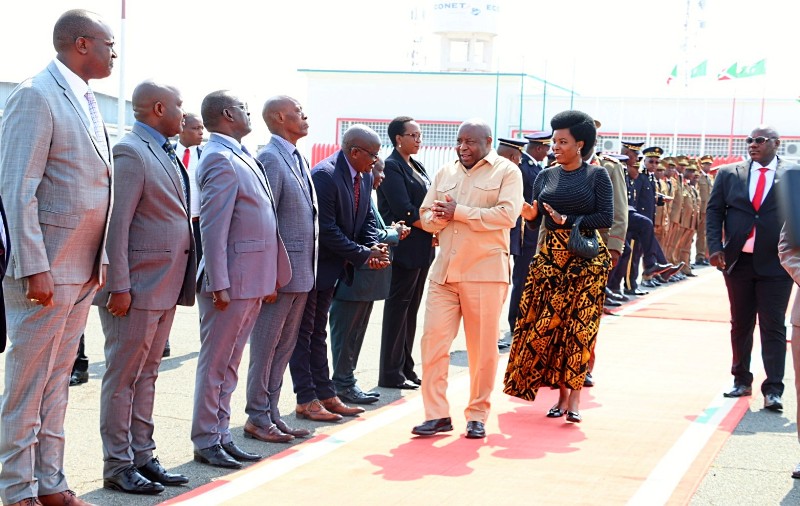
Burundian President Evariste Ndayishimiye departed for New Delhi, Republic of India, on Thursday to attend the 18th BRICS Summit. President Ndayishimiye, who is also the current chairperson of the African Union, traveled accompanied by the First Lady, Angeline Ndayishimiye. The official statement confirmed that the Burundian Head of State and current chairperson of the African Union, Evariste Ndayishimiye, accompanied by the First Lady, Angeline Ndayishimiye, took the plane to New Delhi in the Republic of India. He will participate in the 18th BRICS Summit 2026, where he is expected to represent Burundi and the African Union. It has been officially stated that President Ndayishimiye will take part in the 18th BRICS Summit, with the French claim noting, "Le président Ndayishimiye prendra part au 18e Sommet des Brics."
Summit Details and Attendance
The 18th BRICS Summit 2026 is scheduled to take place in New Delhi, Republic of India. This significant international gathering, identified as the 18e Sommet des Brics 2026, brings together leaders from Brazil, Russia, India, China, and South Africa to discuss global economic, political, and social issues. This year's summit is expected to focus on strengthening cooperation among member states and addressing contemporary international challenges. Discussions are anticipated to cover areas such as sustainable development, economic growth, and multilateralism. The participation of President Ndayishimiye as chairperson of the African Union shows the growing importance of African perspectives in global forums. His attendance notes the BRICS group's commitment to fostering broader international dialogue. The summit provides a platform for BRICS nations to engage with invited leaders from other regions, fostering dialogue on pressing global matters and exploring avenues for collaborative solutions to shared global concerns.
President's Role and Significance
President Evariste Ndayishimiye's attendance at the 18th BRICS Summit in New Delhi carries dual significance, representing both Burundi and the broader African continent. As the current chairperson of the African Union, his participation elevates the summit's engagement with African priorities and perspectives. The invitation to President Ndayishimiye reflects a growing recognition of the African Union's role in global discussions and the increasing importance of African nations in international affairs. His presence at the 18th BRICS Summit 2026 is a testament to the deepening ties between the BRICS bloc and African states.
His presence allows for direct dialogue between the BRICS nations and the African Union on critical issues such as economic development, regional stability, and multilateral cooperation. President Ndayishimiye's role is expected to facilitate discussions that aim to strengthen partnerships between African states and the BRICS bloc, potentially opening avenues for increased trade, investment, and technological exchange. These discussions are key for fostering sustainable growth and addressing socio-economic challenges across the African continent. The summit provides a high-level platform for advancing the African Union's agenda and ensuring that African voices contribute to shaping global policy decisions, thereby promoting a more inclusive and representative international order.
Broader BRICS Context
The BRICS group, comprising Brazil, Russia, India, China, and South Africa, represents a significant bloc of emerging economies. These nations collectively account for a substantial portion of the world's population and global gross domestic product. The annual BRICS Summit serves as a key platform for leaders to discuss a wide array of global economic, political, and social challenges. Member states often focus on strengthening multilateralism, promoting sustainable development, and fostering economic growth among themselves and with other developing nations. The inclusion of leaders like Burundian President Evariste Ndayishimiye, chairperson of the African Union, reflects the bloc's expanding engagement with broader international perspectives and its commitment to forging partnerships beyond its core membership. This expansion shows the BRICS group's evolving role in global governance and its ambition to create a more balanced and equitable international system.