Each year, new individuals enter Burundi's labor market seeking employment, a situation that prompted President Évariste Ndayishimiye to recently denounce what he termed a culture of 'dependence'. President Ndayishimiye's remarks address the broader challenges faced by the Burundian youth as they strive for economic independence. The influx of job seekers into the labor market shows persistent difficulties in securing stable employment opportunities across the country, a critical issue as new entrants join the workforce annually. This continuous stream of young people seeking livelihoods notes the urgent need for effective solutions to integrate them into the nation's economic fabric.
Education-Job Mismatch
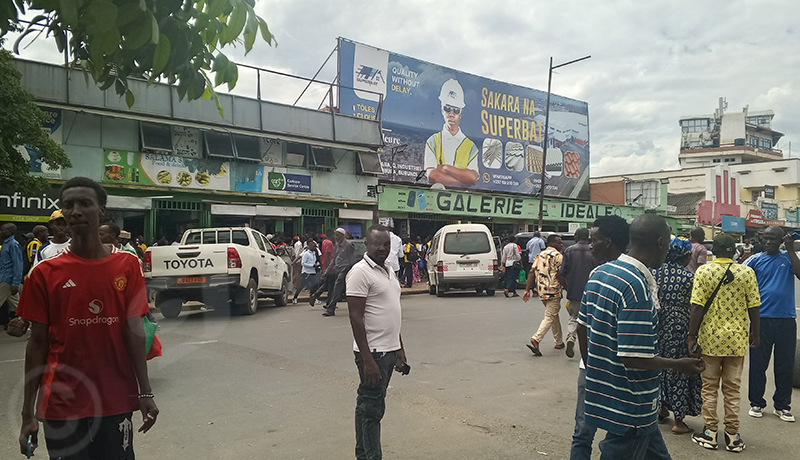
Actors in the field frequently speak of a significant mismatch between available training programs and the demands of the employment market. This discrepancy complicates the job search for many young Burundians, leaving a considerable portion of the youth struggling to find roles that align with their qualifications or aspirations. In Bujumbura's city center, for instance, the galleries 'Idéal' and 'Bata' serve as common gathering points for numerous young individuals seeking employment opportunities, illustrating the central role these informal hubs play in the daily lives of job seekers. Many graduates find themselves underemployed or working in roles unrelated to their studies due to this systemic issue, a direct consequence of the disconnect between educational output and market needs.
One example is Bosco Ntirushwa, who works as a Lumicash agent in Bujumbura's Mukaza commune, despite holding a baccalaureate in French language and literature from the University of Burundi. His situation exemplifies how many young people, even with higher education, are compelled to take on jobs that do not fully utilize their academic training. Educational institutions themselves face considerable challenges that exacerbate the problem. The ETS de Kamenge and the Faculté des Sciences appliquées du campus Kiriri are noted for issues within their laboratories, which can hinder practical skill development essential for various industries. These deficiencies mean students may not gain the hands-on experience vital for many technical and scientific fields. Similarly, the ex-Collège du Saint-Esprit is cited for its dilapidated buildings and insufficient pedagogical equipment, further impacting the quality of education provided. These infrastructural and resource deficits mean that many students graduate without the up-to-date technical skills or practical experience sought by employers. The lack of investment in modern educational facilities and vocational training programs contributes directly to the skills gap, leaving a significant portion of the youth unprepared for the jobs available in the contemporary Burundian economy. This systemic failing in the education sector directly contributes to the high rates of youth unemployment and underemployment, perpetuating a cycle of economic struggle for new generations entering the workforce.
Barriers to Entrepreneurship
Young Burundians attempting to establish their own businesses frequently encounter several systemic challenges. These include limited access to financing, insufficient infrastructure, and an overall unfavorable business environment, according to reports. These factors often hinder entrepreneurial aspirations and the growth of small enterprises, making it difficult for young innovators to turn their ideas into sustainable businesses. The lack of readily available capital, coupled with inadequate basic services like reliable electricity and internet, creates a formidable barrier to entry and growth for nascent businesses. The broader regulatory and economic climate can be perceived as not sufficiently supportive of small and medium-sized enterprises (SMEs), further discouraging entrepreneurial ventures among the youth.
Government initiatives have sought to address some of these obstacles. The Programme d’Autonomisation économique et d’Emploi des jeunes (PAEEJ), for instance, reported the creation of 9,244 jobs over a three-year period, demonstrating a tangible effort to boost youth employment. During the same timeframe, the PAEEJ also financed 2,224 cooperative projects, aiming to stimulate economic activity and empower young people by providing them with collective business opportunities and financial support.
Further efforts to support youth entrepreneurship were outlined in the national employment policy of 2014. This policy aimed to strengthen entrepreneurial endeavors among the youth, with a target of approximately 250 beneficiaries annually. Such policies are key in providing a framework for fostering an entrepreneurial culture and offering concrete assistance to young individuals looking to create their own economic opportunities. These programs represent attempts to foster a more conducive environment for young entrepreneurs, despite the persistent hurdles related to finance, infrastructure, and the broader business climate that continue to challenge their success. The ongoing efforts show the government's recognition of entrepreneurship as a vital pathway to economic independence for the youth.
Voices of Youth and Experts
Bosco Ntirushwa, who holds a baccalaureate in French language and literature from the University of Burundi and hails from Kiremba commune in Butanyerera province, noted the theoretical nature of Burundian education. "Since primary school until university, we practically only learn theory," Ntirushwa stated, reflecting a common sentiment among graduates. He added that this leads graduates back to square one, searching for purpose and livelihood, as their academic knowledge often lacks practical application in the job market. Ntirushwa also described practical difficulties in his work environment as a Lumicash agent, particularly regarding money transfers between agents, pointing to operational inefficiencies that can impede daily business activities.
Blaise Tunezerwe, a communication graduate, works daily at Galerie Idéal and relies heavily on the internet for his activities. Tunezerwe emphasized the prevalence of digital tools, noting that many young people, lacking other options, come to places like Galerie Idéal to earn a living, depending significantly on digital platforms. This reliance on digital connectivity, however, is often hampered by significant challenges. "Not only is the connection poor quality, but it is also expensive," Tunezerwe said, showing the challenges faced in an era of internet and artificial intelligence, where reliable and affordable digital access is increasingly key for economic participation. This notes a critical infrastructural gap that affects the ability of young Burundians to fully leverage digital opportunities for employment and entrepreneurship.
Government's Call to Action
On May 28, 2026, President Évariste Ndayishimiye addressed an interfaith prayer organized by the CNDD-FDD party, urging Burundians to change their 'mentalité' and adopt work and financial autonomy as core principles. The President asserted, "Dieu n’a créé personne pour être pauvre" (God created no one to be poor), emphasizing the government's stance on self-reliance and the importance of individual initiative in overcoming poverty. This call to action comes amidst significant employment challenges for the nation's youth, who represent a large and growing segment of the population. The unemployment rate for young people in Burundi was estimated at 60% in 2016, and it subsequently rose to 65% in 2017, noting the scale of the economic hurdles faced by a large segment of the population. These statistics show the urgency of the President's message, as a substantial portion of the youth remains without formal employment, contributing to social and economic instability. The government's emphasis on a shift in mindset aims to encourage greater personal responsibility and engagement in economic activities, complementing existing programs designed to enhance employment and entrepreneurial opportunities for young Burundians.