The Port of Bujumbura sustained significant damage from floodwaters in late 2023 and early 2024, severely impacting its critical operations. This natural disaster occurred just months after a substantial $93 million project aimed at renovating and modernizing the key port facility had been unveiled, noting the persistent challenges faced by the landlocked nation. The port's inherent vulnerability shows the broader difficulties in Burundi, which ranks as the second-poorest country globally. An alarming nine out of 10 people in Burundi live below the poverty line, a stark indicator of the nation's profound economic fragility and the immense pressure placed on its essential infrastructure. The recent events at the Port of Bujumbura serve as a potent reminder of the urgent need for resilient infrastructure in the face of escalating climate risks.
Flood Devastation and Economic Impact
The recent floods have unleashed a devastating impact across Burundi, displacing over 48,000 people from their homes and affecting more than 240,000 individuals across the country. The widespread destruction and disruption led to total economic losses stemming from the flooding estimated at a staggering $210 million. These calamitous events show the critical and irreplaceable role of the Port of Bujumbura, which functions as the primary gateway for Burundi's international trade. The nation's economic lifeline is heavily dependent on this facility, as Burundi relies on the Port of Bujumbura for more than 80 percent of its imports and exports. This overwhelming reliance makes the port's operational stability absolutely vital for the entire Burundian economy, with any disruption having broad consequences.
The Port of Bujumbura is not merely a local facility; it is a linchpin in the regional trade network. Its strategic location and function facilitate the movement of goods that are essential for daily life and economic activity throughout the country. The substantial economic losses incurred due to the floods highlight the direct correlation between climate vulnerability and economic stability in a nation already grappling with significant developmental challenges. The disruption of trade routes and the damage to essential infrastructure like the port exacerbate existing economic pressures, making recovery efforts more complex and urgent.
Port's History and Vulnerability
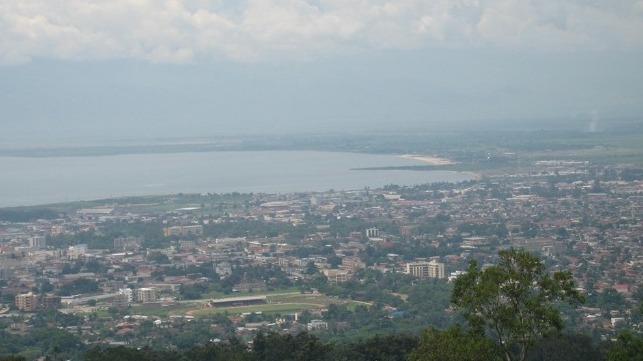
The Port of Bujumbura is strategically situated at the northern tip of Lake Tanganyika, a location that has historically made it a key hub for trade and transport in the region. Constructed in 1959, the facility initially possessed an annual capacity of 200,000 tonnes, designed to handle the trade volumes of its time. Recognizing its growing importance and the increasing demands of regional commerce, its capacity was later expanded in the early 1990s, allowing it to handle up to 500,000 tonnes annually. This expansion reflected the port's evolving role and the increasing reliance placed upon it for national and regional economic activities.
However, despite these past upgrades, the recent floods have exposed the port's current vulnerabilities to modern climate challenges. A detailed engineering study commissioned by the United Nations Development Program (UNDP) and the European Union (EU) has asserted that any future port facilities must prioritize resilience against evolving climate and hydrological risks. This recommendation shows a critical shift in infrastructure planning, moving beyond mere capacity expansion to incorporate strong measures against environmental threats. The study's findings are particularly pertinent given the increasing frequency and intensity of extreme weather events, which pose an existential threat to vital infrastructure in vulnerable regions.
Reimagining Infrastructure for Resilience
Disruptions at the Port of Bujumbura extend far beyond its immediate vicinity, rippling throughout Burundi's entire economy. As a landlocked nation, Burundi's trade and development efforts are inextricably linked to the efficient functioning of this single port. The port serves as a critical entry and exit point for goods, effectively linking Burundi to the wider East African trade network, including vital connections to Tanzania and Zambia, and ultimately providing access to the Indian Ocean for international trade. Its operational stability is particularly significant for a country with a population of 13.7 million, where economic activity is heavily dependent on the consistent flow of imports and exports that sustain industries, provide essential goods, and facilitate economic growth.
The recent floods have unequivocally showed the urgent need for infrastructure that can withstand increasingly frequent and severe weather events, thereby ensuring continuity for the country's economic lifelines. Burundi's profound reliance on this single port makes it exceptionally vulnerable to climate-induced disruptions, necessitating a strategic and full approach to rebuilding and modernizing its facilities. This approach must not only address immediate repair needs but also integrate long-term climate resilience measures to safeguard the nation's economic future. The $93 million renovation project, though unveiled prior to the recent devastation, now carries an even greater imperative to incorporate these critical resilience factors, ensuring that the Port of Bujumbura can serve as a dependable gateway for Burundi for decades to come.