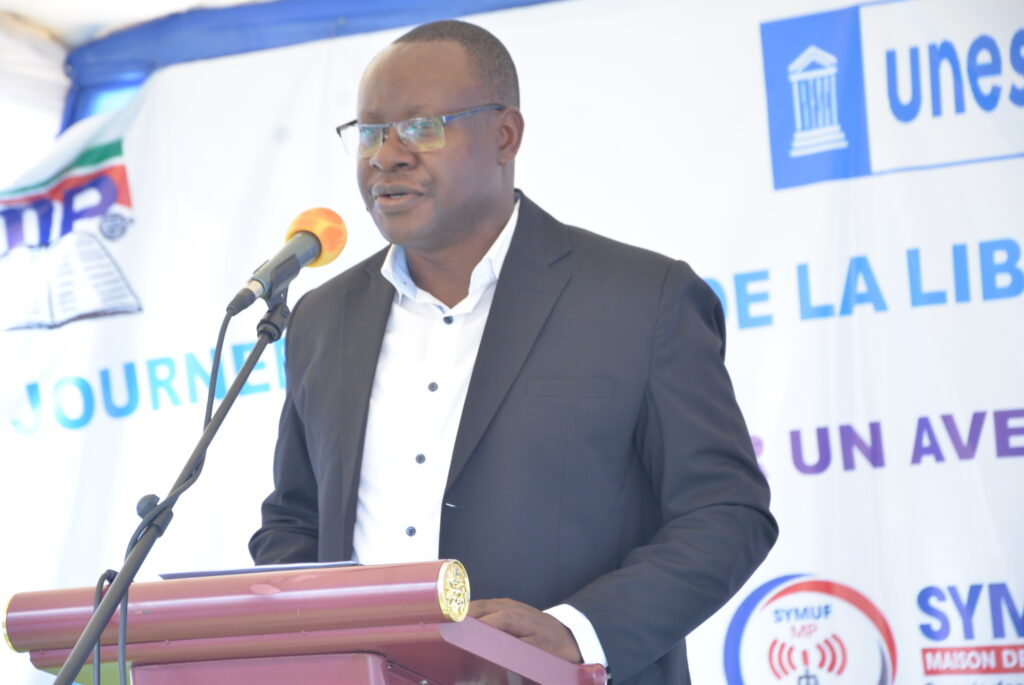
Burundi joined the world in observing World Press Freedom Day on Monday, May 4, 2026. This observance noted the ongoing discussions surrounding media ethics and technological advancements. Burundi also joined the world in celebrating World Press Freedom Day on Monday, May 4, 2026, an event that provided a platform for key conversations about the future of journalism. Peter Wallet is the coordinator of the Maison pour la paix of Unesco in Burundi.
AI's Double-Edged Sword
Artificial intelligence holds the potential to usurp human roles by generating deceptive and false content, a development that could replace or marginalize journalists without proper compensation or respect for their rights and ethical standards. Observers note that this technological advancement also risks fostering a culture of intellectual laziness among the public. In such a scenario, the illusion of readily available information might be accepted over the rigorous work required to verify truth, potentially diminishing critical engagement with news and facts. The capabilities of AI raise concerns about its impact on the integrity of information and the professional landscape for media practitioners. The potential for AI to usurp humans by generating deceptive false content is a significant challenge, threatening to replace or marginalize journalists without pay or respect for their rights and ethics. AI can foster a culture of intellectual laziness where the public accepts the illusion of information over the diligent work of truth verification, posing a substantial risk to informed public discourse.
Uniting Journalism and Technology
Peter Wallet, coordinator of the Maison pour la paix of Unesco in Burundi, invited media professionals to reflect on the transformations induced by digital technology and artificial intelligence. Wallet emphasized the need for journalists to engage with these changes actively. Mr. Wallet specifically invited media professionals to reflect on transformations induced by digital technology and AI, showing the urgency of understanding and adapting to these shifts.
Abbé Dieudonné Niyibizi stated that shaping a future of peace necessitates uniting journalism, technology, and human rights. Niyibizi showed that this integration should not involve submission to machines. His remarks noted a call for a balanced approach, ensuring that technological advancements serve human dignity and ethical journalistic practices rather than replacing them. The discussions aim to guide media professionals in leveraging AI while upholding core principles. This approach emphasizes that while technology offers powerful tools, the human element of ethical judgment and responsibility remains critical in journalism.
Expert Calls for Conscious Use
Abbé Dieudonné Niyibizi, an expert in communication, stated that the critical and conscious use of technology is where the freedom of the press lies. Niyibizi noted the importance of media professionals engaging with technological advancements, including artificial intelligence, while maintaining ethical standards. His perspective emphasizes that the integration of journalism and technology should prioritize human dignity and rigorous journalistic practices. This approach aims to ensure that AI serves to enhance, rather than compromise, the integrity of information and the role of journalists. Niyibizi's remarks contribute to the ongoing discussion among media practitioners in Burundi regarding the responsible adoption of new tools. As an expert in communication, Abbé Dieudonné Niyibizi firmly stated that freedom of the press lies in the critical and conscious use of technology, advocating for a thoughtful and deliberate engagement with new tools.
Upholding Human Conscience
Freedom of the press involves using technology as a tool for precision, verification, and accessibility, according to discussions among media professionals. This approach emphasizes that technology should never serve as a substitute for human conscience, responsibility, and speech. The integration of advanced tools, such as artificial intelligence, must prioritize ethical considerations and maintain the core principles of journalism. Media practitioners are encouraged to leverage these technologies to enhance their work without compromising the human element essential to truthful reporting. This perspective shows the importance of human oversight in all journalistic endeavors, ensuring that technology supports rather than supplants critical judgment. Freedom of the press, as articulated, means using technology as a tool for precision, verification, and accessibility, reinforcing its role as an aid rather than a replacement for human faculties. It is key that technology never becomes a substitute for human conscience, responsibility, and speech, which are the bedrock of ethical journalism.