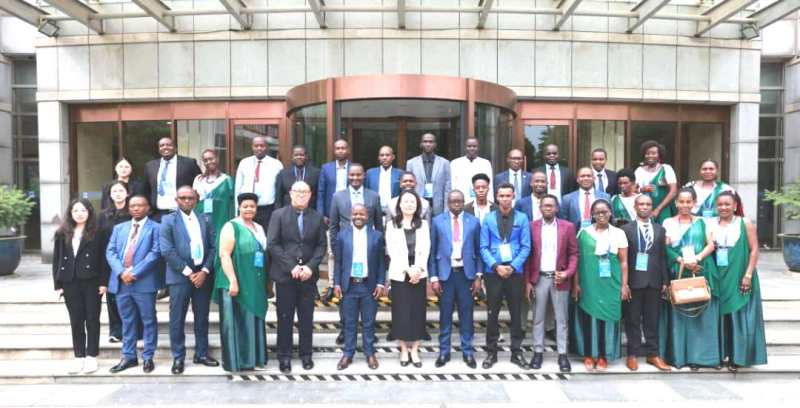
The Commission Vérité et Réconciliation du Burundi (CVR) is advancing its work by addressing the restitution of seized properties in Burundi. This restitution is a symbolic but concrete gesture, forming a pillar of transitional justice within the country. The CVR's efforts in property restitution aim to contribute to reconciliation and peacebuilding. This process is considered a symbolic but concrete gesture, forming a pillar of transitional justice within the country. Proponents argue that the CVR is a necessary response to past spoliations, aiming specifically to restore dignity and social equity for those who have suffered losses. The CVR's efforts in property restitution aim to contribute to reconciliation and peacebuilding.
Swift Justice for Land Disputes
The operation addressing land disputes is projected to expand across Burundi. The operation is expected to extend to the entire country, tackling a significant backlog. More than 35,000 cases that the former Commission nationale des terres et autres biens (CNTB) left unresolved still require resolution, presenting a substantial challenge. Proponents argue the Commission Vérité et Réconciliation du Burundi (CVR) offers a necessary response to past spoliations, aiming to restore dignity and social equity. Proponents state that classical judicial paths have often been slow, inaccessible, or paralyzed. Allowing multiple appeals, proponents believe, would indefinitely prolong land conflicts and reactivate community tensions, thereby hindering genuine reconciliation. The enforceable nature of the CVR's decisions is said to allow for accelerated reparations and helps to decongest courts that are already overburdened. Burundians, proponents emphasize, require concrete solutions rather than procedures without a foreseeable conclusion. Burundians need concrete solutions, not procedures without horizon.
Rule of Law Under Threat
Opponents of the Commission Vérité et Réconciliation du Burundi's (CVR) approach contend that removing its decisions from judicial review represents a fundamental drift that weakens the rule of law. They invoke Article 210 of the Constitution, which explicitly states that justice is rendered by courts and tribunals, suggesting the CVR operates outside this constitutional framework. Opponents argue the CVR is not a jurisdiction and therefore lacks the same procedural guarantees inherent in a formal judicial process, such as the right to appeal. Giving the CVR definitive power without judicial control, critics assert, blurs the separation of powers and critically weakens Burundi's judicial architecture, potentially undermining the foundational principles of justice. This perspective emphasizes the importance of established legal channels for dispute resolution to ensure fairness and uphold constitutional principles. Opponents highlight that such an approach, by removing CVR decisions from judicial review, fundamentally weakens the rule of law by circumventing established legal mechanisms.
Balancing Peace and Justice
On Monday, May 4, 2026, four houses in Bujumbura were officially restituted to their legitimate owners, demonstrating a tangible outcome of the Commission Vérité et Réconciliation du Burundi's (CVR) work. A key debate point surrounding the CVR's operations is that its decisions are "exécutoires et ne sont susceptibles d’aucun recours juridictionnel," meaning they are enforceable and not subject to any judicial appeal. Critics argue that an imposed decision without contestation might calm a conflict today but could inadvertently prepare another for tomorrow, as underlying grievances may not be fully resolved. They also contend that a justice system without recourse is one that can err and has no means to correct itself, raising significant concerns about fundamental fairness and the potential for irreversible mistakes. A justice without recourse is a justice that can err and has no means to correct itself.