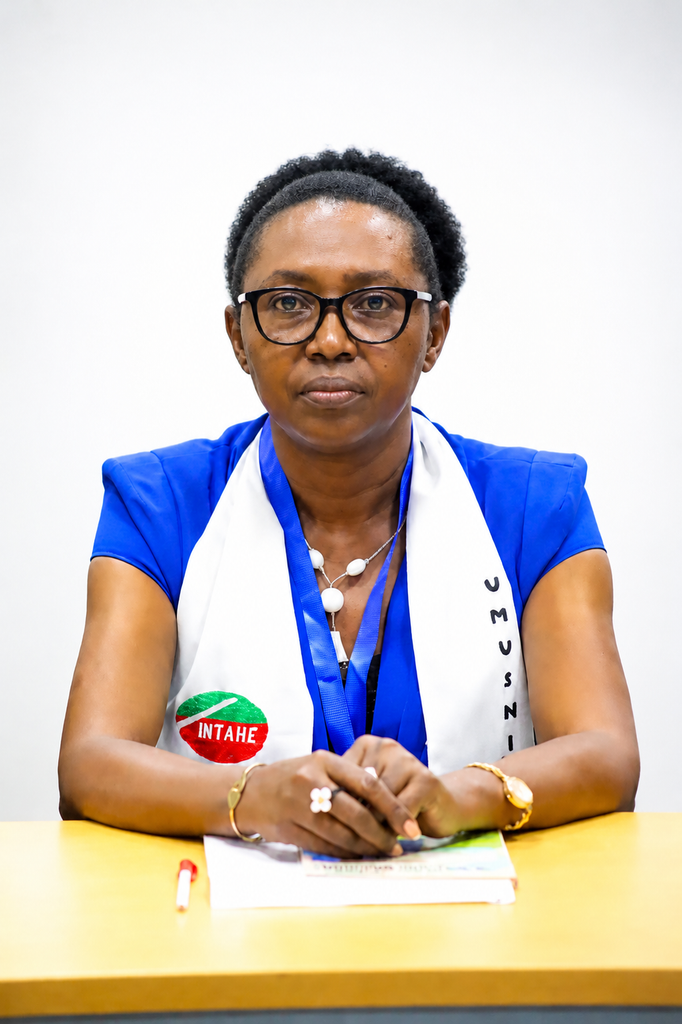
Catherine Tegera has dedicated nearly two decades to listening, mediation, and defending human dignity in Burundi, focusing on victims of gender-based violence (VBG). Born in 1963, Tegera has channeled her extensive life experience, deep personal faith, unwavering values, and strong judicial background into assisting those affected by such violence. Her commitment stems from a profound belief in justice and human rights. "There were women's rights that were violated," Tegera stated, explaining her motivation to act. She noted that while women are often the primary victims, "gender-based violence can affect both women and men." Tegera added, "Women were mistreated without being able to report it, and mistreated men are afraid to speak out for fear of being underestimated." Her goal extends beyond immediate relief; she aims "not only to help a victim escape a violent situation but to enable them to regain their dignity, rights, and place within the community." Tegera emphasized that "silence kills" and urged people to overcome injustices, including those hidden behind cultural phrases like "Niko zubakwa." Her work is a testament to her steadfast resolve to empower individuals and rebuild communities.
A Life of Service and Values
Catherine Tegera's professional journey began with a foundation in education, serving as a teacher at the Bukeye primary school between 1985 and 1987. This early experience in nurturing young minds laid the groundwork for her subsequent dedication to public service. Her commitment to justice and human welfare continued to evolve, leading her to the Ministry of Justice, where she worked on the key 'Incarcerated Child and Mother' project. This initiative showed her early engagement with vulnerable populations and her desire to address systemic issues affecting them.
Her career progressed within the penal system, where she later held the significant position of Deputy Director of the Central Prison of Bujumbura. This role provided her with direct insight into the challenges faced by incarcerated individuals and the broader implications of the justice system. Her leadership capabilities were further recognized when she subsequently served as its interim director from 2007 to 2009. During this period, she was responsible for overseeing the complex operations of a major correctional facility, demonstrating her capacity for management and her commitment to ethical administration.
Following her tenure at the Central Prison, Tegera continued her impactful work at the Directorate General of Penitentiary Affairs, where she served from 2011 until her retirement in 2024. This extended period allowed her to contribute significantly to the broader oversight and administration of the country's penitentiary system. During this time, she was also a respected member of the Permanent Commission, a body responsible for monitoring the penitentiary and judicial files of detainees. Her involvement in this commission ensured that cases were reviewed with diligence and that the rights of those in custody were considered, reflecting her unwavering commitment to fairness and due process.
Tegera's strong ethical compass and dedication to education were deeply rooted in her upbringing. Her father, himself a teacher, instilled in her a profound value for education, actively encouraging all his children, both girls and boys, to attend school. This emphasis on learning and equal opportunity profoundly shaped Tegera's worldview and her subsequent advocacy for human rights. Tegera reflected on her personal motivations and values, stating, "I like the color blue because it is the color of the Blessed Virgin Mary, Mother of God and men. The color red is the symbol of Jesus Christ's love for us. I do not like conformity, I am proud of myself." These sentiments reveal a deeply spiritual and independent individual, whose personal convictions guide her professional and humanitarian efforts.
Understanding Gender-Based Violence
Gender-based violence (VBG) is a widespread phenomenon that can affect both women and men, though women frequently remain the primary victims in many settings. Catherine Tegera's work notes the multifaceted nature of this issue, recognizing that while women often bear the brunt of such violence, men can also be victims, albeit sometimes silenced by societal expectations. The cultural expression "Niko zubakwa," which suggests one must sometimes 'endure all evils to preserve the home,' carries the significant risk of trivializing violence in the pursuit of household stability. This cultural nuance often creates a barrier for victims seeking help and justice, as it implicitly encourages silence and endurance over confrontation and resolution. Tegera’s efforts directly challenge this harmful interpretation, advocating for a society where dignity and safety are critical, not sacrificed for a superficial semblance of domestic harmony.
Catherine Tegera has been married to Tharcisse Ndarugirire for nearly 40 years, a testament to her enduring personal relationships. Mr. Ndarugirire described her character with admiration, stating, "I confess her rectitude, her faithfulness to commitment, her veracity, her intellectual and moral honesty. Very strict in rectitude, she has already had misunderstandings, even among the Bashingantahe men who did not want to go beyond stereotypes." This observation from her husband shows her integrity and her willingness to challenge entrenched norms, even among respected community elders. Tegera is the mother of four children, two boys and two girls, and is a grandmother to two grandchildren, reflecting a rich personal life alongside her demanding professional and advocacy roles. She lives in the Kinanira II neighborhood, located in the Musaga zone of the Mugere commune, in the south of Bujumbura city. Her preferred colors are blue and red, symbolizing her deep faith and passion, as she herself articulated.
Restoring Dignity and Justice
Catherine Tegera's dedication to justice is further exemplified by her historical role as one of the first women invested as a Mushingantahe approximately twenty years ago. This was a new achievement, as the Mushingantahe institution is traditionally reserved for men and associated with profound wisdom, integrity, and moral authority in Burundian society. Her inclusion in this esteemed body signifies a recognition of her exceptional character and her ability to uphold the highest standards of justice and community leadership. As a practicing Catholic, her faith is central to her personal outlook, providing a moral compass for her life and work. Tegera has stated, "J’aime la couleur bleue parce que c’est la couleur de la Sainte Vierge, mère de Dieu et des hommes. La couleur rouge est le symbole de l’amour de Jésus-Christ pour nous. Je n’aime pas le conformisme, je suis fière de moi-même," expressing her personal values and preferences in her native tongue. This statement powerfully conveys her spiritual grounding, her appreciation for symbolic meaning, and her fiercely independent spirit. For her loved ones and those who know her, Catherine Tegera embodies the values of Ubushingantahe, which include humanity, compassion, courtesy, integrity, and a strong concern for the common good, making her a true pillar of her community.
Tegera has consistently applied these profound principles in her practical work, notably assisting a woman from Mutaho commune in Gitega province. This woman faced a dire situation, lacking essential identification documents for herself and her children. This critical absence of documentation prevented her from fully participating in society, accessing basic services, and asserting her legal rights. Tegera's timely and effective intervention enabled the woman to not only obtain the necessary documents but also to regain her rightful place in society and access her land inheritance, which had been unjustly withheld. This specific case vividly illustrates Tegera's hands-on approach to empowering individuals and restoring their fundamental rights.
Catherine Tegera, born in 1963, has consistently advocated for those whose rights have been infringed, demonstrating a lifelong commitment to social justice. She has observed that "Il y avait des droits des femmes qui étaient bafoués," noting the systemic issues she has worked tirelessly to address throughout her career. Tegera acknowledged that "Les VBG peuvent toucher aussi bien les femmes que les hommes, même si les femmes demeurent les principales victimes dans de nombreux contextes," indicating a broad and nuanced understanding of gender-based violence that considers all affected parties. She also pointed out that "La femme était maltraitée sans pouvoir dénoncer et l’homme maltraité a peur de le dire par peur d’être sous-estimé," shedding light on the barriers to reporting violence for both genders. Her overarching goal, articulated with clarity and conviction, is "Ne pas seulement aider une victime à sortir d’une situation de violence, mais lui permettre de retrouver sa dignité, ses droits et sa place au sein de la communauté," aiming for holistic recovery and genuine social reintegration. Tegera asserts that "Le silence tue. Il faut dépasser toutes les formes d’injustice qui se cachent, par exemple, derrière le vocable «Niko zubakwa »," advocating for the open confrontation of hidden injustices and the dismantling of cultural norms that perpetuate harm. Her nearly two decades of dedicated service are a testament to her unwavering commitment to justice, dignity, and the profound belief that every individual deserves to live free from violence and with their rights fully respected.