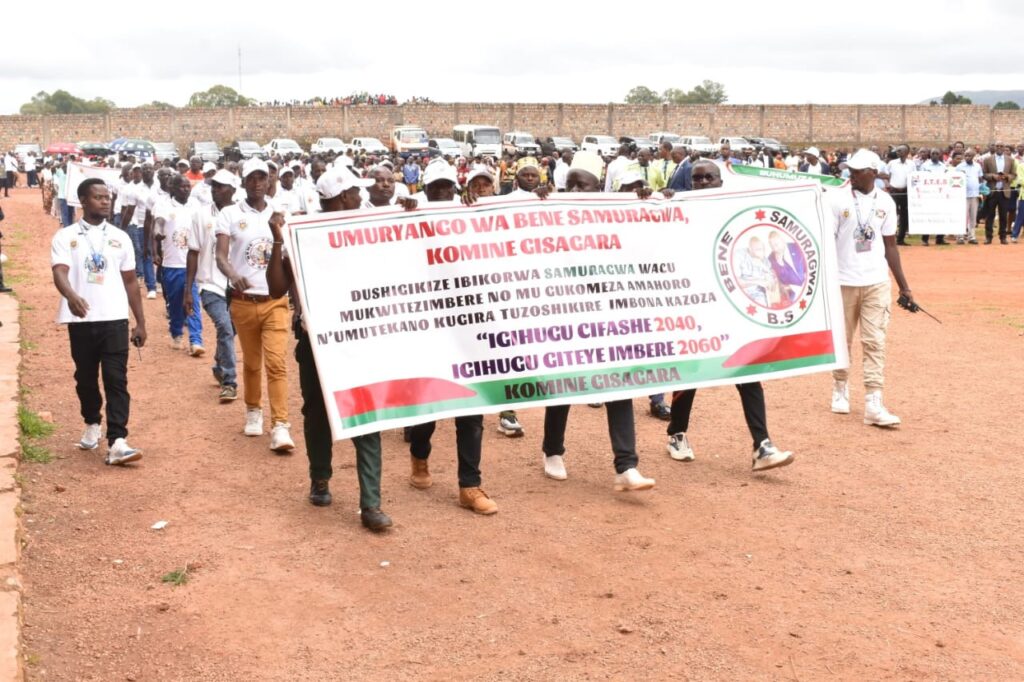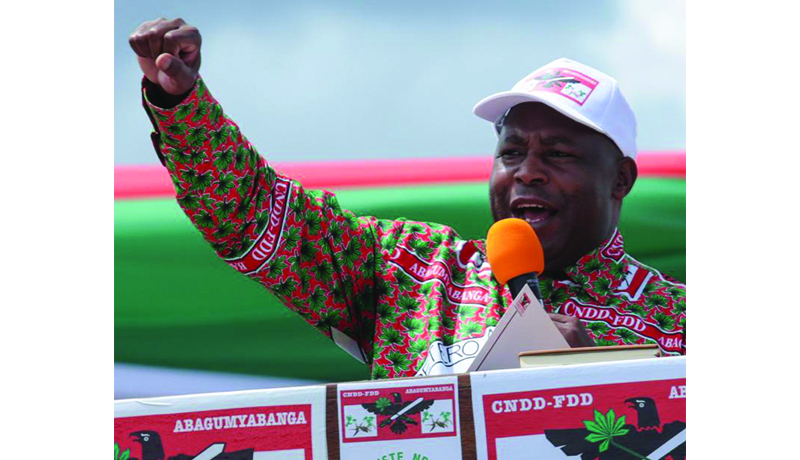
The ruling CNDD-FDD party formally launched its campaign for the 2027 presidential election and designated incumbent President Evariste Ndayishimiye as its candidate. The party held an extraordinary congress in Gitega on April 26, 2026, where the decision was made. This move positions President Ndayishimiye to seek another term in office, solidifying the party's leadership ahead of the upcoming electoral cycle. The congress served as a key platform for the CNDD-FDD to articulate its strategic direction and present its chosen representative for the next presidential contest. The early designation signals a clear intent from the ruling party to take a proactive stance in shaping the political landscape for the next electoral cycle, setting an early tone for the competition. This strategic decision by the CNDD-FDD shows its confidence in President Ndayishimiye's leadership and its ambition to maintain continuity in governance, thereby influencing the political discourse significantly in the lead-up to 2027.
President's Vision and Priorities
President Evariste Ndayishimiye, designated as the CNDD-FDD candidate for the 2027 presidential election, outlined his vision for the country, emphasizing security, economic independence, and education. He reaffirmed his commitment to guaranteeing security and justice for all Burundians, urging the population to preserve peace and maintain active mobilization against poverty. This commitment forms a cornerstone of his proposed agenda, aiming to foster a stable environment conducive to national development. "Travaillons dur, jour et nuit, mais restons vigilants," President Ndayishimiye stated, showing the need for diligence and watchfulness among the populace to achieve these goals. He noted that collective effort and sustained vigilance are critical for the nation to overcome its challenges and progress towards a more prosperous future.
President Ndayishimiye also insisted on the necessity of protecting national borders against any external threat, stressing the importance of national sovereignty and territorial integrity. He criticized Burundi's economic dependence on external sources, deeming it incompatible with national dignity. This critique reflects a broader aspiration for self-reliance and reduced vulnerability to external pressures. "Je ne veux pas que nous prenions l’avion pour aller mendier, mais plutôt pour chercher des marchés d’écoulement pour nos produits," he declared, advocating for a shift from reliance on foreign aid to seeking export markets for Burundian goods. This statement illustrates his resolve to transform Burundi's economic model, moving towards a more strong and self-sustaining economy driven by local production and international trade. His vision includes fostering an environment where Burundian products can compete globally, thus enhancing the nation's economic standing and reducing its reliance on foreign assistance.
He further advocated for a rational exploitation of natural resources, emphasizing the importance of local transformation of these resources. This approach aims to maximize the value derived from Burundi's natural endowments within the country, creating jobs and fostering industrial growth. President Ndayishimiye stressed the central role of education in forming an educated, competent, and innovative generation for sustainable development. His focus on human capital development is seen as a critical investment for the nation's long-term progress. "Le Burundi doit former une génération de Burundais instruits, compétents et capables d’innover," he said, noting his focus on human capital development as a core pillar of his agenda. This educational emphasis is designed to equip the youth with the skills necessary to drive innovation and contribute meaningfully to the country's economic and social advancement. The President's full vision thus intertwines national security, economic autonomy, and human development as key drivers for Burundi's future.
Party's Strategic Move
The ruling party's campaign is already "omnipresent" in the public space, according to Gaspard Kobako, indicating an early and widespread presence in the national discourse. This aggressive early positioning by the CNDD-FDD aims to establish a dominant narrative and consolidate support well in advance of the official election period. Hamza Venant Burikukiye, however, stated that "the strategy of the CNDD-FDD remains legitimate, like other parties can do. Again, it is their organization that must be respected, provided that no law has been violated." He emphasized that "the internal organization of a party is its sole responsibility. Designating a party candidate by its activists (congress members) after the official launch of the election process remains legal, so no comment should be made on it. That would be wanting to interfere in the internal affairs of the political party." Burikukiye's comments show the party's assertion of its right to internal self-governance and its interpretation of the legality of its early candidate designation.
Burikukiye also asserted that "proclaiming him a candidate while he is still in office as head of state cannot worry anyone if one is truly well prepared to enter the competition." He questioned, "How can other political parties or aspiring candidates be stifled when the country continues to function normally and laws remain in force? State coffers are managed and inspected by authorized bodies that are still functional." These remarks suggest that the CNDD-FDD views its early move as a challenge for other parties to match, rather than an unfair advantage. Burikukiye's argument posits that the institutional frameworks are strong enough to ensure a level playing field, regardless of the incumbent's early campaign activities. He maintains that the early designation does not inherently undermine the fairness of the electoral process, provided that all legal provisions are respected by all political actors.
Conversely, Olivier Nkurunziza stated that "the essential is not the precocity of a candidacy, but in the quality of the project proposed to citizens." Nkurunziza characterized the early designation as "an attempt to lock down the political game upstream, aiming to set the pace for the electoral process." This perspective suggests that the CNDD-FDD's strategy is designed to preemptively control the electoral narrative and limit the space for other political contenders. He added that "the party will remain vigilant and will not hesitate, if necessary, to refer the matter to the Ceni and competent institutions in case of irregularities." This declaration notes a commitment to monitoring the electoral process closely and challenging any perceived breaches of electoral law or fair play. Kefa Nibizi indicated that the choice is "difficult to justify in terms of national priorities." Nibizi argued that "what interests the ruling party is only power instead of finding solutions to the issues that haunt the population, notably the lack of fuel, rising prices, unavailable chemical fertilizers, essential medicines that cannot be found, rampant unemployment, and Burundians abroad who are mistreated." This criticism points to a perceived disconnect between the ruling party's political ambitions and the immediate welfare concerns of the citizenry. He also noted that "regarding the Constitution and the Electoral Code, there is no imposed deadline for presenting a candidate." Nibizi concluded that "everything the head of state does or says from now on could be perceived as part of the presidential campaign," raising concerns about the blurring lines between official duties and political campaigning.
Reactions and Criticisms
The CNDD-FDD's early designation of its candidate has prompted various reactions from political figures and civil society. Agathon Rwasa, a prominent political figure, suggested the move sends a clear message that "those who dream of democracy will have to be disappointed" ("Ceux qui rêvent de démocratie n’auraient qu’à déchanter"). Rwasa's statement reflects a concern that the early declaration by the ruling party could be interpreted as an attempt to stifle democratic competition. Rwasa indicated that the ruling party appears to have its "foot in the 2027 presidential election" while other political formations seem inactive, noting the perceived imbalance in readiness and engagement. He further commented that "priorities seem more oriented towards the interests of the system's strongmen" ("Les priorités semblent davantage orientées vers les intérêts des ténors du système"), implying that the party's actions are driven by internal power dynamics rather than broader national interests. This perspective suggests a cynical view of the ruling party's motivations, questioning its commitment to a truly open and competitive democratic process.
Gabriel Banzawitonde, speaking on the early announcement, stated that "whether the candidacy comes early or late, the essential is that the laws are not trampled" ("Qu’elle arrive tôt ou tard, l’essentiel est que les lois ne soient pas piétinées"). This emphasizes the critical importance of upholding legal frameworks throughout the electoral cycle, irrespective of the timing of political maneuvers. Banzawitonde expressed concern about the period with an incumbent president campaigning, remarking, "We strongly fear this interval with a sitting president as a candidate, who could gain an advantage over others by campaigning with state resources" ("Nous craignons fortement cet intervalle avec un président en exercice candidat, qui pourrait prendre de l’avance sur les autres en menant campagne avec les moyens de l’État"). This fear shows a common apprehension in nascent democracies regarding the misuse of state resources for partisan political ends, potentially creating an unfair playing field. He also suggested that the early declaration could serve to "block in time any potential internal candidacies and discourage other political formations" ("Cela peut être un moyen de bloquer à temps d’éventuelles candidatures internes et de décourager les autres formations politiques"), indicating a strategic intent to consolidate power and deter opposition. Banzawitonde concluded that under such conditions, the chances of other candidates "are reduced to nothing" ("leurs chances sont réduites à néant"), emphasizing the need "to guarantee democracy in Burundi" ("garantir la démocratie au Burundi"). His remarks highlight the importance of ensuring a truly equitable and transparent electoral environment to uphold democratic principles.
Gabriel Rufyiri, a civil society actor, suggested that the authorities should instead "concentrate their efforts on the effectiveness of government action during the current mandate" ("les autorités devraient plutôt concentrer leurs efforts sur l’efficacité de l’action gouvernementale durant le mandat en cours"). Rufyiri implied that prioritizing electoral campaigning at this stage diverts focus from pressing national issues and effective governance. This sentiment reflects a concern that political maneuvering is overshadowing the immediate needs and challenges faced by the Burundian population. The call for greater focus on current governmental responsibilities rather than future electoral battles resonates with those who believe that the government's primary duty is to address the present-day concerns of its citizens. The debate surrounding the CNDD-FDD's early move thus encapsulates broader questions about political priorities, democratic fairness, and the effective governance of Burundi.