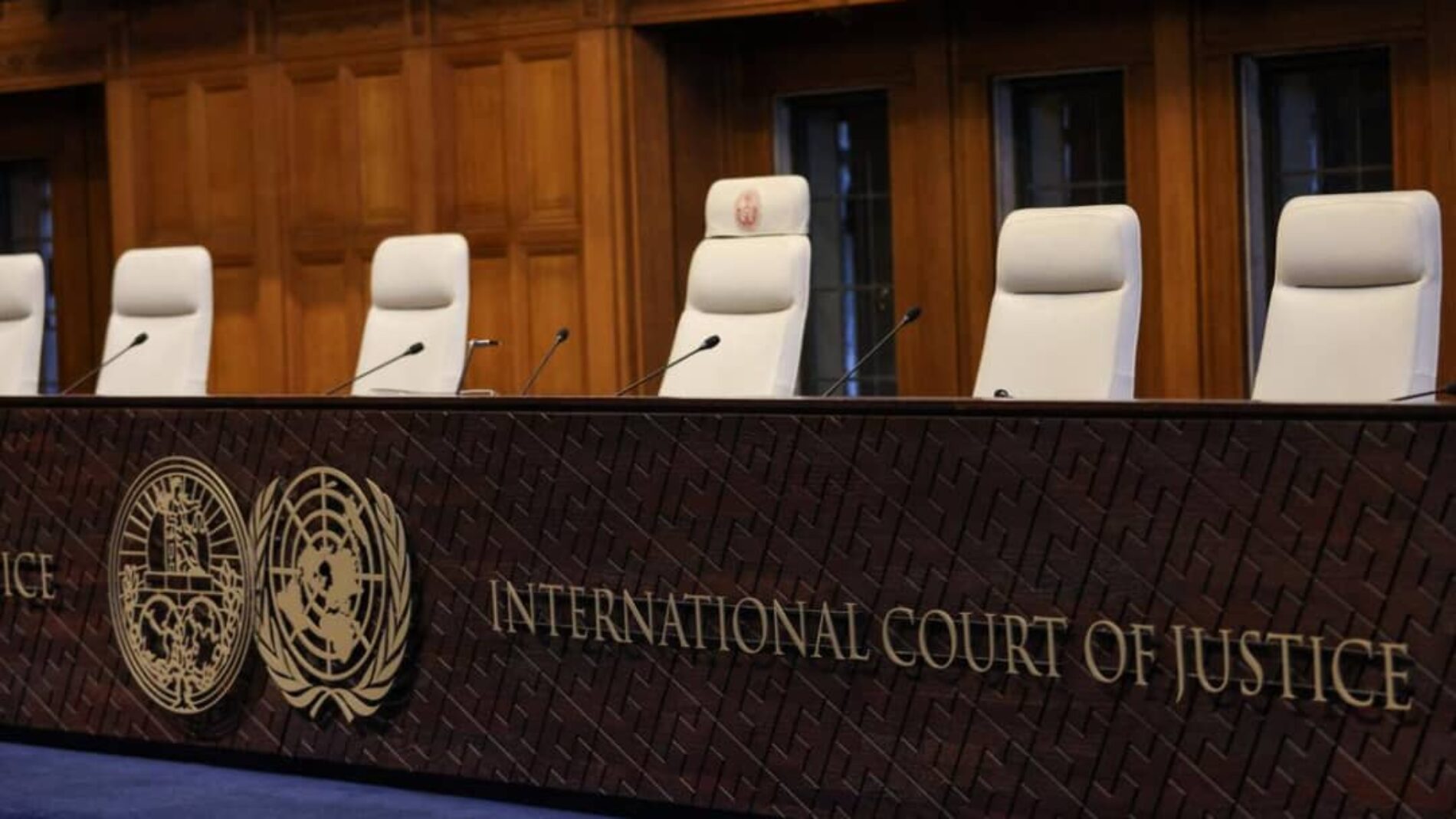
The Democratic Republic of Congo (DRC) has initiated a legal case against Rwanda before the International Court of Justice (ICJ) in The Hague, filing a request with the UN's highest court on June 26. The Democratic Republic of Congo (DRC) has brought its dispute with Rwanda before the International Court of Justice (ICJ), the principal judicial organ of the United Nations, based in The Hague. The DRC accuses Rwanda of serious violations of international law and human rights spanning three decades in eastern DRC, with the complaint covering alleged acts committed between 1996 and the present day. Congolese authorities claim Rwanda is responsible for these violations. The DRC further accuses Rwandan authorities of conducting "a genocidal campaign and serious and massive violations of human rights in eastern Zaire, then the Democratic Republic of Congo." This formal legal action shows the escalating tensions and deep-seated grievances between the two Central African nations.
Kinshasa's Detailed Allegations
Kinshasa asserts the International Court of Justice (ICJ) possesses jurisdiction to examine the case, particularly under the Convention on the Prevention and Punishment of the Crime of Genocide. This assertion notes the gravity of the accusations, placing them within the framework of one of the most serious international crimes. Congolese authorities claim the alleged acts initially targeted Hutu populations who had sought refuge in the Democratic Republic of Congo following the 1994 genocide against the Tutsi in Rwanda. These actions then reportedly extended to several Congolese communities, according to the DRC's submission. The complaint specifies that these violations began in 1996 and have continued uninterruptedly to the present day, painting a picture of prolonged suffering and systemic abuses.
Kinshasa specifically names the Nyindu, Bembe, Lega, Nande, Hunde, and Bashi among the groups it alleges were victimized. The Congolese Ministry of Communication states that civilian populations in eastern DRC have endured massacres, extrajudicial executions, torture, sexual violence, forced displacement, and discrimination based on ethnicity and gender over several decades. The full nature of these allegations speaks to the widespread impact of the conflict on the civilian population. The conflict in eastern DRC has persisted for nearly three decades, fueling one of the continent's most severe humanitarian crises. The DRC's legal submission to the ICJ seeks to hold Rwanda accountable for its alleged role in perpetuating this instability and the associated human rights abuses. The filing of this request marks a significant escalation in the diplomatic and legal confrontation between the DRC and Rwanda.
Rwanda's Counterclaims and Security Concerns
Kigali accuses the Democratic Republic of Congo (DRC) of equipping, arming, and providing logistical support to the Forces démocratiques de libération du Rwanda (FDLR), including supplying them with military uniforms. This accusation forms a core part of Rwanda's justification for its security concerns in the region. The M23, a former predominantly Tutsi rebellion, resumed arms in late 2021. Kinshasa consistently accuses Rwanda of supporting the M23, a claim that Rwanda regularly denies. Rwanda, for its part, states its primary security concern is the continued presence and activities of the FDLR in eastern DRC. Kigali, in turn, accuses Kinshasa of collaborating with this Hutu Rwandan armed group, some of whose leaders are accused of participating in the 1994 genocide against the Tutsi. This reciprocal blame game notes the complex and deeply entrenched nature of the conflict.
The M23 movement now controls a large part of the North Kivu and South Kivu provinces. This includes their respective capitals, Goma and Bukavu, as well as several strategic territories within these provinces. The territorial gains of the M23 have exacerbated the humanitarian situation and further complicated efforts to achieve peace. The ongoing conflict has led to massive displacement and a severe impact on the lives of millions of Congolese citizens. The accusations and counter-accusations between the DRC and Rwanda have made it challenging to address the root causes of the violence and to protect civilian populations caught in the crossfire.
Broader Regional Context
Rwanda consistently denies accusations of supporting the M23 rebel group, asserting its primary security concern stems from the presence of the Forces démocratiques de libération du Rwanda (FDLR) in eastern DRC. Kigali accuses Kinshasa of collaborating with this Hutu Rwandan armed group, some of whose leaders are accused of participating in the 1994 genocide against the Tutsi. These accusations from Rwanda show its long-standing security narrative regarding the FDLR, an armed group that has been a source of tension between the two countries for decades. The presence of the FDLR in eastern DRC is a key point of contention, with Rwanda viewing it as an existential threat.
Before filing its case with the International Court of Justice, the Democratic Republic of Congo had already lodged a complaint with the East African Community (EAC) Court of Justice, also implicating Rwanda in the ongoing conflict. This prior legal action demonstrates the DRC's persistent efforts to seek redress and accountability through various regional and international bodies. The move to the ICJ signifies a further escalation, bringing the dispute to the highest judicial forum of the United Nations. President Félix Tshisekedi, however, continues to downplay the threat posed by the FDLR. He has described the group as "une force résiduelle réduite au banditisme" (a residual force reduced to banditry), indicating a different perspective on its operational capacity compared to Rwanda's assessment. This contrasting view on the FDLR's threat level is a significant point of disagreement between the two nations.
These differing views highlight the deep mistrust and divergent interpretations of security threats that characterize the relationship between the two nations, complicating efforts towards regional stability. The historical context of the 1994 genocide against the Tutsi in Rwanda continues to influence current perceptions of security and the roles of various armed groups in the eastern DRC. The DRC's decision to pursue legal action at the ICJ represents a significant diplomatic and legal challenge to Rwanda, potentially opening a new chapter in the long-standing and complex conflict in the Great Lakes region. The outcome of this case could have broad implications for regional security and international law concerning state responsibility for alleged atrocities.