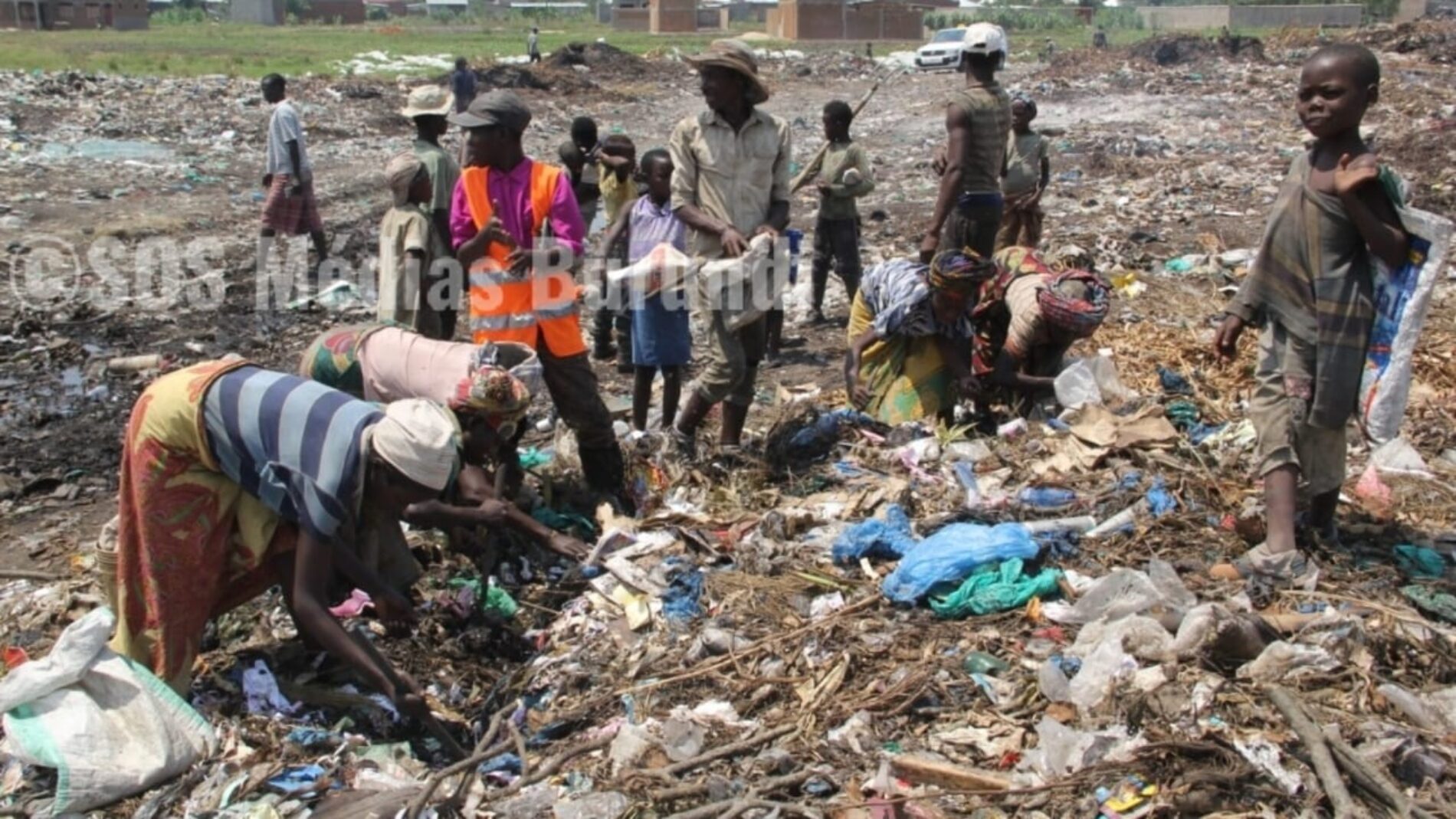
The Buterere public landfill, situated west of the Ntahangwa commune in Burundi's economic capital, Bujumbura, is experiencing significant management difficulties that are disrupting the collection and treatment of household waste. The challenges have led to perceptions of the landfill being saturated. However, the situation is attributed more to underlying management issues rather than an actual shortage of physical space at the site. This impacts the overall waste disposal infrastructure in the region, which is key for public health and environmental stability in the capital. The Buterere public landfill, located west of the Ntahangwa commune, north of Burundi's economic capital, is facing serious management difficulties disrupting household waste collection and treatment, a situation that has drawn considerable public concern.
Addressing Operational Failures
Engineer Égide Nijimbere, the Minister of Infrastructure, Equipment, and Social Housing, announced a series of measures last weekend aimed at improving operations at the strategic Buterere landfill site. The minister’s announcement follows a period marked by significant operational challenges. Repeated breakdowns of garbage trucks have led to frequent collection interruptions across several neighborhoods in Bujumbura, exacerbating the waste management crisis and leading to visible accumulations of refuse in urban areas. The Buterere landfill is perceived as saturated, but this situation stems more from management problems than a real lack of space, according to official statements.
Contrary to public perception, the site has not yet reached its maximum capacity. Officials attribute the current difficulties to flawed management practices, the aging condition of collection trucks, and the advanced degradation of the access road, which was originally constructed in the 1980s. These factors collectively hinder efficient waste disposal operations. The current difficulties are directly linked to flawed management, aging collection trucks, and the advanced degradation of the access road, built in the 1980s, which makes transportation to the site increasingly difficult and costly. To address these operational shortcomings, the ministry plans to deploy its agents directly to the landfill. These agents will be responsible for guiding trucks and organizing unloading zones more efficiently, aiming to streamline the process and prevent further disorganization. Minister Nijimbere announced strengthened collaboration with local administration. This partnership aims to prevent the anarchic occupation of available spaces within the landfill, ensuring more structured and sustainable use of the facility's capacity and preventing unauthorized activities that further complicate management. Agents from the ministry will be deployed to guide trucks and organize unloading zones, a move intended to bring immediate improvements to the site's daily operations. Strengthened collaboration with local administration is announced to prevent anarchic occupation of available spaces, ensuring that the landfill's designated areas are used solely for their intended purpose.
Health and Environmental Risks
The ongoing situation at the Buterere landfill has led to a significant accumulation of garbage in households, posing growing risks to public hygiene and general health across Bujumbura. This situation has caused an accumulation of garbage in households, with growing risks to public hygiene and health for residents, particularly in densely populated areas. The landfill itself is widely regarded as an ecological and sanitary bomb, necessitating urgent and sustainable interventions to avert a larger public health crisis. This assessment shows the critical need for immediate action to mitigate potential hazards, which are already manifesting in various forms.
A daily occurrence at the site involves children frequenting the landfill to collect food scraps and various other waste materials. This practice exposes them to considerable health risks due to direct contact with potentially contaminated refuse, including sharp objects, hazardous chemicals, and biological waste. Every day, children frequent the site to collect food scraps and various waste, exposing them to significant health risks, a stark reminder of the social impact of the landfill's mismanagement. The precarious conditions at Buterere also contribute to broader public health concerns in the surrounding areas. Cholera outbreaks are regularly reported in the area, indicating a direct link between the landfill's inadequate management and the local community's well-being. The presence of such diseases notes the severe environmental and health consequences of the current waste management crisis, making the landfill a focal point for disease vectors and pollution. The Buterere landfill is considered an ecological and sanitary bomb requiring urgent and sustainable interventions, a classification that emphasizes the gravity of the situation and the necessity for full solutions.
Future Plans and Funding
Urgent actions to address the Buterere landfill crisis include rehabilitating the road leading to the site and redeploying agents from the Office burundais de l’Urbanisme, de l’Habitat et de la Construction (OBUHA) to supervise dumping operations more effectively. These measures are designed to improve both access and operational control at the facility. Work on the access road is scheduled to commence next year, a critical step towards ensuring reliable transportation of waste to the site. Funds specifically allocated for the rehabilitation of this access road have already been secured within the 2026-2027 budget, demonstrating a commitment to this vital infrastructure project. Urgent actions include rehabilitating the road leading to the Buterere landfill and redeploying agents from the Burundian Office of Urbanism, Housing, and Construction (OBUHA) to better supervise dumping operations, aiming to bring immediate structural and oversight improvements. Work on the access road is expected to begin next year, signaling the start of tangible improvements, and funds for the rehabilitation of the access road have already been allocated in the 2026-2027 budget, securing the financial means for this key project.
Beyond immediate interventions, technical authorities are evaluating the establishment of new waste transit and landfill sites to bolster the region's waste management infrastructure and provide long-term solutions to the growing waste challenge. Technical authorities are also considering the establishment of new waste transit and landfill sites, which would diversify and strengthen the waste disposal network. In the medium term, the government intends to proceed with further technical studies and mobilize additional funding, recognizing that sustainable waste management requires ongoing investment and research. A key initiative planned for the future is the introduction of a waste sorting system, aiming to improve efficiency and reduce the overall volume of waste directed to landfills, thereby extending their lifespan and promoting recycling. In the medium term, the government plans to continue technical studies, mobilize complementary funding, and introduce a waste sorting system, signaling a full and forward-looking approach to waste management in Bujumbura and its surrounding areas. This holistic strategy aims to transform the current crisis into an opportunity for modernizing waste disposal practices and safeguarding public health for generations to come.