A significant fire devastated approximately 80% of Ngozi's central market on the night of July 9, 2026, marking the fifth such catastrophe in seven months. The blaze, which witnesses reported started around 8 PM from a wholesaler's kiosk after a general power outage, consumed a section known to contain highly flammable products. Security forces at the scene reportedly prevented merchants from entering the market to save their goods, a move that has since drawn criticism and exacerbated the sense of loss among the affected traders. The fire, which engulfed a substantial portion of the market, left a trail of destruction, impacting livelihoods and raising serious questions about public safety and disaster preparedness in the region. This incident has reignited public debate on the frequency of such devastating events and the adequacy of the state's response mechanisms.
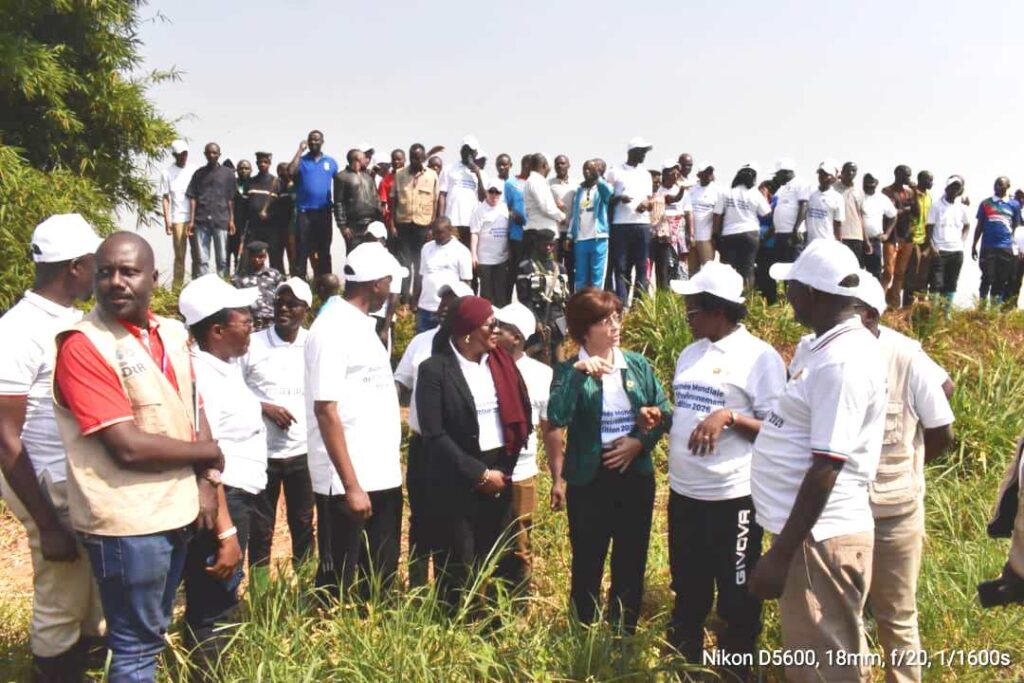
Daniel-Gélase Ndabirabe, President of the National Assembly and deputy for Butanyerera, visited the site on July 12, 2026, to assess the damage and engage with local officials. During his visit, Victor Segasago, the governor of Butanyerera province, called for solidarity with the victims, emphasizing the need for collective support in the face of such widespread devastation. Governor Segasago also stated that security services would conduct a thorough assessment of the losses incurred by the merchants and promised a rapid cleanup of the affected area to facilitate eventual reconstruction. The kiosk where the first flames reportedly appeared supplied products from Dubai and China, suggesting a potentially rapid spread due to the nature of the goods stored within. The governor's appeal for solidarity shows the gravity of the situation and the immediate need for community assistance to those who have lost their businesses.
The Fire's Devastation and Response
The inferno, which began shortly after 8 PM, quickly spread through the market, fueled by the highly flammable products reportedly stored in the affected section. The anti-fire truck stationed at the market attempted an intervention; however, its hose reportedly burst during the critical initial stages of the effort, severely hampering immediate firefighting capabilities. This mechanical failure left the market vulnerable to the rapidly spreading flames. An anti-fire truck dispatched from Muyinga later arrived at the scene, but it faced significant delays as it had to travel several kilometers to access a suitable water source, further complicating the efforts to bring the blaze under control. Amidst the chaos and the desperate attempts to salvage goods, a merchant who attempted to approach his stand reportedly collapsed. This individual was evacuated to a hospital but tragically died shortly after, adding a profound human cost to the material losses. The inability of the local fire services to effectively contain the fire in its early stages has become a focal point of public concern and a source of deep frustration for the affected community.
Following the immediate aftermath and the ongoing efforts to manage the disaster, a second communiqué was issued, prohibiting any activity on the market site. This restriction is to remain in effect until official permission is granted by a specialized team dispatched from Bujumbura, indicating the seriousness with which the authorities are treating the site's integrity and the need for a full assessment. Victor Segasago, the governor of Butanyerera province, also addressed reports of looting that occurred during the incident, a distressing development that compounded the victims' suffering. Governor Segasago publicly requested that individuals who took goods belonging to others during the fire return them or hand them over to the police, stressing the importance of ethical conduct even in times of crisis. These measures highlight the multi-faceted challenges faced by the authorities in the wake of such a large-scale disaster, encompassing not only fire containment but also site security, investigation, and the restoration of order.
Official Statements and Public Outcry
Daniel-Gélase Ndabirabe, President of the National Assembly, commented on the market fire during his visit, offering a perspective that quickly drew criticism. Ndabirabe stated, "Nothing is free, it is the price to pay for not having foreseen the necessary." Mr. Ndabirabe further remarked, "What happened here is the price to pay for not having insured our goods, unlike those who thought of it beforehand," seemingly placing the onus of responsibility on the merchants themselves. He went on to suggest that a merchants' association could have collectively purchased anti-fire trucks to mitigate such incidents, implying a lack of foresight or collective action on the part of the business community. These statements, delivered in the immediate aftermath of such a devastating loss, were widely perceived as insensitive and dismissive of the victims' plight.
Léonce Ngendakumana, former president of the National Assembly, countered this perspective with a strong rebuke, stating that market fires represent a significant loss for both the country and its population, affecting the national economy and the livelihoods of countless individuals. Mr. Ngendakumana emphasized that the protection of markets is not merely a desirable outcome but a mandatory role of the Burundian state, a fundamental responsibility enshrined in its governance. He elaborated, stating in French, "A ce titre, le rôle de l’Etat est key pour les protéger par tous les moyens," showing the state's indispensable role in safeguarding these vital economic hubs. He asserted that the acquisition of anti-fire trucks and other essential equipment for market protection should be explicitly included in the general state budget, arguing that this is a core public service. He explained his reasoning, "L’ achats des camions anti-incendie ou tout autre engin pour la protection des marchés doivent figurer dans le budget général de l’Etat. Le rôle du commerçant est de payer les impôts et taxes pour financer cela," clearly outlining the reciprocal relationship between taxpayers and the state's protective duties. Mr. Ngendakumana views Deputy Ndabirabe's statements as not only inappropriate but also deeply offensive to citizens and merchants, arguing, "La faute lourde commise l’a été non pas par le citoyen ou le commerçant, mais bel et bien par le gouvernement qui élabore les programmes et les budgets ainsi que par le Parlement qui les approuve et contrôle l’action gouvernementale. La faute revient à ceux-là et non au citoyen." This firmly places the blame for such catastrophic failures on governmental and parliamentary bodies rather than on individual traders.
Abdoul Kassim, president of the UPD-Zigamibanga party, also criticized Ndabirabe's remarks, describing the accusation that merchants failed to buy anti-fire trucks as "pure cynicism." Mr. Kassim showed that the state has a constitutional obligation to protect its populations and their property, a duty that extends to public spaces like markets. He stated, "L’Etat a l’obligation constitutionnelle de protéger les populations et leurs biens. Les marchés étant des lieux publics d’intérêt commun, il est impératif que les pouvoirs publics y mettent une attention particulière," noting the state's specific responsibility towards public markets as communal assets. Mr. Kassim added that the National Assembly president should have shown empathy for the victims instead of blaming them, noting, "Le président de l’Assemblée nationale aurait dû plutôt compatir avec les victimes, au besoin même verser les larmes du crocodile comme on le dit au lieu d’enfoncer le clou dans la plaie," a poignant expression of the perceived lack of compassion from a high-ranking official.
Olivier Nkurunziza, president of Uprona, echoed the sentiment that the protection of citizens and their property is primarily the responsibility of the state, not an optional endeavor for individuals or associations. He observed that anarchic construction practices persist despite the government's role in preventing such fires, stating, "C’est cela qui manque. On construit d’une façon anarchique alors que le gouvernement a le rôle exactement de prévenir tous ces incendies," pointing to systemic failures in urban planning and enforcement. Mr. Nkurunziza stressed that public authorities must express solidarity with victims and provide concrete answers, moving beyond mere rhetoric to tangible support. He clarified, "Les déclarations des autorités doivent rassembler, rassurer et proposer des solutions. Il est également légitime d’encourager les commerçants à renforcer leurs mesures de prévention et à envisager une couverture d’assurances, mais cela ne saurait exonérer l’État de ses responsabilités en matière de protection civile et de sécurité publique," striking a balance between individual responsibility and state obligations. He concluded that elected officials and authorities should offer moral and material support, commit to a thorough investigation, strengthen civil protection capabilities, and implement a national plan for market security, stating, "Les élus et les autorités devraient apporter un soutien moral et matériel, s’engager à diligenter une enquête, à renforcer les capacités de la protection civile et à mettre en œuvre un plan national de sécurisation des marchés." This full call to action outlines a clear path for governmental response and prevention.
Calls for Accountability and Prevention
The administrator of Ngozi commune indicated that merchants would be permitted to reconstruct their stands following the recent fire, offering a glimmer of hope for recovery amidst the devastation. Merchants affected by the incident are collectively calling for a full investigation into this and other similar fires that have occurred with alarming regularity in the region, seeking answers and accountability for the recurring catastrophes. They are also requesting urgent material support to restart their businesses, recognizing that without immediate aid, many may not be able to recover from such a significant loss. These demands reflect a deep-seated frustration with the perceived lack of official action and support following previous incidents.
Gabriel Rufyiri, president of the anti-corruption organization Olucome, urged authorities to fully assume their responsibilities in disaster prevention and management, noting the systemic failures that contribute to these recurring tragedies. Rufyiri expressed profound concern over the recurring nature of these fires, which often occur under suspicious circumstances. He stated, "These fires are often nocturnal or occur at dawn. This raises suspicions among the population that they may be of criminal origin," suggesting that foul play cannot be ruled out and warrants serious investigation. He also deplored the absence of concrete public responses and independent investigations since the 2013 fire that affected the central market of Bujumbura, indicating a pattern of inaction and a lack of transparency from the authorities. This historical context amplifies the current calls for a strong and impartial inquiry.
Olucome specifically requested the establishment of an independent national committee dedicated to disaster prevention, emphasizing the need for a proactive and expert-driven approach to mitigate future risks. The organization further called for the acquisition of anti-fire vehicles for all communes across the country, recognizing that adequate equipment is fundamental to effective emergency response. Rufyiri criticized the current state of market infrastructure, noting, "It is regrettable that many markets are still built without respecting safety standards, without adapted access for anti-fire trucks, and without extinguishers," showing critical deficiencies in planning, construction, and safety enforcement. These structural issues, he argued, make markets inherently vulnerable to rapid and widespread destruction.
In addition to infrastructure concerns, Olucome advocated for the mandatory insurance of markets and the creation of a compensation fund specifically for disaster victims. These measures, according to Rufyiri, are key steps for ensuring the safety and economic stability of traders and communities, providing a financial safety net that is currently lacking. The organization's full recommendations aim to address the multifaceted challenges of market safety, from prevention and response to recovery and long-term resilience, ultimately seeking to protect both livelihoods and public assets from future devastation.